
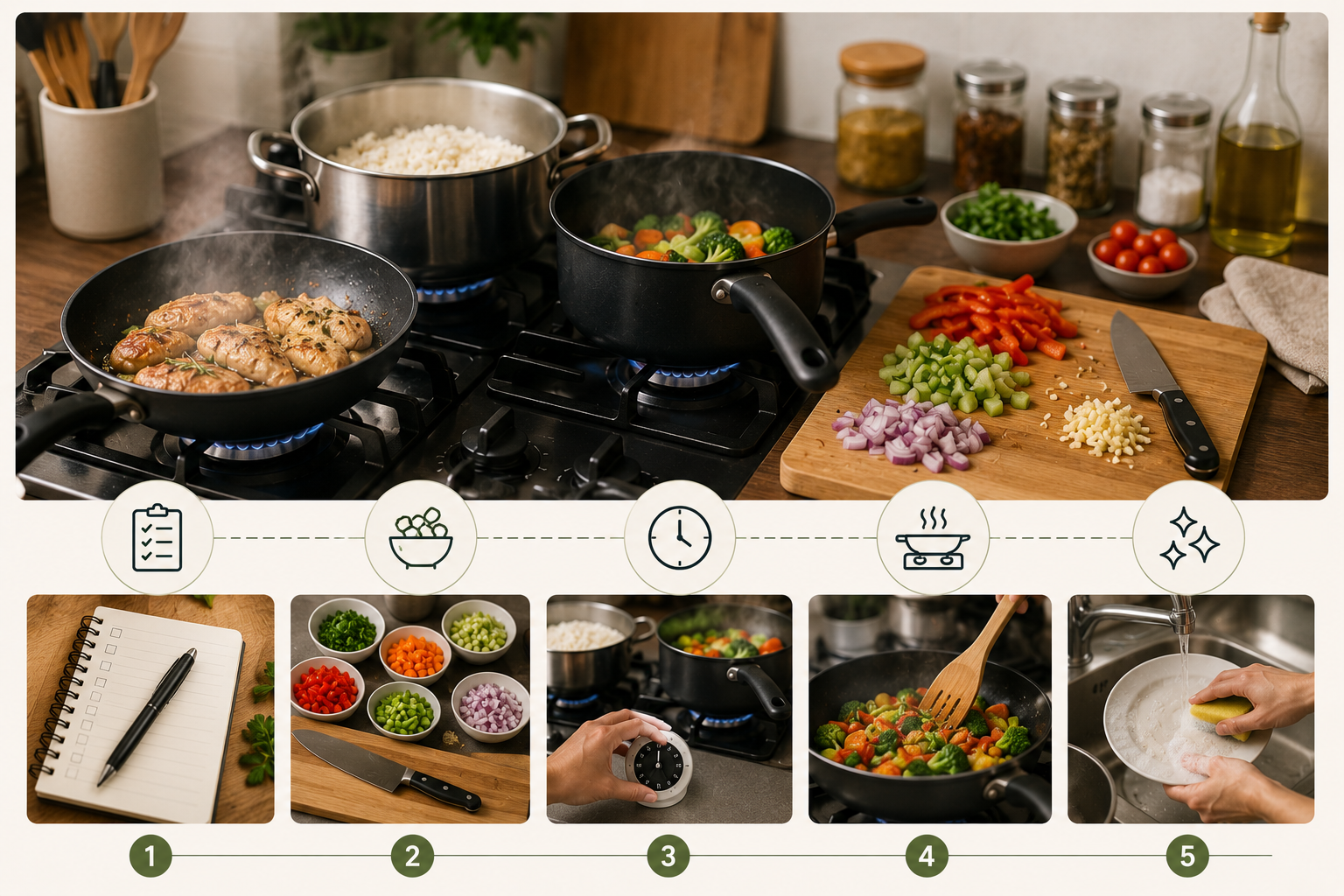
Cooking one dish is easy. Cooking multiple things at once—that’s where most people start to feel overwhelmed.
You’re stirring something on the stove, chopping vegetables simultaneously, checking another pot, and suddenly everything feels chaotic. One dish gets overcooked, another is delayed, and the kitchen turns into a stressful environment.
But here’s something important to understand: managing multiple tasks while cooking isn’t about doing more at once—it’s about doing things in the right order.
When you approach cooking with a clear system, handling multiple tasks becomes much easier. You don’t rush, you don’t panic, and you don’t lose control.
This guide will show you practical, real-life techniques to manage multiple tasks in the kitchen without stress. These are simple habits you can apply daily to make cooking smoother and more efficient.
Understand Why Multitasking Feels Overwhelming
The real issue
Most people think multitasking means doing everything at the same time. That’s where things go wrong.
What actually happens
- You divide your attention too much
- You forget steps
- You react instead of planning
- You lose track of time.
The better perspective
Cooking multiple things successfully is not about multitasking—it’s about sequencing tasks intelligently.
If you often feel overwhelmed while cooking, you might also relate to these common mistakes: https://golazo.vip/common-cooking-mistakes-beginners-should-avoid/
Start With a Simple Game Plan
Why planning reduces stress
Without a plan, you’re forced to make decisions in the middle of cooking. That slows you down and increases pressure.
What to do before starting
Take a minute to:
- Identify all dishes you’re making
- Note which ones take longer
- Decide the order of cooking
The benefit
You replace chaos with clarity before you even turn on the stove.
Prepare Everything Before You Begin
The biggest mistake
Trying to prepare ingredients while cooking is already in progress.
A better approach
- Chop all vegetables
- Measure spices
- Keep ingredients ready
Why this matters
Preparation removes interruptions and allows you to focus on cooking.
For a faster prep system, check this guide: https://golazo.vip/preparing-ingredients-faster-without-creating-a-mess/
Prioritize Tasks Based on Cooking Time
The key principle
Not all tasks are equal—some take longer than others.
How to apply this
- Start with dishes that take the most time
- Add quicker tasks later
- Finish with fast, final steps
Example
- Begin cooking rice or slow dishes first
- Prepare vegetables while they cook
- Finish with quick frying or sautéing
If you want perfectly timed basics like rice, this guide is helpful: https://golazo.vip/a-simple-way-to-cook-rice-perfectly-every-time/
Use “Waiting Time” Productively
What most people do
They wait while something cooks, then rush later.
What you should do instead
Use that time to:
- Prepare the next ingredient
- Clean tools
- Organize your space
Why this works
You stay ahead instead of falling behind.
Keep Your Cooking Area Structured
The problem
A cluttered kitchen makes multitasking harder.
The solution
- Assign areas for prep, cooking, and finished food
- Keep tools in predictable locations
- Avoid unnecessary items on the counter
The result
You move efficiently without confusion.
For a better setup, explore: https://golazo.vip/setting-up-your-kitchen-for-faster-daily-cooking/
Focus on One Active Task at a Time
The common misconception
Trying to actively manage multiple things at once.
The better method
- Only one task should need your full attention
- Other tasks should be in passive stages (like simmering)
Why this helps
You reduce stress and avoid mistakes.
Learn to Control Heat Across Multiple Dishes
The challenge
Different dishes require different heat levels.
What to do
- Keep high-heat tasks short and focused
- Use medium heat for most cooking
- Let low-heat dishes run in the background
The benefit
You balance attention across tasks without losing control.
If heat management feels confusing, this guide can help: https://golazo.vip/learning-to-control-heat-without-burning-your-food/
Avoid Starting Everything at Once
The mistake
Beginning all dishes at the same time.
What happens
- You get overwhelmed quickly
- Timing becomes difficult
- Mistakes increase
The smarter approach
Stagger your tasks:
- Start one dish
- Add another after a few minutes
- Continue gradually
The result
A steady and manageable flow.
Keep Checking Progress Without Panic
Why this matters
Ignoring dishes for too long leads to problems.
What to do
- Check each dish regularly
- Adjust the heat when needed
- Stay aware without rushing
The benefit
You stay in control without feeling stressed.
Simplify Your Menu When Needed
The hidden pressure
Trying to cook too many complex dishes at once.
A better approach
- Combine simple and slightly complex dishes
- Avoid overloading yourself
- Keep things realistic
Why it works
Less complexity means better execution.
Clean as You Move Between Tasks
The issue
Mess builds up quickly when handling multiple tasks.
The habit
- Wash tools during cooking
- Wipe surfaces during breaks
- Keep your space manageable
The result
A cleaner kitchen and less stress.
For practical cleaning tips, visit: https://golazo.vip/simple-ways-to-keep-your-kitchen-clean-while-you-cook/
Use Visual Cues Instead of Guesswork
The mistake
Relying only on time.
What to watch for
- Color changes
- Texture
- Steam and aroma
Why this helps
You don’t need to constantly track time for every dish.
Accept That Not Everything Needs Constant Attention
The problem
Trying to monitor every dish every second.
The reality
Some tasks can run on their own:
- Simmering
- Boiling
- Baking
The benefit
You free up time to focus on more important tasks.
Build Confidence Through Repetition
Why practice matters
Handling multiple tasks becomes easier with experience.
What to focus on
- Repeat similar meals
- Learn timing patterns
- Improve gradually
The result
You naturally become more efficient over time.
FAQs
How can I manage multiple dishes without stress?
Plan your steps, prepare ingredients first, and focus on one active task at a time.
What is the most significant mistake in multitasking while cooking?
Starting everything at once without a clear plan.
How do I avoid burning food while handling multiple tasks?
Control heat properly and inspect dishes regularly.
Should I cook multiple dishes at the same time?
Yes, but only when you have a clear sequence and a manageable workload.
How can I strengthen my multitasking skills in the kitchen?
Practice simple workflows and gradually increase complexity.
Conclusion
Cooking multiple things at once doesn’t have to feel overwhelming. The stress usually comes from trying to do too much, too quickly, without a clear system.
When you shift your approach—from multitasking to smart sequencing—everything changes.
Instead of rushing, you move step by step. Instead of reacting, you stay prepared. Instead of feeling overwhelmed, you stay in control.
Start small. Try planning your cooking order before you begin. Prepare ingredients in advance. Focus on one active task at a time.
These simple changes don’t just make cooking easier—they make it more predictable and enjoyable.
Because in the end, managing multiple tasks in the kitchen isn’t about doing more work. It’s about doing the right work, at the right time, in the right way.