
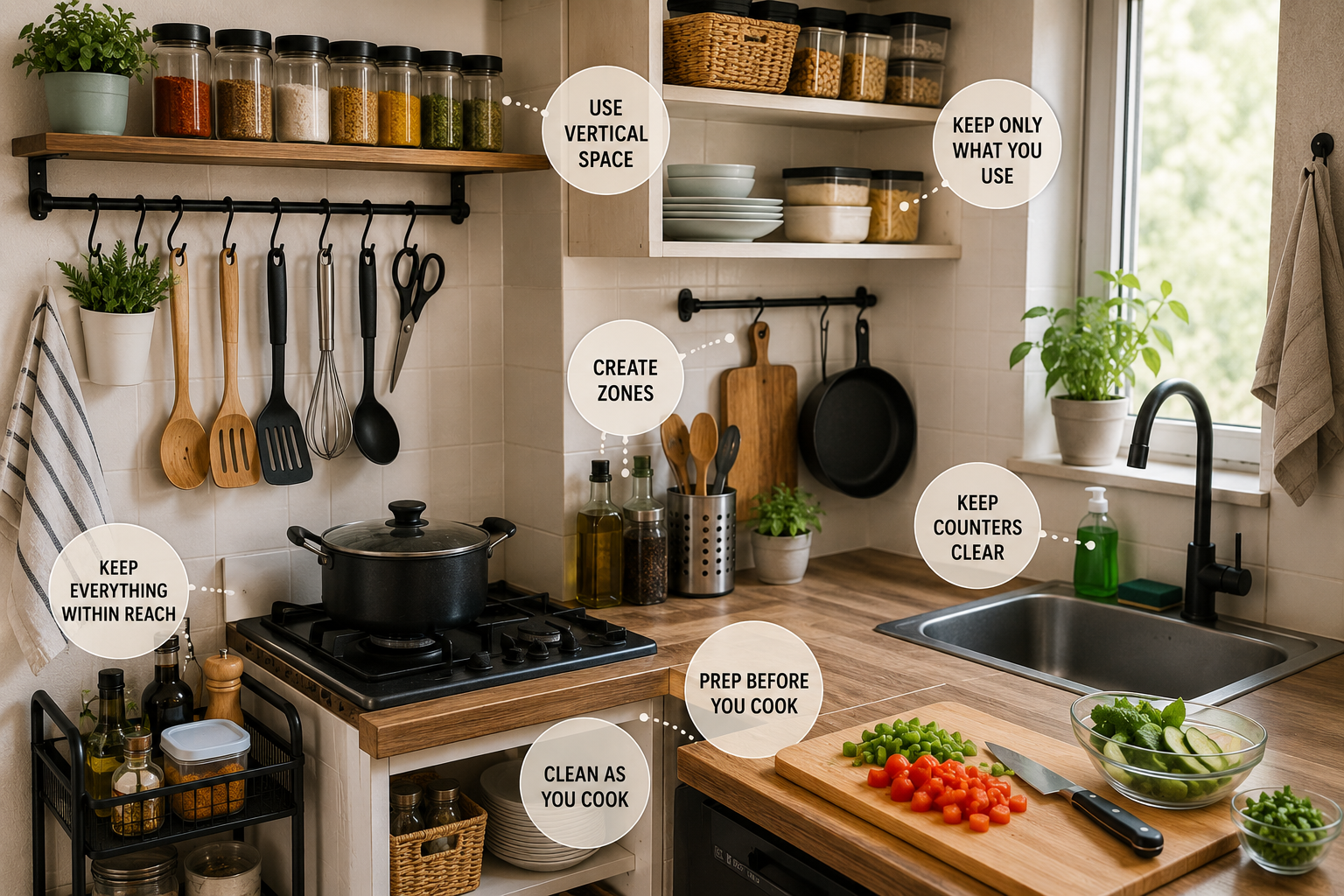
Cooking in a small kitchen can feel frustrating at first. Limited counter space, crowded cabinets, and constant clutter can turn even simple meals into stressful tasks. But here’s the truth most people miss: you don’t need a bigger kitchen to cook better—you need a smarter system.
The difference between a chaotic kitchen and a smooth cooking experience often comes down to small, practical habits. When your setup works with you instead of against you, everything becomes easier—from chopping vegetables to cleaning up afterward.
This guide focuses on real-world, problem-solving kitchen tips that actually make a difference. No fluff, no unrealistic advice—just practical strategies you can apply immediately.
Why Small Kitchens Feel Difficult (And How to Fix It)
A small kitchen becomes difficult not because of its size, but because of how it’s used.
Most people struggle with:
- Too many items and not enough space
- Poor organization
- No clear workflow
- Trying to do everything at once
Instead of trying to “fit more” into your kitchen, the goal is to reduce friction. When every movement feels easier, cooking becomes faster and less stressful.
If your kitchen constantly feels overwhelming, it’s often due to disorganization rather than lack of space. Learning how to create a functional setup can completely change your experience, as explained in this guide on https://golazo.vip/creating-a-kitchen-setup-that-actually-works/.
Keep Only What You Actually Use
The hidden problem: too many tools
One of the biggest mistakes in small kitchens is holding onto tools you rarely use. Extra utensils, duplicate items, and unnecessary gadgets eat up valuable space.
The practical solution
Go through your kitchen and ask:
- Do I use this weekly?
- Does this item have a clear purpose?
- Can something else replace it?
If the answer is no, remove it.
Why this works
Fewer items mean:
- Easier access
- Faster cooking
- Less cleaning
This simple step alone can make your kitchen feel twice as big.
Create “Zones” Instead of Random Storage
What are kitchen zones?
Instead of storing items wherever they fit, group them based on function:
- Cooking zone (oil, spices, pans)
- Prep zone (knives, cutting board)
- Cleaning zone (dish soap, towels)
How to set this up
Keep items close to where they are used:
- Spices near the stove
- Knives near prep space
- Plates near serving area
Why it matters
When everything is in the right place, you stop wasting time searching. Cooking becomes a smooth flow instead of constant interruptions.
Keep Your Countertops Clear
The problem with cluttered counters
A crowded countertop limits your ability to work efficiently. Even simple tasks like chopping vegetables become uncomfortable.
What to do instead
Only keep essentials on the counter:
- One cutting board
- Frequently used oil or spice
- Maybe a kettle or coffee maker
Everything else should go back into storage.
The result
You instantly create more working space without changing your kitchen size.
If clutter is a constant issue, you’ll benefit from these strategies in https://golazo.vip/how-to-avoid-clutter-in-a-busy-kitchen/.
Prep Before You Start Cooking
Why this matters
One of the biggest stress points in cooking is trying to do everything at once:
- Chopping while something is burning
- Searching for ingredients mid-cooking
- Cleaning while cooking
A better approach
Before turning on the stove:
- Wash and cut all ingredients
- Measure spices
- Keep everything within reach
The impact
This simple habit reduces stress and prevents mistakes. It also makes cooking feel more controlled and enjoyable.
For a deeper approach to efficient preparation, see https://golazo.vip/preparing-ingredients-faster-without-creating-a-mess/.
Use Vertical Space Smartly
The overlooked space
In small kitchens, walls are often underused.
Simple solutions
- Install hooks for utensils
- Use shelves for spices
- Hang pans or tools
Why it works
You free up cabinets and counters while keeping essentials easily accessible.
Choose Multi-Purpose Tools
The mistake most people make
Buying single-purpose tools that take up space.
What to use instead
Look for tools that do multiple jobs:
- A pan that works for frying and sautéing
- A knife that handles most cutting tasks
- Stackable containers
The benefit
You reduce clutter while keeping your kitchen fully functional.
Clean As You Cook
Why this habit matters
In a small kitchen, mess builds up quickly. If you leave everything for later, cleanup becomes overwhelming.
What to do
- Wash utensils while food is cooking
- Wipe surfaces immediately after use
- Put items back as soon as you’re done
The result
You finish cooking with a mostly clean kitchen, which saves time and mental energy.
Master Heat Control to Avoid Mistakes
The common issue
Burning food because of poor heat management is one of the biggest frustrations in cooking.
The simple fix
- Start with medium heat instead of high
- Adjust gradually
- Don’t leave the stove unattended
Why this matters
Proper heat control improves cooking results and reduces stress.
If you struggle with this, check out https://golazo.vip/learning-to-control-heat-without-burning-your-food/ for a practical breakdown.
Organize Your Ingredients for Easy Access
The problem
Digging through cabinets wastes time and interrupts your workflow.
The solution
- Group similar items together
- Use clear containers if possible
- Keep frequently used items at eye level
The outcome
You spend less time searching and more time cooking.
Follow a Simple Cooking Workflow
Why workflow matters
Cooking becomes stressful when there’s no structure.
A basic workflow
- Prep ingredients
- Start cooking
- Clean as you go
- Serve and finish
What this solves
It prevents chaos and helps you stay in control of your kitchen.
For a structured approach, this guide can help: https://golazo.vip/a-simple-workflow-that-makes-cooking-more-efficient/.
Reduce Decision Fatigue While Cooking
The hidden problem
Constantly deciding what to do next slows you down.
How to fix it
- Plan your steps before starting
- Keep recipes simple
- Repeat meals you already know
Why it works
Fewer decisions mean faster and smoother cooking.
Keep Everyday Items Within Reach
What most people do wrong
Storing frequently used items in hard-to-reach places.
What to do instead
Keep daily-use items:
- Easy to grab
- Visible
- Organized
The benefit
You save time and reduce frustration during cooking.
Don’t Try to Cook Everything at Once
The mistake
Handling too many tasks simultaneously leads to mistakes.
A better approach
- Focus on one step at a time
- Cook in stages if needed
- Keep things simple
The result
Better food and less stress.
Accept That Simplicity Works Best
The reality
You don’t need complicated recipes or tools to cook well.
What actually helps
- Basic ingredients
- Simple techniques
- Consistent habits
Why this matters
Simplicity makes cooking sustainable, especially in a small kitchen.
FAQs
How can I make my small kitchen feel bigger?
Focus on decluttering, using vertical space, and keeping countertops clear. Organization matters more than size.
What are the most important tools for a small kitchen?
A good knife, a versatile pan, a cutting board, and basic utensils. Avoid unnecessary gadgets.
How do I cook faster in a small kitchen?
Prepare ingredients in advance, keep your workspace organized, and follow a simple workflow.
Is meal planning necessary for small kitchens?
It helps a lot. Planning reduces clutter, saves time, and prevents last-minute stress.
How do I keep my kitchen clean while cooking?
Clean as you go—wash utensils during cooking and wipe surfaces immediately after use.
Conclusion
A small kitchen doesn’t have to limit your cooking—it can actually make you more efficient. When space is limited, you’re forced to focus on what truly matters: organization, simplicity, and smart habits.
The biggest transformation doesn’t come from buying new tools or expanding your kitchen. It comes from changing how you use the space you already have.
Start small:
- Remove what you don’t need
- Organize what you use
- Follow a simple workflow
Over time, these small changes create a kitchen that feels easier, faster, and more enjoyable to cook in.
And once your kitchen starts working for you, cooking stops feeling like a chore—and starts becoming something you actually enjoy.