
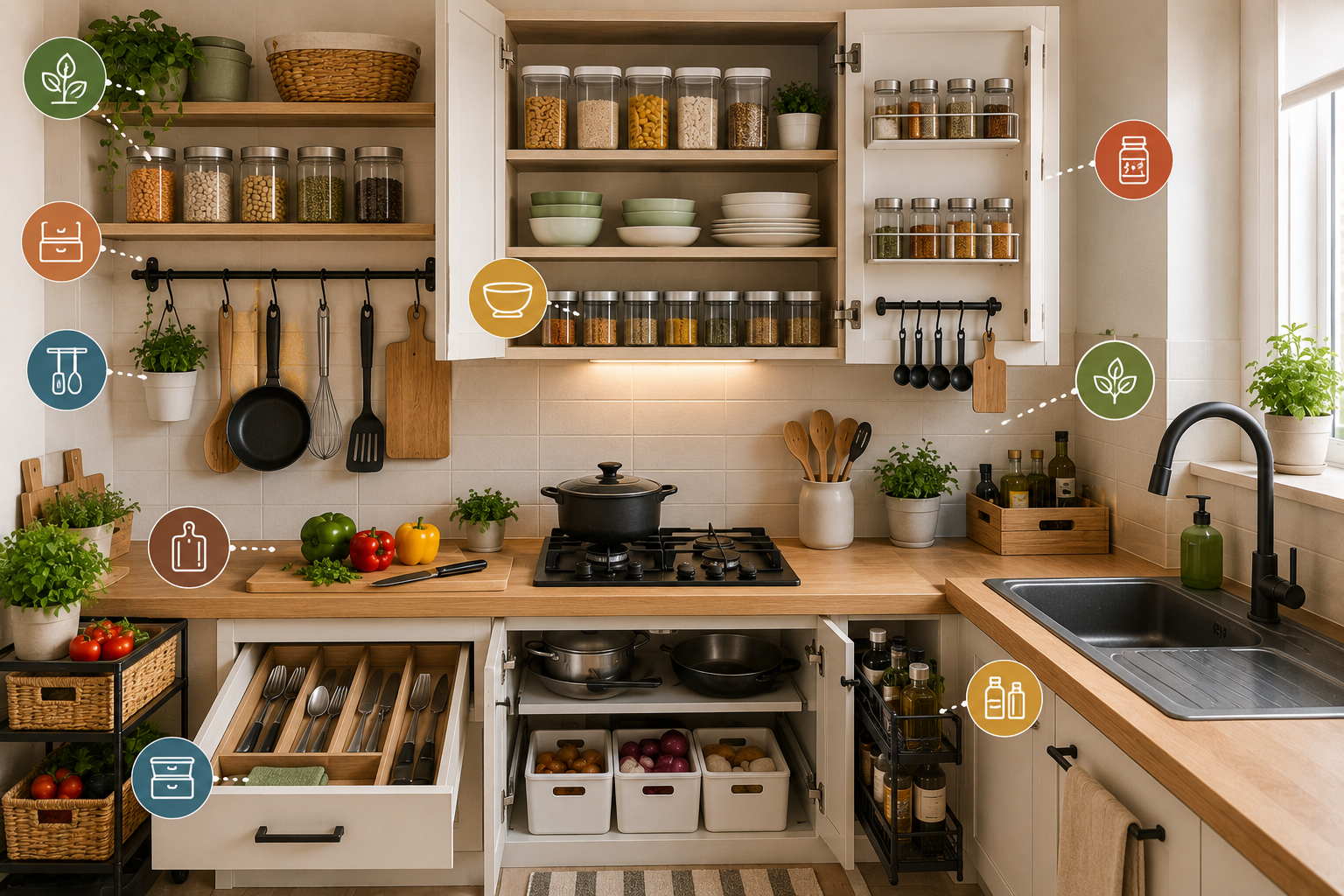
Managing kitchen space can feel overwhelming, especially when cabinets are full, counters are crowded, and finding simple tools becomes a daily struggle. The good news is that you don’t need a bigger kitchen to make cooking easier—you just need a smarter approach to organizing and managing the space you already have. With the right strategies, even a small kitchen can feel open, efficient, and enjoyable to use.
This beginner-friendly guide will walk you through practical and realistic ways to manage kitchen space effectively. Whether your kitchen is tiny, medium-sized, or shared with family, these simple strategies will help you reduce clutter, improve workflow, and make everyday cooking feel smoother.
Start by Understanding Your Kitchen Habits
Before reorganizing anything, take a moment to understand how your kitchen is actually used. Many people organize based on Pinterest photos or storage trends rather than real-life routines, which leads to frustration later. Ask yourself simple questions. How often do you cook? Which appliances do you use daily? Where do you naturally place groceries after shopping? Which cabinets feel crowded, and which ones stay half empty?
Observing your habits helps you design a kitchen that matches your lifestyle instead of forcing you to adapt to an unrealistic system. A family kitchen, for example, needs quick access and durability, while a solo kitchen may focus on minimalism and flexibility. When an organization reflects real behavior, maintaining it becomes much easier.
Declutter First Before Organizing Anything
One of the biggest mistakes people make when managing kitchen space is trying to organize clutter instead of removing it. No amount of containers or shelves can fix overcrowded cabinets filled with unused items.
Start by emptying one area at a time and sorting items into three simple categories: keep, donate, and discard. Be honest about what you actually use. If you haven’t touched a gadget in a year, chances are you won’t miss it.
Common items that often take unnecessary space include duplicate utensils, broken tools, expired pantry goods, extra mugs, and unused appliances. Removing these items instantly creates breathing room and makes organizing far easier. Decluttering is the foundation of efficient kitchen space management.
Divide the Kitchen into Functional Zones
Professional kitchens rely on zoning to maintain efficiency, and this method works perfectly in home kitchens too. Instead of organizing randomly, divide your kitchen into functional zones based on tasks.
Typical kitchen zones include food prep, cooking, cleaning, storage, and serving. Each zone should contain the tools and supplies needed for that activity. For example, knives, cutting boards, and mixing bowls should live in the prep zone, while pots and pans belong near the stove. Zoning reduces unnecessary movement and helps everything feel more intuitive. When iyou keep items close to where you use them cooking becomes faster and less stressful.
Use Vertical Space to Maximize Storage
Many kitchens run out of space because they don’t use vertical storage enough. Walls, cabinet doors, and empty vertical gaps offer valuable storage opportunities. Install hooks, rails, or shelves to store frequently used tools such as utensils, mugs, or small pans. Stackable shelves inside cabinets can double storage capacity without requiring renovations.
Even the inside of cabinet doors can hold spice racks, cutting boards, or cleaning supplies. Using vertical space allows you to keep counters clear while still having convenient access to essentials. This simple shift can dramatically increase storage without expanding the kitchen.
Keep Countertops Clear and Functional
Countertops are the most visible and valuable workspaces in any kitchen. When they become crowded, cooking feels stressful and cleaning becomes difficult. Aim to keep only daily-use appliances on the counter, such as a kettle or coffee maker. Everything else should have a designated storage spot inside cabinets or drawers.
A helpful rule is to treat countertops as work surfaces rather than storage areas. The more open your counters are, the bigger and calmer your kitchen will feel. Clear countertops also encourage regular cleaning and make food preparation more enjoyable.
Organize Cabinets Based on Frequency of Use
Not all kitchen items deserve equal access. Some tools are used daily, while others are needed only occasionally. Organizing cabinets based on frequency of use makes a huge difference. Store everyday items at eye level where they’re easy to reach. Reserve higher shelves for rarely used appliances and lower cabinets for heavier cookware.
This simple approach reduces bending, reaching, and searching for tools, making daily tasks more efficient and comfortable. When frequently used items are easy to grab, cooking becomes quicker and smoother.
Make Drawers Work Smarter with Dividers
Kitchen drawers often become chaotic because small items move around and mix together. Drawer dividers transform messy drawers into organized, easy-to-navigate spaces. Use dividers for utensils, measuring tools, gadgets, and small accessories. Assign each section a specific purpose so items always return to the same spot.
This small change saves time every day because you no longer need to dig through clutter to find what you need. Smart drawers create a sense of order and control in the kitchen.
Store Pantry Items in a Clear and Logical Way
A cluttered pantry leads to wasted food and repeated grocery purchases. Organizing pantry items clearly helps you see what you have and use it efficiently. Group similar items together, such as grains, canned goods, snacks, and baking supplies. Consider using clear containers or labeled bins to make items visible and easy to identify.
Keep frequently used pantry items at eye level and store bulk goods higher or lower. This simple system prevents overcrowding and makes meal planning easier. A well-organized pantry supports better cooking and reduces food waste.
Create Dedicated Storage for Small Appliances
Small appliances often cause major clutter because they don’t have assigned storage spots. Without a designated home, they end up living on countertops. Choose a cabinet or shelf specifically for appliances like blenders, mixers, and air fryers. If space allows, consider an appliance garage or storage basket to keep cords tidy and items easy to access.
Grouping appliances together keeps your kitchen looking neat while still allowing convenient access when needed. Dedicated storage prevents countertop overload.
Build a Simple Daily Reset Routine
The key to long-term kitchen organization is maintenance. Without a daily reset habit, clutter slowly returns. A daily reset can take as little as five minutes. Clear counters, wash dishes, return items to their zones, and check for misplaced tools. This quick routine keeps the kitchen consistently tidy without requiring large cleaning sessions. Small daily habits prevent overwhelming messes and make the kitchen feel welcoming every day.
Conclusion
Managing kitchen space doesn’t require a complete renovation or expensive storage systems. With thoughtful planning and simple changes, any kitchen can become more efficient and enjoyable to use.
Start by understanding your habits, decluttering unused items, and dividing the kitchen into functional zones. Use vertical storage, keep countertops clear, organize cabinets by frequency, and improve drawers with dividers. A well-organized pantry, dedicated appliance storage, and a quick daily reset routine will help maintain order over time. The goal is not perfection but practicality. When your kitchen works with your lifestyle instead of against it, cooking becomes easier, faster, and far more enjoyable.
FAQs
1. How often should I reorganize my kitchen?
A full reorganization once or twice a year is usually enough. However, small adjustments can be made anytime your needs change.
2. What is the best way to organize a very small kitchen?
Focus on vertical storage, decluttering regularly, and keeping only essential items accessible. Small kitchens benefit greatly from zoning and daily reset habits.
3. How can I prevent kitchen clutter from returning?
Build a short daily reset routine and avoid bringing unnecessary items into the kitchen. Consistency is the key to long-term organization.
4. Do I need expensive storage products to organize my kitchen?
No. Many effective solutions involve rearranging existing items, using simple containers, and creating consistent habits.
5. What should always stay on the kitchen counter?
Only daily-use appliances and essentials. Keeping counters mostly clear makes the kitchen feel larger and easier to maintain.