
⏱ Reading time: 6 minutes
I used to throw fresh herbs into everything. A handful of basil in a bolognese. Sprigs of rosemary in a quick stir-fry. Cilantro on a pizza. Sometimes it worked. More often, the herbs wilted into stringy nothingness or clashed with the other flavours. I was treating all herbs as interchangeable, and they are not.
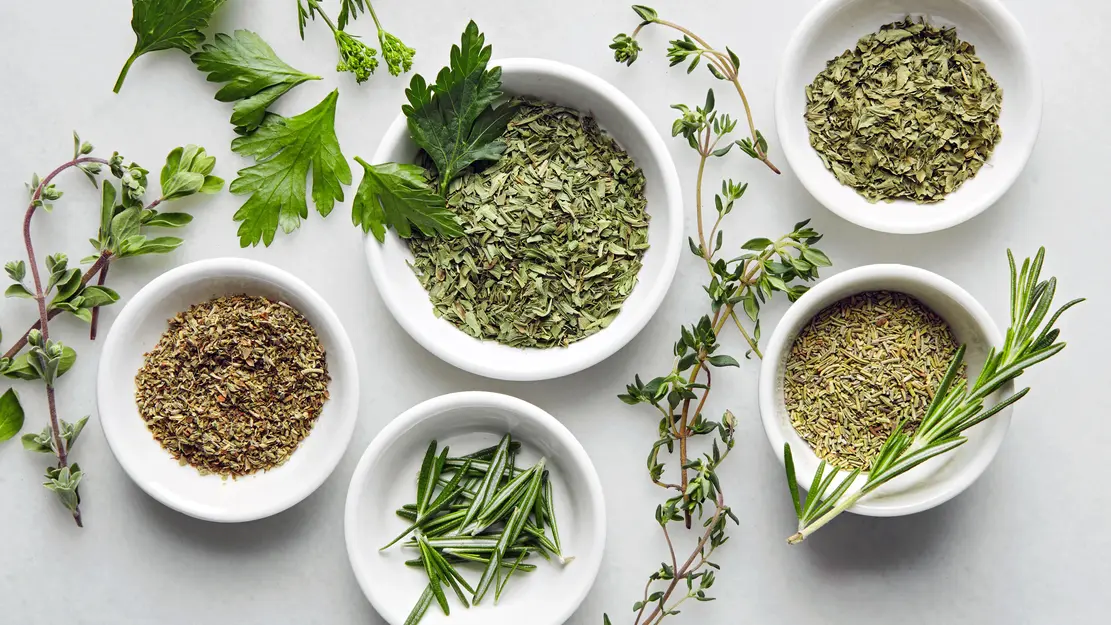
The choice between fresh and dried is not about freshness being better. It is about understanding what each form does best. Dried herbs are not a sad substitute for fresh. They are different ingredients with different strengths. Knowing when to reach for which one will make your cooking more precise and more flavourful.
This guide breaks down the practical differences, the herbs that work dried, the ones that do not, and how to substitute one for the other without ruining the dish.
What Happens When Herbs Dry
Drying concentrates flavour. Water evaporates, leaving the essential oils behind. A teaspoon of dried oregano contains the flavour of several tablespoons of fresh. This concentration changes how the herb behaves in cooking.
Dried herbs also change structurally. Delicate leaves like basil and parsley lose their bright, volatile compounds during drying. What remains is a muted, hay-like version of the original. Woody herbs like thyme, rosemary, and oregano hold up better because their flavour compounds are more stable.
The general rule is simple. Dried herbs work best in dishes with long cooking times, where their concentrated flavour can infuse into sauces, stews, and braises. Fresh herbs shine at the end of cooking or in raw applications, where their brightness and aroma remain intact.
Herbs That Work Dried
Some herbs transform beautifully when dried. Their flavours deepen and become more complex. These are your workhorses for winter cooking and pantry staples.
Oregano. Dried oregano is arguably better than fresh. The drying process intensifies its earthy, slightly bitter quality. It is essential in Italian tomato sauces, Greek salads, and Mexican moles. Fresh oregano is milder and works in raw applications, but dried is the default for cooked dishes.
Thyme. Dried thyme retains its subtle lemon-wood flavour well. It is a background herb that supports other flavours without dominating. Use it in stocks, stews, roasted meats, and bean dishes. Fresh thyme is lovely but not dramatically different in cooked applications.
Rosemary. Dried rosemary is potent. A little goes a long way. It works beautifully in roasted potatoes, lamb, and bread. Fresh rosemary is more aromatic and less bitter, but dried is perfectly acceptable when fresh is unavailable.
Bay leaves. Bay leaves are almost always used dried. Fresh bay leaves exist but are rare and have a different, more mentholated flavour. Dried bay leaves slowly release their subtle, tea-like aroma during long simmers. Remove them before serving.
Sage. Dried sage is stronger and more astringent than fresh. It works in stuffing, sausage, and bean dishes. Fresh sage is milder and better for frying whole leaves as a garnish. For cooked dishes, dried is the standard.
| Herb | Dried Strength | Best Dried Uses | Fresh Advantage |
|---|---|---|---|
| Oregano | Excellent | Tomato sauces, pizza, Greek dishes | Milder, better in raw salads |
| Thyme | Very good | Stocks, stews, roasted meats | More aromatic, prettier garnish |
| Rosemary | Good (potent) | Potatoes, lamb, bread, roasted vegetables | Less bitter, more pine aroma |
| Bay Leaves | Standard form | Soups, stews, braises, rice | Rare; different flavor profile |
| Sage | Good (strong) | Stuffing, sausage, beans | Better for frying as garnish |
| Marjoram | Very good | Mediterranean dishes, poultry | More delicate, floral notes |
Herbs That Need to Be Fresh
Some herbs lose so much in translation that dried versions are barely recognisable. These should almost always be used fresh.
Basil. Dried basil is a shadow of its former self. The bright, peppery, anise-like notes vanish. What remains is a vague green flavour that adds little to a dish. Fresh basil is essential for pesto, caprese, and any tomato-based Italian dish. Add it at the very end of cooking or use it raw.
Cilantro. Dried cilantro is essentially pointless. The fresh herb’s distinctive soapy-floral flavour does not survive drying. If a recipe calls for cilantro and you only have dried, use parsley or skip it entirely. Dried cilantro will disappoint you.
Parsley. Dried parsley is flavourless green dust. It adds colour and nothing else. Fresh parsley is a finishing herb that brings brightness and a mild, clean flavour. Use it in gremolata, chimichurri, tabbouleh, and as a final sprinkle on almost any savoury dish.
Chives. Dried chives exist but they lack the delicate onion-garlic bite of fresh. They are acceptable as a last-resort garnish, but fresh chives are irreplaceable in sour cream toppings, egg dishes, and potato salads.
Mint. Dried mint is used in some Middle Eastern and North African cooking, but fresh mint is dramatically better. Its cool, bright flavour is essential in salads, drinks, and desserts. Dried mint works in long-simmered tagines where it has time to rehydrate and infuse.
Dill. Fresh dill has a clean, slightly sweet, grassy flavour that dried dill cannot replicate. Dried dill is acceptable in pickles and some Scandinavian dishes, but fresh is preferred for salmon, yoghurt sauces, and potato salads.
The Soft Herb Rule: Soft, leafy herbs with high water content — basil, cilantro, parsley, mint, dill, tarragon, and chervil — generally do not dry well. Their flavour compounds are volatile and degrade quickly. Woody herbs with lower water content — rosemary, thyme, oregano, sage, and bay — dry beautifully and often improve.
The Substitution Ratio
When substituting dried for fresh or vice versa, the standard ratio is one part dried to three parts fresh by volume. This accounts for the concentration that happens during drying.
One tablespoon of fresh herbs equals one teaspoon of dried. One teaspoon of dried equals one tablespoon of fresh. This is a starting point, not a law. Dried herbs vary in potency depending on age and storage. Older dried herbs lose strength over time. If your dried oregano has been in the cabinet for three years, you might need more than the ratio suggests.
Also consider when the herb is added. Dried herbs added early in cooking have time to rehydrate and release their flavour. Fresh herbs added early can turn bitter or lose their brightness. If you are substituting dried for fresh in a recipe that calls for fresh herbs at the end, add the dried herbs earlier in the process instead.
| Fresh Amount | Dried Equivalent | When to Add Dried | When to Add Fresh |
|---|---|---|---|
| 1 tablespoon | 1 teaspoon | Early in cooking, with aromatics | Last 1-2 minutes or as garnish |
| 1/4 cup (4 tablespoons) | 4 teaspoons (1 tablespoon + 1 teaspoon) | Early, to allow rehydration | Off heat, just before serving |
| 1/2 cup | 2 tablespoons + 2 teaspoons | Early, in soups and stews | Final garnish, raw applications |
How to Store Both Forms
Fresh herbs are perishable. Treat them like flowers. Trim the stems, place them in a glass of water, and cover loosely with a plastic bag. Store in the refrigerator. Change the water every few days. Basil is the exception — it hates cold and turns black in the fridge. Store basil in water at room temperature, away from direct sunlight.
For longer storage, hardy herbs like rosemary and thyme can be wrapped in damp paper towels and stored in the crisper. Delicate herbs like cilantro and parsley benefit from the water-glass method. You can also freeze herbs in olive oil using ice cube trays. These herb cubes drop straight into hot pans and soups.
Dried herbs need cool, dark, airtight storage. Heat, light, and air degrade their essential oils. Keep them in a cabinet away from the stove, not in a spice rack above the range where steam and heat attack them daily. Whole dried herbs last longer than ground or crumbled ones. Buy whole when possible and crumble them yourself.
Most dried herbs lose significant potency after six months to a year. They do not spoil, but they fade into flavourless dust. If you cannot smell the herb when you open the jar, it will not flavour your food. Replace old dried herbs without guilt.
When to Add Herbs During Cooking
Timing matters as much as the herb itself. Add dried herbs too late and they taste raw and dusty. Add fresh herbs too early and they turn bitter and lose their brightness.
Dried herbs need time to rehydrate and release their oils. Add them when you add other aromatics — onions, garlic, and celery. Let them bloom in the fat for a minute before adding liquid. This toasting step wakes up dormant flavour compounds.
Fresh herbs are almost always added at the end. Chop them finely and stir them in during the last minute of cooking, or sprinkle them on top as a garnish. The exception is hardy fresh herbs like rosemary and thyme, which can handle longer cooking times. Add these with the dried herbs if you want their flavour to permeate the dish.
The Herb Stem Secret: Do not throw away herb stems. Thyme stems can be added whole to stocks and stews — the leaves fall off during cooking, and the stems add flavour. Cilantro stems are more flavourful than the leaves and blend beautifully into pestos and salsas. Parsley stems work in stocks. Use the whole plant when you can.
Final Thoughts
Fresh versus dried is not a hierarchy. It is a choice based on what you are cooking, what you have available, and what flavour you want to achieve. Dried oregano in a long-simmered marinara is perfect. Fresh oregano in that same sauce would be wasted. Fresh basil on a finished pizza is essential. Dried basil on that pizza would be sad.
Build a pantry of dried woody herbs for everyday cooking. Buy fresh soft herbs when a recipe demands them or when you see beautiful bunches at the market. Learn the substitution ratio. Store both properly. Add them at the right time. Do these things and your herb game will transform from guesswork into intention.
The goal is not to use the freshest, most expensive herb in every dish. The goal is to use the right herb in the right form at the right time. That is what makes food taste considered. That is what makes it taste like someone cared.