
It is 6:30 PM. You stand in front of the cutting board, staring at an uncut onion and a large box of raw chicken. The urge to order takeout is overwhelming. For years, cooking after work was a grueling marathon. I meticulously followed a recipe, carefully cut every vegetable into equal pieces, messed with four pans, and spent almost as much time cleaning up as I did eating. Exhausted, I often forgot to do the grocery shopping afterward and opted for expensive takeout.
The turning point came when I finally realized that efficiency in the kitchen does not have to come at the expense of food quality. Professional kitchens rely on processes, preparation, and smart techniques to save time. By applying just a few of these techniques in your kitchen, you can significantly shorten cooking time. You don’t have to be a professionally trained chef to master these techniques. All you need to do is adjust your approach to the physical work in the kitchen. These time-saving and effortless cooking tips have completely changed my daily life.
The Magic of Batch-Prepping Aromatics:
Almost all delicious savory dishes are based on the same ingredients: chopped onions, garlic, and ginger. Preparing these meals every evening is such a hassle. Who has time to peel and chop garlic cloves one by one on a Tuesday night?
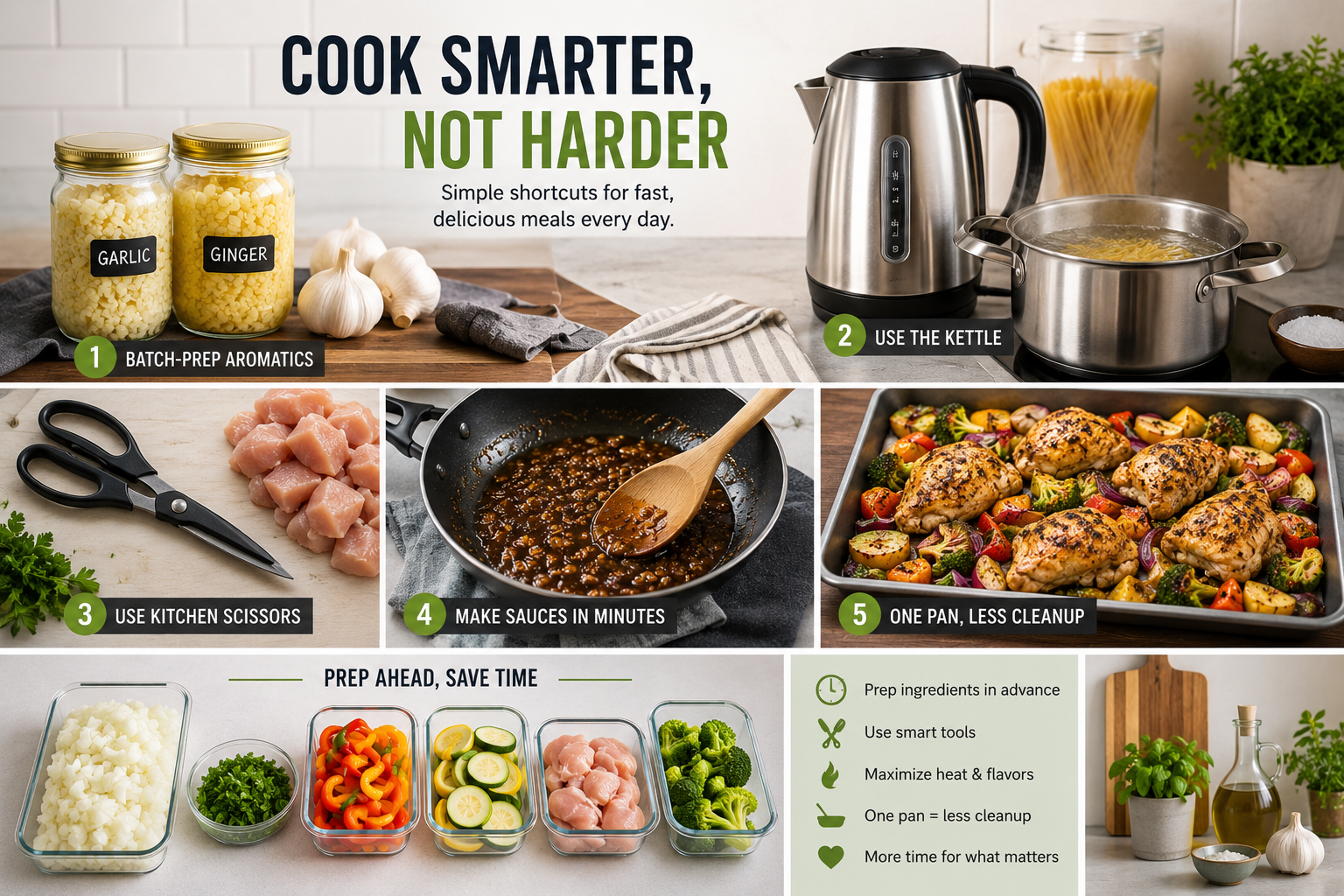
My favorite time-saving trick is to process these spices in bulk over the weekend. I peel two whole bulbs of garlic, put them in a small food processor, and chop them coarsely. Next, I process a large piece of peeled ginger in the same way. Afterward, I put the chopped spices in a small, airtight glass jar, cover it completely with a thin layer of neutral cooking oil, and put it in the refrigerator. The oil blocks the oxygen, keeping the garlic and ginger fresh for weeks without losing their rich flavor.
When I want to cook, I twist the jar open, scoop out a spoonful of the prepared garlic paste, and put it in a hot pan. The garlic and ginger soak up the oil, fully absorb the aromas of the ingredients, and add a rich layer of flavor to the dish. This little trick saves me at least 10 minutes every evening, because I no longer have to peel, chop, and wash a sticky cutting board.
Use Kitchen Scissors Instead of a Knife:
From a young age, we learn that only sharp kitchen knives are meant for cutting things. A sharp knife is essential. But using a knife for everything results in a lot of unnecessary cleaning. If you are cutting fresh meat, you must thoroughly clean the cutting board before cutting other ingredients.
I keep a sturdy, durable spring-loaded kitchen scissors in my cutlery drawer, which means I have half the amount of washing up to do. When making stir-fries, I don’t even have to get out the cutting board; I simply cut chicken legs into bite-sized pieces, place them over a hot pan, and cut the chicken with scissors. You can cut away fat in the same way. Cut fresh herbs from the pork chops and add them directly to a simmering sauce or sprinkle them over a soup.
Safety and care are of the utmost importance when using raw meat scissors. You need scissors with hinges that are easy to split into two parts. If the blades do not separate, meat juices can remain in the joint, posing a serious risk of bacterial growth. Disassemble the scissors immediately after trimming raw meat and place both parts in the dishwasher.
Cooking Method with the Kettle:
On a regular electric or gas stove, it takes more than fifteen minutes for a large pot of cold water to boil. “It is frustrating to stare at a pot of water that takes forever to boil while you are in a rush to serve pasta.”
I also have a kettle, which allows me to avoid constantly using the stove. Kettles heat up very quickly and usually boil a liter of water in under three minutes. If I need to cook pasta, blanch vegetables, or make soup quickly, I fill the kettle with water and turn it on. At the same time, I place an empty pasta pot on the stove and heat it over medium heat. As soon as the pasta pot is hot, the water in the kettle boils. I pour the boiling water directly into the preheated pasta pot, add salt, and immediately put the pasta in. This double heating method saves about half the waiting time.
More Delicious Sauces in a Few Minutes:
To make a rich and flavorful broth, meat usually needs to simmer for several hours. But once you have mastered the technique of making the perfect stock sauce, you can achieve the same delicious flavor in less than five minutes.
When I fry chicken breasts, pork chops, or steaks in a stainless steel skillet, a layer of caramelized black crust forms on the bottom. This crust, also known as “stock,” is rich and flavorful. Instead of rinsing it away with water, I use it immediately to make a simple sauce.
I remove the fried meat from the pan and let it rest for a moment. Next, I spray some chicken stock, white wine, or even tap water into the scorching hot skillet. It immediately starts bubbling and steaming. I carefully scrape the bottom of the pan clean with a wooden spoon and add all the caramelized crust to the liquid. I let it simmer over high heat for a few minutes until the sauce thickens slightly, then turn off the heat and add a small piece of cold butter. As the butter melts, the sauce transforms into a thick, glossy glaze that can be drizzled over the meat. This dish is ready in no time, yet it instantly elevates a simple meat dish.
The Baking Pan Revolution:
Previously, you might have spent an entire evening washing up and preparing different parts of your dinner in separate pans. By switching to baking pans, my cooking efficiency during the week has improved significantly. By grilling meat and vegetables in the same baking pan, the juices can naturally soak into the vegetables, and you only have to wash one pan.
What is the secret to baking pan dishes? Controlling time and temperature. I always place my heavy aluminum baking pan in the oven while it preheats. By placing cold ingredients on the hot metal baking pan, they start to sear immediately, resulting in beautifully grilled meat instead of mushy steamed meat.
For even faster cleaning, you can line the baking pan with a thick layer of aluminum foil or a reusable silicone baking mat. Once you’ve finished eating, just fold up the foil and wipe the baking pan clean with a damp sponge. This makes cleaning the pan easy. For stubborn grease stains in the pan, mix baking soda with warm water to form a paste, apply it to the pan, and let it sit for an hour. This makes the residue simple to remove.
Frequently Asked Questions:
Does the taste of pre-cut garlic change if I freeze it or store it in the refrigerator?
Storing garlic in oil in the refrigerator softens the taste, making it sweeter while retaining a slight spiciness of raw garlic. It is still fine to cook with. However, for safety reasons and to avoid the risk of botulism, homemade garlic in oil must be kept in the refrigerator and consumed within two weeks.
Can I cook pasta in cold water?
Yes, dried pasta can indeed be cooked in cold water. Put the pasta in a pan, add cold water until the pasta is submerged, and bring it to a boil over high heat. While the water boils, the pasta will gradually absorb it. The pasta usually develops a perfect, springy texture when the water boils. This method saves a lot of time and produces a lot of starch, ideal for thickening sauces.
What is the fastest and safest way to thaw meat for dinner?
The fastest and safest way to thaw meat is by placing it in a bowl of cold tap water. Wrap the meat tightly in a sealed plastic bag and change the cold water every 30 minutes. With this method, you can thaw most common chicken breasts or ground beef in about an hour. Avoid hot water, as the heat promotes rapid bacterial growth.
Are pre-cut vegetables worth it?
If buying pre-cut onions, carrots, or pumpkins allows you to prepare healthy meals at home instead of ordering expensive takeout, then they are certainly worth it. They significantly lower the barrier to cooking, especially when you feel exhausted. However, be sure to check the packaging carefully to ensure the vegetables are fresh, as cut vegetables spoil faster than whole vegetables.
How to safely clean and maintain kitchen scissors:
Buy scissors that always hinge in the middle. After each use, remove both blades and wash them with hot soapy water or place them in the dishwasher rack. Before putting them back, always make sure the metal is completely dry to prevent corrosion of the blades.
Take Control of Your Evenings:
Cooking should nourish the body and mind, not lull you to sleep. By changing your perspective and applying a few smart strategies, you might just be able to entirely change the rhythm of your kitchen. By preparing the hardest ingredients in large quantities, using the right kitchen tools to reduce washing up, and making optimal use of existing heat sources, you can save a lot of time every month. You don’t have to remake your favorite dishes; just look for more efficient cooking methods. With these tips, you will spend less time in the kitchen and have more time left to enjoy the delicious food you put so much effort into preparing.