
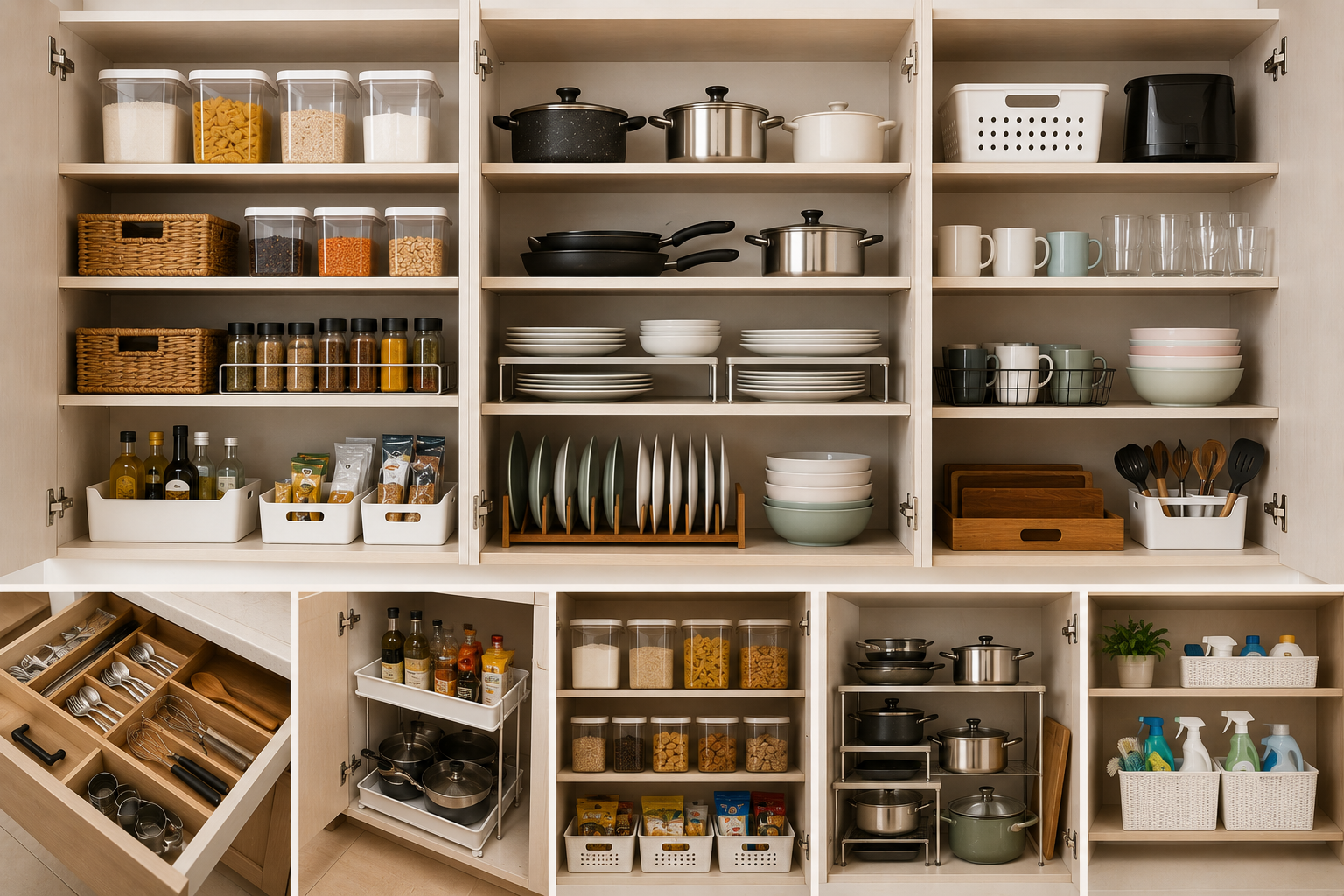
A well-organized kitchen cabinet system can completely change how you cook, clean, and move around your kitchen. For beginners, however, cabinet organization often feels confusing—where do things go, what should be thrown away, and how do you keep everything from becoming messy again?
The good news is that organizing kitchen cabinets doesn’t have to be complicated or expensive. With a simple, beginner-friendly system, you can create a kitchen setup that stays tidy, saves time, and makes daily cooking much easier. This guide walks you through practical, real-life steps to help you organize kitchen cabinets efficiently and maintain them with minimal effort.
1. Start by Emptying and Understanding Your Cabinet Space
Before organizing anything, the first step is to fully understand what you are working with. Many people skip this step and end up rearranging clutter instead of truly organizing.
What to do first:
- Empty one cabinet at a time
- Place everything on a clean surface
- Group similar items together
Why this step matters:
When you empty your cabinets, you see exactly how much space you have and what items you actually own. It also helps you identify duplicates, expired items, or things you no longer use.
This simple reset gives you a fresh starting point for better organization.
2. Sort Everything Into Simple Categories
Once everything is out, the next step is sorting. This makes it easier to decide where things should go later.
Basic kitchen categories:
- Cooking utensils (spatulas, ladles, tongs)
- Dry ingredients (rice, flour, pasta)
- Snacks and packaged foods
- Pots, pans, and cookware
- Plates, bowls, and glasses
- Cleaning supplies
Helpful tip:
Keep it simple. Don’t overcategorize. The goal is clarity, not complexity.
Sorting helps you understand what you actually need space for and reduces unnecessary clutter.
3. Declutter Before You Organize
One of the biggest mistakes beginners make is organizing items they don’t even need. Decluttering first saves time and prevents future mess.
What to remove:
- Broken or unused kitchen tools
- Expired food items
- Duplicate utensils or containers
- Items you haven’t used in 6–12 months
Easy decision rule:
Ask yourself:
- “Do I use this regularly?”
- “Would I buy this again today?”
If the answer is no, it’s time to let it go or store it elsewhere.
Decluttering creates more space and makes your cabinet system much easier to maintain.
4. Assign a Purpose to Each Cabinet
Instead of randomly placing items, give each cabinet a clear purpose. This is the foundation of long-term organization.
Example cabinet zones:
- Cooking cabinet: spices, oils, daily-use utensils
- Food storage cabinet: dry goods, snacks, containers
- Dishware cabinet: plates, bowls, glasses
- Cookware cabinet: pots, pans, baking trays
Why tthis approach works
When every cabinet has a job, you always know where things belong. This reduces confusion and prevents items from being misplaced.
It also makes cleaning faster and more organized.
5. Use the “Most Used First” Placement Rule
A beginner-friendly organization trick is placing frequently used items in the easiest-to-reach spots.
How to apply it:
- Eye-level shelves: daily-use items
- Lower cabinets: heavy cookware
- Upper cabinets: rarely used items
Example:
If you use tea, sugar, and cups every morning, keep them at eye level or within easy reach—not in hard-to-access corners.
This simple habit reduces daily frustration and saves time during cooking.
6. Invest in Simple Storage Tools (Not Expensive Ones)
You don’t need fancy organizers to create a functional cabinet system. Simple, affordable tools work just as well.
Useful storage tools:
- Transparent containers for dry food
- Small baskets for grouping items
- Drawer dividers for utensils
- Stackable boxes for saving space
- Labels for quick identification
Why simple tools are better:
They are easy to clean, easy to maintain, and easy to replace. Overcomplicating storage often leads to frustration and messy cabinets again.
Keep it practical, not complicated.
7. Maximize Vertical Space Inside Cabinets
Many people only use the bottom shelf of their cabinets, wasting valuable vertical space. Using height efficiently can double your storage capacity.
Smart vertical storage ideas:
- Shelf risers for stacking plates or bowls
- Stackable containers for dry goods
- Hanging racks inside cabinet doors
- Tiered organizers for spices
Benefits:
- More storage in the same space
- Easier visibility of items
- Reduced clutter and stacking chaos
When you think vertically, your cabinets instantly become more efficient.
8. Group Similar Items Together for Easy Access
Keeping similar items together makes your kitchen more functional and less confusing.
Examples of grouping:
- Baking items in one section (flour, sugar, baking tools)
- Breakfast items together (tea, coffee, cereal)
- Cooking essentials in one zone (oil, spices, utensils)
Why grouping works:
It reduces time spent searching for items and keeps your workflow smooth while cooking.
You won’t need to open multiple cabinets just to prepare one meal.
9. Label Everything for Long-Term Organization
Labeling is a simple but powerful step that many beginners ignore. It helps maintain order, especially in shared households.
What to label:
- Storage containers
- Pantry items
- Shelves or cabinet zones
- Spice jars
Benefits of labelling:
- Everyone knows where items belong
- Reduces mix-ups and confusion
- Helps maintain organization over time
Even simple handwritten labels can make a big difference in keeping your kitchen organized.
10. Maintain Your Cabinet System With Weekly Mini-Checks
Organization is not a one-time task. To keep your cabinets neat, small maintenance habits are essential.
Weekly maintenance checklist:
- Put items back in their correct place
- Remove expired food or unused items
- Wipe cabinet shelves quickly
- Reorganize anything that looks messy
Simple habit tip:
Spend just 10–15 minutes each week checking your cabinets. This prevents clutter from building up again.
Small efforts regularly are much easier than big cleanups later.
Conclusion
Organizing kitchen cabinets doesn’t have to be overwhelming, even for beginners. With a simple system that includes decluttering, categorizing, assigning zones, and using smart storage techniques, you can transform your kitchen into a clean, efficient, and stress-free space.
The key is not perfection but consistency. Once you build habits like grouping similar items, using vertical space, and maintaining weekly checks, your kitchen will naturally stay organized without extra effort.
A well-organized cabinet system not only saves time but also makes cooking more enjoyable and your daily routine much smoother.
FAQs
1. What is the easiest way to start organizing kitchen cabinets as a beginner?
Start by emptying one cabinet at a time, sorting items into categories, and removing anything you don’t use. Then assign a clear purpose to each cabinet.
2. How do I stop my kitchen cabinets from getting messy again?
Use simple systems like labeling, grouping similar items, and doing weekly 10-minute maintenance checks. Consistency is key.
3. Do I need expensive organizers for kitchen cabinets?
No, basic tools like baskets, containers, and shelf risers are enough. Functionality matters more than cost.
4. How often should I reorganize my kitchen cabinets?
A light check every week and a deeper review every few months is usually enough to keep everything in order.
5. What is the biggest mistake people make when organizing cabinets?
Trying to organize without decluttering first. Keeping unnecessary items leads to clutter and makes organization harder to maintain.