
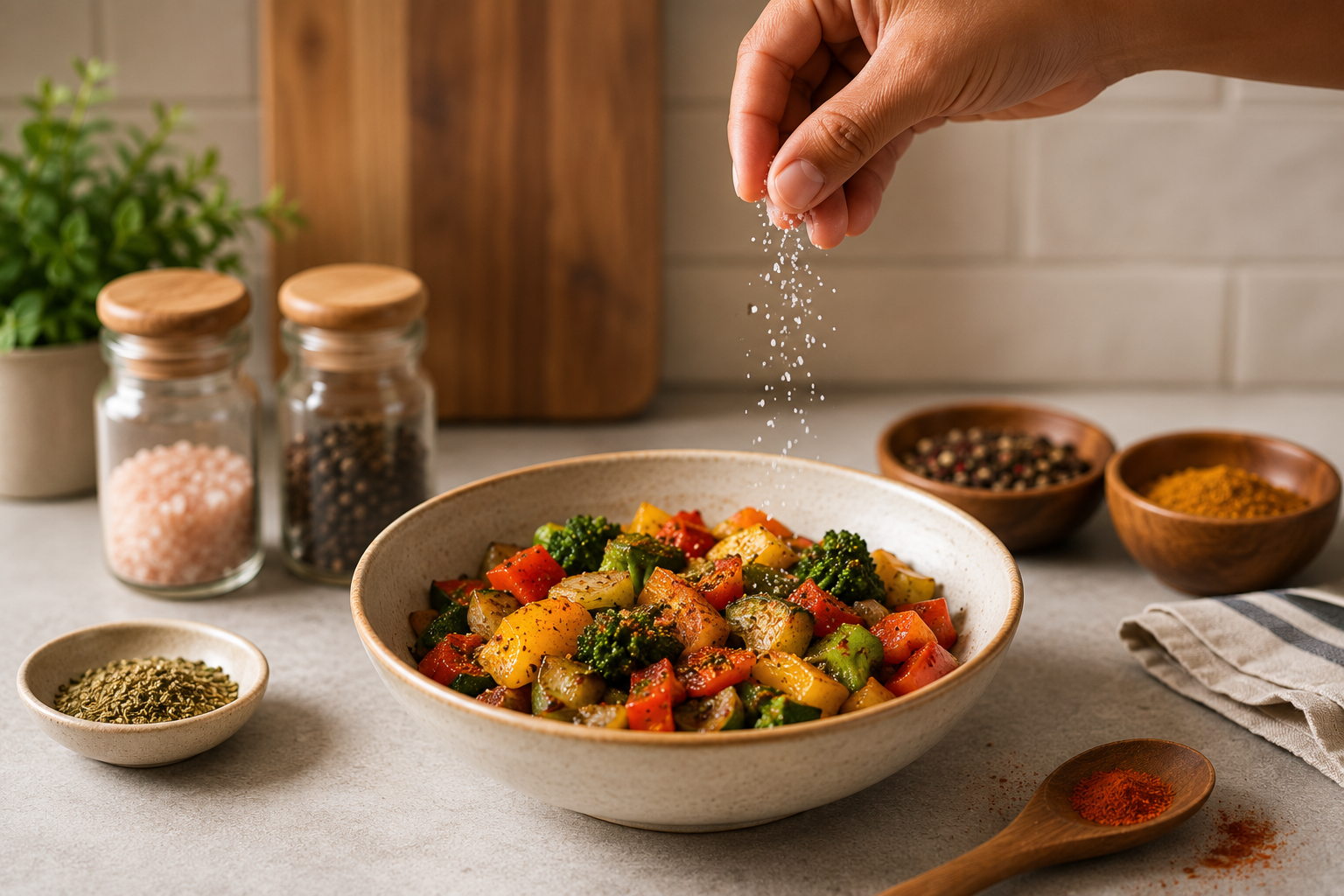
If you’ve ever cooked a meal that looked perfect but didn’t taste quite right, there’s a good chance the issue wasn’t the ingredients—it was the balance of salt and spices.
This is one of the most common challenges beginners face. Some dishes turn out bland and lifeless, while others become overpowering and difficult to enjoy. And often, the difference between the two is a matter of small adjustments.
The truth is, seasoning is not about adding random amounts of salt or spices and hoping for the best. It’s about understanding how flavors interact, when to add them, and how to adjust them during cooking.
Once you learn how to balance salt and spices properly, everything changes. Even simple meals start tasting better. You gain control over flavor, and cooking becomes more intuitive rather than confusing.
This guide will walk you through practical, real-world techniques to help you season your food correctly every time—without overthinking or overcomplicating the process.
Why Salt Is More Important Than Most People Realize
It’s Not Just About Saltiness
Salt doesn’t just make food salty—it enhances natural flavors. When used correctly, it:
- Brings out the sweetness in vegetables
- Deepens savory flavors in meat
- Balances bitterness
Without enough salt, food often tastes flat, no matter how many spices you add.
Under-salting vs. over-salting
Both extremes cause problems:
- Too little salt → dull, bland taste
- Too much salt → overpowering and unpleasant
The goal is not to “taste salt” but to make flavors feel complete.
Understanding Spices: Flavor vs Heat
Not All Spices Are the Same
Spices can add:
- Warmth (like cumin)
- Heat (like chili powder)
- Aroma (like coriander)
- Depth (like turmeric)
Adding spices without understanding their role can create confusion in flavor.
Layering Flavors Instead of Dumping Everything
A common mistake is adding all spices at once without thinking about balance.
Instead:
- Start with a small amount
- Build gradually
- Taste and adjust
When to Add Salt and Spices
Timing changes everything.
Seasoning at the wrong time can ruin balance.
Early Stage
Adding salt early helps it absorb into ingredients and build deeper flavor.
Mid-Cooking
This stage is where spices are often added to develop aroma and taste.
Final Adjustment
Taste your food and adjust salt or spices before finishing it.
The “Taste As You Go” Habit
Why It’s Essential
One of the most significant differences between beginners and confident cooks is tasting during cooking.
This helps you:
- Catch mistakes early
- Adjust seasoning gradually
- Avoid over-seasoning
How to Do It Safely
- Taste only when food is safe to eat
- Use a clean spoon each time
- Make small adjustments
Common Seasoning Mistakes and Fixes
Adding Too Much Salt at Once
This mistake is difficult to fix later.
Solution: Add in small amounts and build gradually.
Ignoring the Balance Between Ingredients
Sometimes the issue isn’t salt; it’s imbalance.
Solution: Adjust other elements like acidity or spices instead of adding more salt.
Overusing Strong Spices
Too much of one spice can dominate the dish.
Solution: Use strong spices carefully and combine them with milder ones.
Not Understanding Heat Control
Burning spices or cooking them on high heat can ruin flavor.
How Salt and Spices Work Together
Balance, Not Competition
Salt enhances flavor, while spices create complexity. They should work together, not overpower each other.
Example
If your dish tastes flat:
- Add a pinch of salt first
- Then adjust spices if needed
Often, proper salt alone improves the dish significantly.
Fixing Common Flavor Problems
Food Tastes Bland
- Add a small amount of salt
- Enhance with mild spices
Food Tastes Too Salty
- Add water or a neutral ingredient (like rice or vegetables)
- Balance with mild spices
Food Tastes Too Spicy
- Add dairy (if suitable) or neutral ingredients
- Avoid adding more spices
How Different Foods React to Seasoning
Vegetables
Vegetables need proper salt to bring out their natural sweetness.
Meat
Salt helps improve texture and flavor when added early.
Rice and Grains
Even simple rice benefits from light seasoning.
Building a Simple Seasoning Strategy
Step 1: Start Light
Always begin with small amounts.
Step 2: Cook and Observe
Let flavors develop before adding more.
Step 3: Adjust Gradually
Make small changes instead of big ones.
Step 4: Final Taste Check
Before serving, taste and adjust one last time.
Avoiding Overcooking While Seasoning
Why It Matters
Overcooking can dull flavors, making you add more salt or spices unnecessarily.
Keeping Your Cooking Process Smooth
Organization Helps Flavor
When your kitchen is organized, you can focus better on seasoning and timing.
Developing Your Taste Over Time
Practice is key.
The more you cook, the better you understand flavor balance.
Trust Your Senses
- Taste
- Smell
- Visual cues
These become more reliable with experience.
Simple Daily Habits That Improve Seasoning
Don’t Rush
Rushing leads to poor decisions and uneven seasoning.
Keep Notes Mentally
Remember what worked and what didn’t.
Stay Consistent
Using the same ingredients and methods helps you learn faster.
Conclusion
Balancing salt and spices is one of the most important skills in cooking, yet it’s often overlooked or misunderstood. Many beginners either under-season their food or go too far, not realizing that good flavor comes from small, controlled adjustments.
The key is to think of seasoning as a process, not a one-time step. You build flavor gradually—adding, tasting, adjusting, and refining as you cook.
Once you develop this habit, everything improves. Simple dishes become enjoyable, complex meals feel manageable, and cooking becomes less about guessing and more about understanding.
In the end, great flavor doesn’t come from adding more—it comes from adding the right amount at the right time.
FAQs
1. How do I know if I’ve added enough salt?
If the food tastes complete and not bland, you’ve likely added enough. You shouldn’t taste salt directly.
2. Can I correct a dish that’s too salty?
Yes, by adding neutral ingredients or slightly diluting the dish with water or broth.
3. Should I add spices at the beginning or end?
Both. Some spices develop flavor when cooked early, while others are better added later for freshness.
4. Why does my food taste bland even after adding spices?
It may need more salt. Salt enhances the overall flavor and helps spices stand out.
5. How long does it take to learn proper seasoning?
With regular practice, most people improve noticeably within a few weeks.