
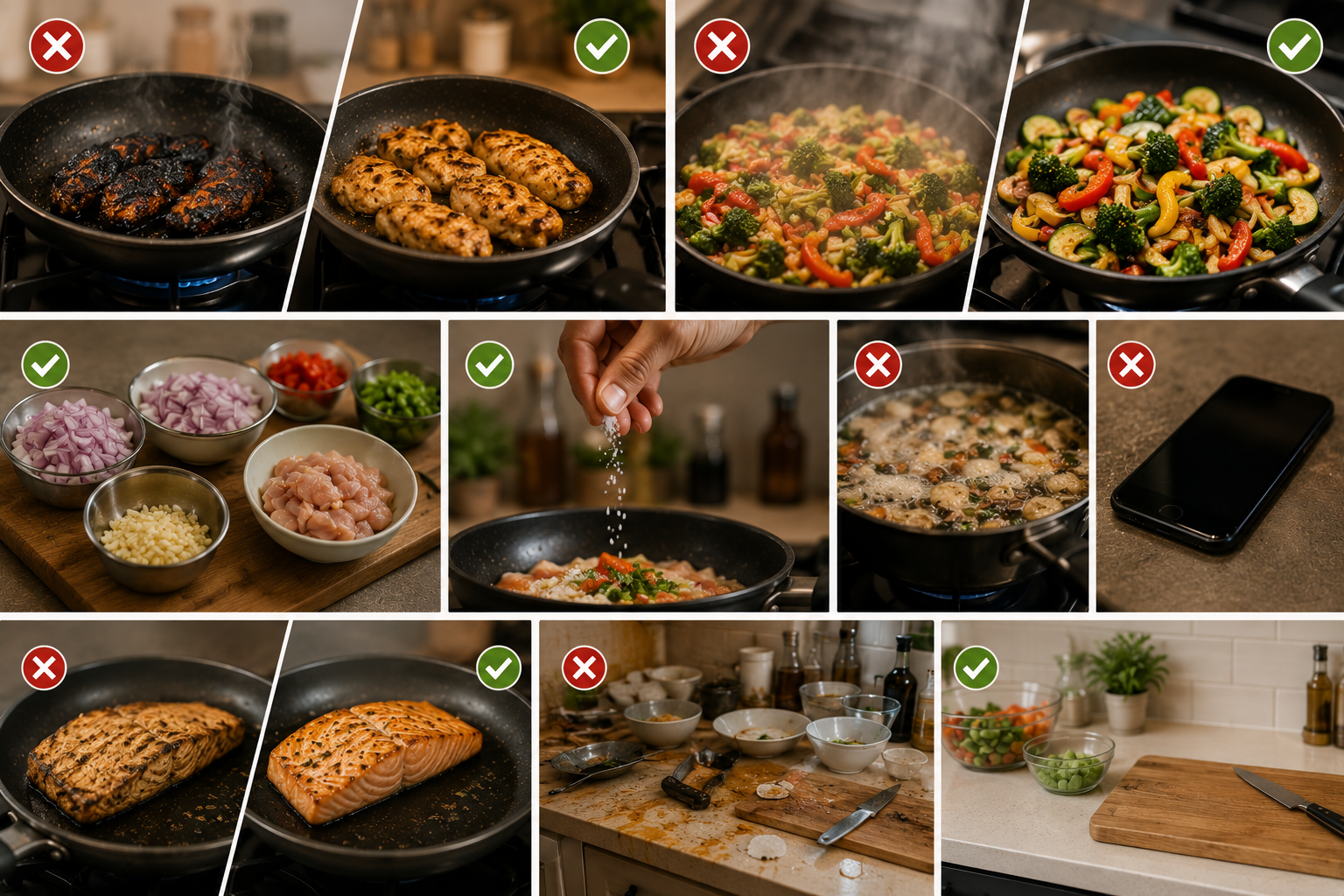
Everyone makes mistakes in the kitchen—it’s part of learning. But for beginners, certain mistakes show up again and again. The frustrating part is that these aren’t complicated problems. They’re small habits that quietly affect how your food turns out.
You might follow a recipe carefully and still end up with something that doesn’t taste right. Maybe your food burns too quickly, sticks to the pan, turns out bland, or feels overcooked even when you followed the recipe exactly.
The issue usually isn’t effort—it’s understanding.
Cooking becomes much easier when you recognize these common mistakes early and know how to avoid them. Instead of guessing what went wrong, you start making small, intentional improvements.
In this guide, we’ll go through the most common cooking mistakes beginners make and show you simple, practical ways to fix them. These are real-world solutions you can apply immediately, even if you’re just starting.
Rushing the Cooking Process
Why Speed Creates Problems
One of the biggest mistakes beginners make is trying to cook too quickly. This often comes from being hungry or wanting to finish quickly.
But rushing leads to the following:
- Uneven cooking
- Burnt food
- Poor flavor development
Cooking is not about speed—it’s about timing and control.
A Better Approach
Give your food the time it needs. Even an extra few minutes can make a big difference in taste and texture.
Using Incorrect Heat Levels
The “More Heat = Better” Myth
Many beginners turn the heat too high, thinking it will cook food faster and better. In reality, it often leads to:
- Burnt surfaces
- Raw interiors
- Dry or tough food
How to Fix It
Use medium heat for most dishes and adjust as needed. Learning heat control is one of the most important skills in cooking.
Skipping Preparation Before Cooking
Starting Without a Plan
Jumping into cooking without preparing ingredients leads to:
- Stress
- Missed steps
- Overcooked food
What to Do Instead
Before you start:
- Chop all ingredients
- Measure spices
- Keep everything within reach
This simple habit makes cooking smoother and more controlled.
Not Understanding Basic Cooking Techniques
Why Techniques Matter
Cooking isn’t just about ingredients—it’s about how you use them. Using the wrong method can ruin even the best ingredients.
For example:
- Frying instead of simmering can dry out food
- Boiling instead of sautéing can remove flavor
Overcrowding the Pan
What Happens When You Add Too Much
Putting too much food in one pan:
- Lowers the temperature
- Creates steam instead of proper cooking
- Leads to uneven results
The Solution
Cook in smaller batches. It may take slightly longer, but the results are much better.
Not Paying Attention While Cooking
The Danger of Distraction
Cooking requires awareness. Even a short distraction can lead to the following:
- Burnt food
- Overcooking
- Missed timing
Stay present.
You don’t need to watch every second, but you should stay aware of what’s happening.
Ignoring Seasoning Balance
Why Flavor Feels “Off”
Many beginners either under-season or over-season their food.
- Too little seasoning → bland taste
- Too much seasoning → overpowering
Improve Your Balance
Add seasoning gradually and taste as you go.
Not Knowing When Food Is Done
Relying Only on Time
Following cooking time exactly doesn’t always work because conditions vary.
Learn to Observe
Pay attention to:
- Color
- Texture
- Smell
Using the Wrong Cookware
Why It Matters
Different pans behave differently:
- Thin pans heat unevenly
- Thick pans provide better control
Choose Wisely
If you’re a beginner, start with simple, reliable cookware like a good non-stick pan.
Constantly Stirring or Not Stirring Enough
Finding the Balance
- Too much stirring → breaks food, prevents browning
- Too little stirring → causes burning
What Works Best
Let food sit briefly, then move it when needed.
Cooking Without Understanding Ingredients
Why It Leads to Mistakes
Not knowing how ingredients behave can cause problems like the following:
- Overcooking vegetables
- Undercooking meat
- Poor flavor combinations
Build Basic Knowledge
Learn how common ingredients react to heat and seasoning.
Not Cleaning While Cooking
How Mess Affects Cooking
A messy kitchen leads to the following:
- Confusion
- Slower work
- Increased stress
Simple Habit
Clean as you go. It keeps your space organized and helps you focus.
Trying Complicated Recipes Too Soon
Why It Backfires
Jumping into complex dishes can overwhelm beginners.
Start Simple
Focus on basic meals first. Build confidence before trying advanced recipes.
Ignoring Workflow and Organization
Why It Matters
A smooth workflow helps you manage time, heat, and ingredients better.
Not Learning From Mistakes
Repeating the Same Errors
If you don’t reflect on what went wrong, you’ll keep making the same mistakes.
Build Awareness
After cooking, ask yourself:
- What worked well?
- What didn’t?
- What can I improve next time?
Overcooking Food “Just to Be Safe”
Why It’s a Problem
Many beginners cook food longer than needed to avoid undercooking. This leads to:
- Dry texture
- Loss of flavor
- Tough meat
Find the Right Balance
Cooking properly is different from overcooking.
Building Better Cooking Habits
Focus on Consistency
Doing simple things correctly every time leads to improvement.
Practice Regularly
You don’t need complicated meals—just consistent practice.
Stay patient.
Cooking is a skill that develops over time.
Conclusion
Cooking mistakes are not failures—they’re part of the learning process. Every burnt dish, every overcooked meal, and every seasoning mistake teaches you something valuable.
The key is to recognize patterns. Most beginner mistakes come from the same few habits: rushing, using incorrect heat, skipping preparation, or not paying attention. Once you fix these, everything becomes easier.
You don’t need to be perfect. You just need to be aware.
Start with small improvements. Focus on heat control, timing, and basic techniques. Stay consistent, learn from each attempt, and give yourself time to grow.
Before long, the mistakes that once frustrated you will become rare—and cooking will start to feel natural, enjoyable, and even relaxing.
FAQs
1. What is the most common cooking mistake beginners make?
Using incorrect heat levels is one of the most significant mistakes. It affects texture, flavor, and overall results.
2. How can I avoid burning my food?
Use medium heat, stay attentive, and avoid leaving food unattended for too long.
3. Why does my food taste bland?
It usually needs better seasoning. Add salt and spices gradually and taste as you cook.
4. Is it okay to make mistakes while learning to cook?
Yes, mistakes are a normal part of learning. Each mistake helps you improve.
5. How long does it take to become confident in cooking?
With regular practice, most people see noticeable improvement within a few weeks.