
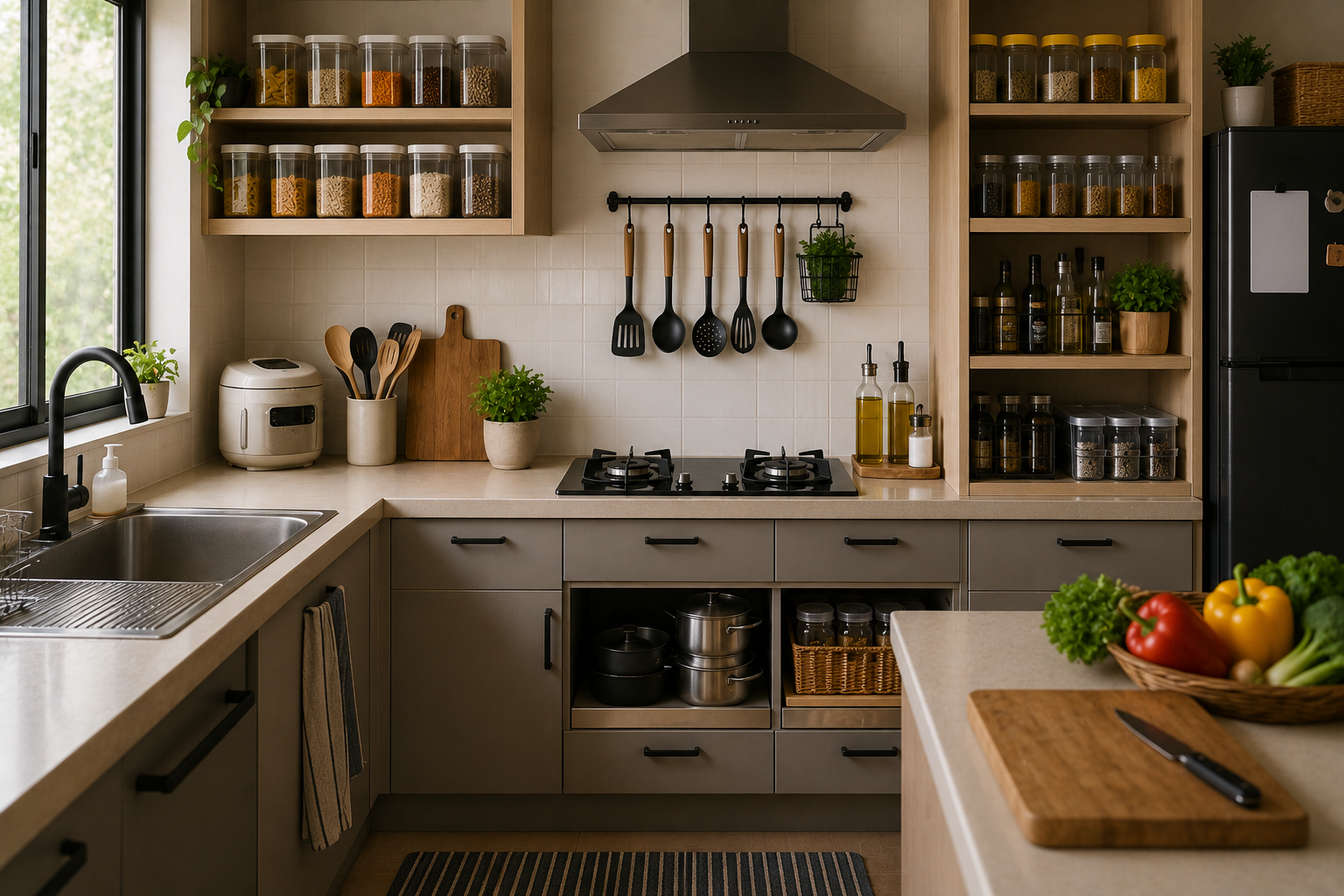
A kitchen is more than just a place for cooking—it’s the heart of daily routines, family meals, and quick snacks. But when the setup is messy, poorly organised, or confusing to use, even simple cooking becomes frustrating. On the other hand, a well-planned kitchen setup saves time, reduces stress, and makes everyday tasks feel smooth and effortless.
The good news is that you don’t need a luxury kitchen or expensive renovation to create a setup that actually works. With the right structure, smart organisation, and simple habits, you can transform any kitchen into a highly functional space. In this guide, we’ll walk through practical, beginner-friendly strategies to help you build a kitchen setup that is efficient, organised, and easy to maintain.
1. Understand How You Actually Use Your Kitchen
Before making any changes, take a step back and observe your daily kitchen habits. A functional kitchen is built around real-life usage, not theory.
Ask yourself:
- Where do I spend most of my time in the kitchen?
- What tools do I use daily?
- What tasks feel slow or frustrating?
Common usage patterns:
- Morning tea/coffee preparation
- Cooking quick meals
- Washing dishes and cleaning
- Storing groceries
Why this matters:
When your kitchen setup matches your lifestyle, everything becomes more natural and efficient. You stop fighting your space and start working with it.
2. Create a Simple and Logical Kitchen Layout
A kitchen that works well is built on flow and structure. The goal is to reduce unnecessary movement.
Ideal kitchen workflow zones:
- Storage zone: fridge, pantry, dry goods
- Preparation zone: counter space, knives, cutting boards
- Cooking zone: stove, pans, spices
- Cleaning zone: sink, dish soap, towels
Benefits of a good layout:
- Faster meal preparation
- Less back-and-forth movement
- More organized workflow
Even if your kitchen is small, creating mini zones can improve efficiency significantly.
3. Declutter Before Designing Anything
A functional kitchen setup starts with removing what you don’t need. You cannot organise clutter effectively.
What to remove:
- Broken utensils or appliances
- Expired food items
- Duplicate tools you never use
- Items stored “just in case” for years
Simple rule:
If you haven’t used it in the last 6–12 months, it probably doesn’t belong in your daily kitchen setup.
Benefits:
- More usable space
- Easier organization
- Faster access to essentials
Decluttering is the foundation of a kitchen that actually works.
4. Design Your Kitchen Around Daily Essentials
Your kitchen should prioritise the items you use most often. Everything else should take a back seat.
Daily essentials include:
- Cooking utensils (spoon, spatula, ladle)
- Basic spices and oils
- Plates, cups, and bowls
- Frequently used appliances
Smart placement tips:
- Keep essentials within arm’s reach of cooking area
- Store rarely used items higher or deeper
- Avoid mixing daily and occasional-use items
When your essentials are easy to access, your kitchen instantly becomes more functional.
5. Use Smart Storage Instead of Overcomplicated Systems
A kitchen setup that works well is simple to maintain. Overcomplicated storage systems often fail over time.
Simple storage solutions:
- Clear containers for pantry items
- Stackable boxes for saving space
- Drawer dividers for utensils
- Basic baskets for grouping items
Why simplicity matters:
- Easier to clean
- Easier to maintain
- Easier for everyone in the household to follow
A simple system is always more effective than a complicated one.
6. Optimize Counter Space for Real Cooking Needs
Your countertops play a major role in how functional your kitchen feels. A cluttered counter slows everything down.
What should stay on counters:
- Daily-use appliances (kettle, toaster)
- Small prep tools if frequently used
- One designated prep area
What should be stored away:
- Rarely used gadgets
- Extra containers and clutter items
- Non-essential decor
Pro tip:
Follow a “clear counter rule”—keep surfaces as open as possible for cooking and preparation.
7. Organize Cabinets Based on Usage Frequency
Cabinets should not be random storage spaces. A structured approach makes your kitchen easier to navigate.
Cabinet organisation strategy:
- Top shelves: rarely used items
- Middle shelves: frequently used items
- Lower shelves: heavy cookware and appliances
Example setup:
- Baking tools in one cabinet
- Cooking pots near stove
- Plates and bowls near dishwasher or sink
This system reduces confusion and speeds up your daily routine.
8. Improve Accessibility With Simple Adjustments
A kitchen that “works” is one where everything is easy to reach and use.
Easy improvements:
- Add pull-out trays in deep cabinets
- Use lazy Susans for corner spaces
- Install hooks for hanging utensils
- Use transparent storage containers
Benefits:
- No more digging through clutter
- Faster cooking process
- Better visibility of stored items
Small accessibility improvements can dramatically improve kitchen efficiency.
9. Build a System for Easy Cleaning and Maintenance
A functional kitchen setup is not just about cooking—it’s also about easy cleaning.
Cleaning-friendly setup tips:
- Keep cleaning supplies in one accessible zone
- Use washable mats near sink and stove
- Store trash bins within easy reach
- Avoid hard-to-clean, cluttered corners
Maintenance habits:
- Wipe surfaces after cooking
- Return items to their place immediately
- Do a quick daily reset
A kitchen that is easy to clean stays functional longer.
10. Create Simple Habits That Keep Everything Working
Even the best kitchen setup will fail without good habits. Small daily actions keep everything in place.
Essential habits:
- Put tools back after use
- Clean while cooking when possible
- Avoid leaving items on counters overnight
- Do a 10-minute daily tidy-up
Weekly habits:
- Check pantry for expired items
- Reorganize misplaced tools
- Wipe and reset cabinets if needed
Consistency is the real secret to a kitchen that actually works.
Conclusion
Creating a kitchen setup that actually works is not about expensive upgrades or complex systems—it’s about smart planning, simplicity, and consistency. When you design your kitchen around your daily habits, remove unnecessary clutter, and organise items based on real usage, everything becomes easier and more efficient.
From optimising storage and improving accessibility to building simple maintenance habits, each small step adds up to a more functional and stress-free kitchen. The goal is not perfection but practicality.
A well-designed kitchen supports your lifestyle, saves time, and makes everyday cooking feel smooth and enjoyable.
FAQs
1. What is the first step to creating a functional kitchen setup?
Start by decluttering and removing unused items. This creates space for a more efficient layout.
2. How do I make my small kitchen work better?
Use vertical storage, clear counters, and simple organisation systems to maximise space and improve flow.
3. Do I need expensive tools to improve my kitchen setup?
No, simple tools like containers, baskets, and drawer dividers are enough to create an effective setup.
4. How can I maintain a kitchen that works well long-term?
Build daily habits like putting items back, cleaning while cooking, and doing quick weekly resets.
5. What makes a kitchen setup truly functional?
A functional kitchen is one that is easy to use, easy to clean, and designed around your daily routine.