
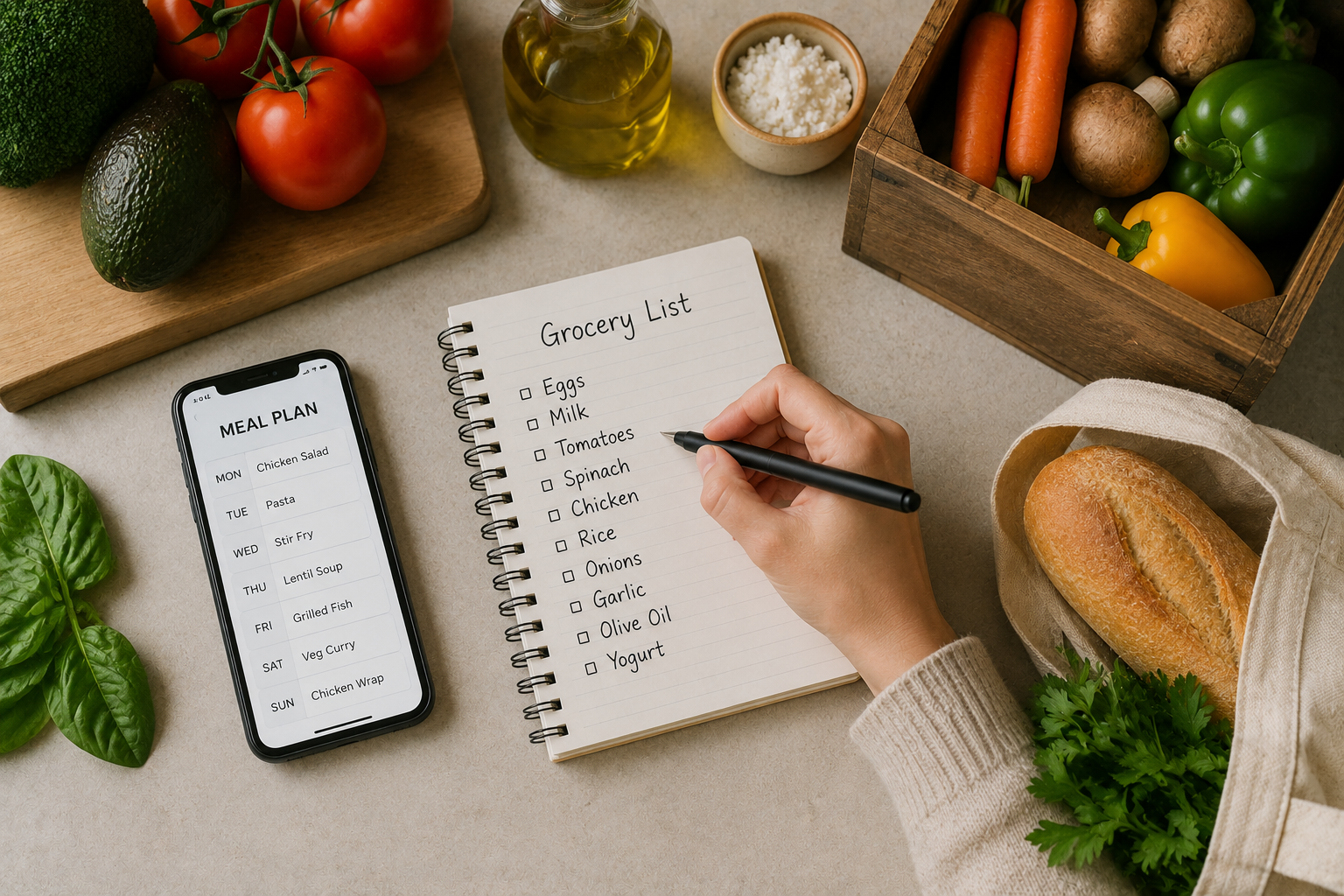
For a long time, I thought my cooking struggles were about skills. I assumed I wasn’t organized enough, or maybe I just didn’t plan well. Every week, I would go grocery shopping with a long list written quickly—rice, vegetables, spices, snacks, and a few “random useful things.”
But when I came home, something never matched.
I would stand in the kitchen and think, “I have ingredients, but I don’t have meals.” That sentence repeated itself more times than I can count. I had food, but I didn’t have direction.
One evening, after wasting both time and ingredients, I realized the truth:
My grocery list was disconnected from my meals.
That was the turning point. Once I learned how to create a grocery list that actually matches meals, cooking became easier, cheaper, and far less stressful.
Why Most Grocery Lists Don’t Work in Real Life
Most people create grocery lists based on memory or habit, not actual planning. That’s where the system breaks.
Here’s what usually goes wrong:
- You buy ingredients without knowing how they fit into meals
- You forget key items needed for full dishes
- You overbuy “just in case” items
- You waste food because nothing is connected
- You still end up ordering outside food
The biggest issue is simple:
People shop for ingredients instead of shopping for meals.
Once I understood the situation, everything changed.
Step 1: Start With Meals Before You Think About Shopping
The first rule of effective grocery planning is simple:
Always plan meals before writing your grocery list.
Even a basic plan works.
For example, decide:
- 2 rice-based meals
- 2 quick meals (like eggs or pasta)
- 1 vegetable-based dish
- 1 backup meal
That’s enough structure.
You don’t need complicated recipes. You just need direction.
When I started doing this, I noticed my grocery lists became shorter—but more useful.
Step 2: Break Every Meal Into Simple Building Blocks
Every meal can be broken into four basic categories:
1. Base
- Rice
- Pasta
- Bread
- Potatoes
2. Protein
- Eggs
- Lentils
- Chicken
- Beans
3. Vegetables
- Onions
- Tomatoes
- Seasonal vegetables
- Frozen mix
4. Flavor
- Salt
- Spices
- Sauces
- Cooking oil
This structure is powerful because it turns complex cooking into simple planning.
Instead of thinking:
“What should I buy for dinner?”
You think:
“What do I need for rice + eggs + vegetables?”
Step 3: Turn Meals Into Ingredient Checklists
Let’s make this practical.
Example Meal 1: Egg Fried Rice
- Rice
- Eggs
- Onions
- Oil
- Soy sauce or spices
Example Meal 2: Pasta with Vegetables
- Pasta
- Tomatoes
- Onions
- Spices
- Optional cheese
Example Meal 3: Lentil Bowl
- Lentils
- Rice
- Spices
- Vegetables
Now your grocery list is no longer random—it is built from real meals.
This is the moment grocery shopping becomes predictable and stress-free.
Step 4: Check What You Already Have Before Listing Anything
This step sounds simple, but it saves a lot of money.
Before writing your list:
- Check pantry (rice, spices, oil)
- Check fridge (leftovers, vegetables, eggs)
- Check freezer (frozen items)
When I started doing this, I realized I was often buying duplicates of things I already had.
That habit alone reduced waste significantly.
Step 5: Use the “Missing Ingredient Rule”
After planning meals and checking your kitchen, ask:
“What is missing to complete these meals?”
Only write missing items.
For example:
If you already have:
- Rice
- Eggs
- Onions
You do NOT need to add them again.
You only add:
- Missing vegetables
- Missing sauces
- Missing proteins
This rule keeps your grocery list clean and focused.
Step 6: Organize Your Grocery List by Purpose, Not Random Order
Instead of a messy list, organize it like this:
Breakfast Items
- Eggs
- Bread
Main Meals
- Rice
- Pasta
- Lentils
Vegetables
- Onions
- Tomatoes
- Mixed vegetables
Flavor Essentials
- Salt
- Spices
- Oil
- Sauces
Backup Foods
- Instant noodles
- Frozen items
This structure makes shopping faster and reduces confusion in the store.
Step 7: Avoid “Just in Case” Shopping Completely
One of the biggest mistakes I used to make was buying items “just in case.”
Examples:
- Extra snacks
- Extra sauces
- Random ingredients I might never use
- Duplicate vegetables
The result?
Fridge clutter and wasted food.
Now I follow one rule:
If it is not part of a planned meal, it does not go in the cart.
This single rule improved my grocery discipline more than anything else.
Step 8: Create a Repeatable Weekly Grocery Template
You don’t need to reinvent your grocery list every week.
Instead, create a flexible template:
Core Staples
- Rice or pasta
- Eggs or protein
- Bread
Vegetables
- 2–3 basic vegetables
- Optional frozen mix
Flavor Base
- Spices
- Oil
- Sauces
Backup Meals
- Instant noodles or ready options
This template makes grocery shopping automatic.
You simply adjust quantities—not structure.
Step 9: A Real-Life Grocery List Example Based on Meals
Let’s say your weekly meals are the following:
- Egg rice
- Pasta with vegetables
- Lentil stew
- Sandwiches
- Stir-fried vegetables
Your grocery list becomes:
Grains
- Rice
- Pasta
- Bread
Protein
- Eggs
- Lentils
Vegetables
- Onions
- Tomatoes
- Mixed vegetables
Flavor
- Cooking oil
- Salt
- Chili powder
- Basic spices
Notice how everything connects directly to meals.
Nothing is random.
Step 10: How This System Saves Time, Money, and Stress
Once your grocery list matches your meals:
You save time
Shopping becomes faster because you know exactly what you need.
You save money
No unnecessary items or duplicate purchases.
You reduce waste
Everything you buy has a purpose.
You reduce stress
No more “what should I cook?” confusion midweek.
For me, the biggest change was mental clarity. Cooking stopped feeling like chaos.
Step 11: Common Mistakes to Avoid
Even with a good system, beginners make a few mistakes:
1. Planning too many meals
Keep it simple—3 to 5 days is enough.
2. Overcomplicating recipes
Simple meals work better for this system.
3. Ignoring leftovers
Leftovers should always be part of your plan.
4. Not checking existing food
This leads to unnecessary duplication.
Avoiding these mistakes keeps everything smooth.
Step 12: Simple Weekly Workflow You Can Follow
Here is a practical routine:
Step 1: Plan meals (10–15 minutes)
Choose 4–6 simple meals.
Step 2: Check kitchen (5 minutes)
See what you already have.
Step 3: Create grocery list (10 minutes)
List only missing ingredients.
Step 4: Organize by category
Group items for faster shopping.
This entire system takes less than 30 minutes once you get used to it.
Conclusion
Creating a grocery list that matches your meals is one of the simplest ways to make everyday cooking easier. When you start with meals, break them into ingredients, check what you already have, and only buy what is missing; everything becomes more organized and predictable.
You stop wasting food, you stop overspending, and most importantly, you stop feeling confused in the kitchen. A good grocery list is not about buying more. It is about buying smarter, with intention and clarity. When your meals lead your shopping, everything else falls into place.
FAQs
1. Should I make my grocery list before or after meal planning?
Always after meal planning. This ensures every item has a purpose.
2. How many meals should I plan for grocery shopping?
A simple plan of 3–5 days is ideal for beginners.
3. What is the biggest mistake in grocery list creation?
Buying ingredients without linking them to specific meals.
4. How can I reduce food waste with grocery planning?
Only buy what is needed for planned meals and use a “missing ingredient” approach.
5. Can I reuse the same grocery list every week?
Yes, a flexible template based on your regular meals works very well and saves time.