Last Updated: 7 Aug, 2026.
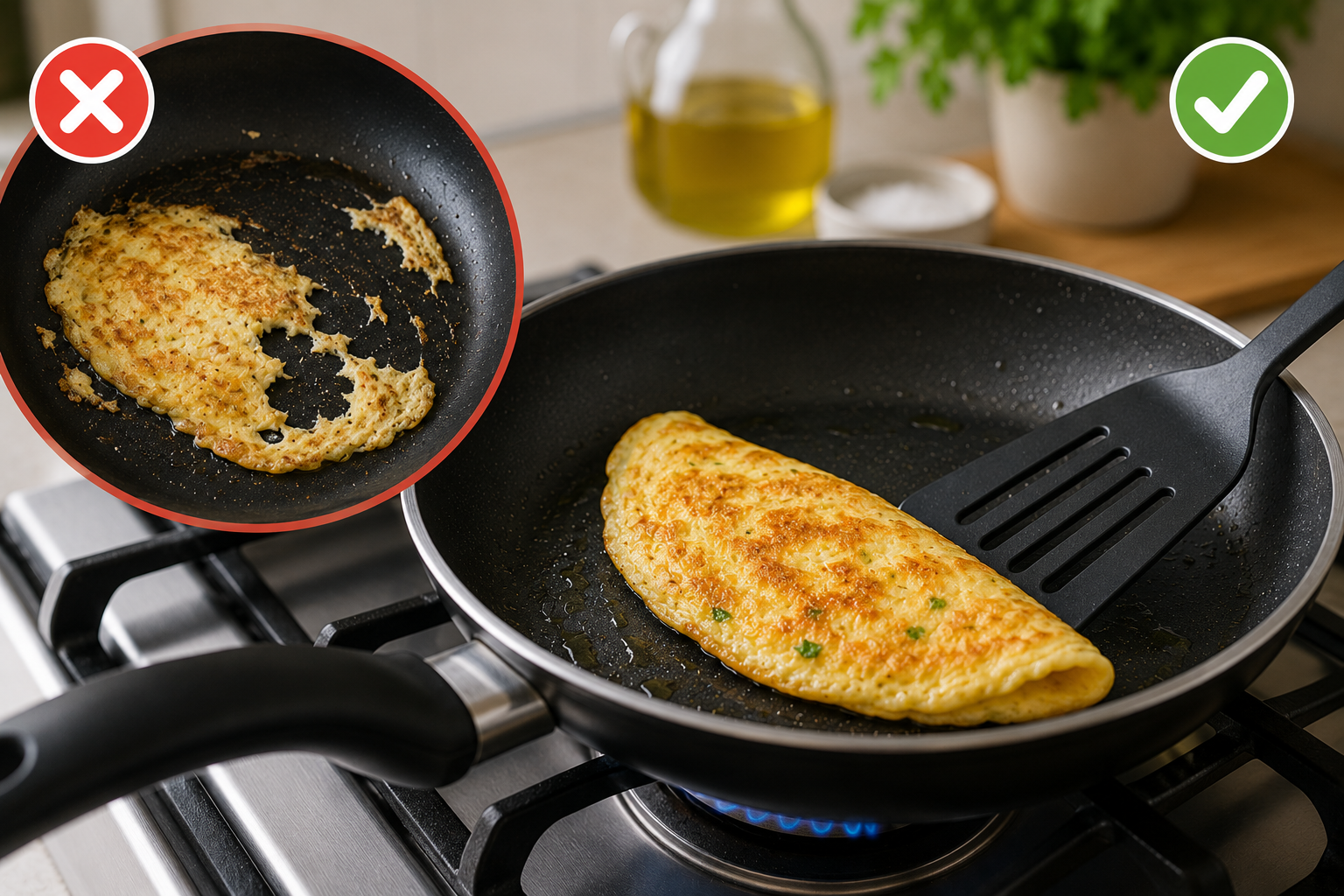
Few cooking problems are more frustrating than watching a piece of food that looked perfect in the pan suddenly refuse to move. You slide a spatula underneath it and meet resistance. You try again, and part of the food tears away while the rest remains attached to the cooking surface. It is tempting to blame the pan immediately, but sticking is usually the result of several conditions coming together rather than one simple mistake.
The food itself, its surface moisture, the amount of cooking fat, the temperature of the pan, the amount of food being cooked at once, and the condition of the cookware can all influence what happens. Sometimes food is supposed to cling briefly and release later as its surface develops a crust. Other times, sticking is a warning that something about the cooking setup needs to change. Learning to distinguish those situations makes the problem much easier to solve.
Sticking Is Not Always a Sign That Something Went Wrong
One of the most useful things to understand about sticking is that temporary attachment can be part of normal cooking. Food placed against a hot cooking surface may initially adhere to it while its exterior is changing. As the surface cooks and develops structure, it can eventually release more easily.
This is particularly noticeable when searing meat or cooking foods that benefit from browning. Immediately trying to move the food can sometimes make the situation worse because the exterior has not yet developed enough structure to separate cleanly from the pan.
That does not mean you should simply leave everything stuck in place. It means resistance itself is information. If a food is only lightly attached and continues to brown normally, giving it more time may be appropriate. If it is burning, tearing apart, or producing excessive residue, another factor may be responsible.
Natural release is different from burning
A piece of food that is temporarily attached to the pan is not necessarily burning. Browning and sticking can occur together, especially when a food develops a well-browned exterior.
Burning usually produces a much different result: the surface becomes excessively dark, bitter-smelling, or charred while the food may still be undercooked inside. The distinction matters because the solution is different. Food that is naturally developing a crust may need patience, while food that is scorching needs a change in heat or cooking time.
Moisture Is One of the Biggest Factors
Wet food behaves differently from dry-surfaced food when it hits a cooking pan. Water at the surface absorbs heat and turns into steam, and a food item carrying a substantial amount of surface moisture can spend the early part of cooking releasing that moisture rather than developing a dry, browned exterior.
This does not automatically cause sticking, but it can change the conditions at the cooking surface. Excess moisture can interfere with browning and create a longer period during which the ingredient is in close contact with the pan while its surface is changing.
Before cooking foods that you want to brown, patting excess surface moisture away can make a noticeable difference. This is especially useful for ingredients such as meat, tofu, mushrooms, and vegetables that have been rinsed or stored with moisture on their surface.
Wet ingredients can also cool the pan
Moisture is not the only issue. A cold or wet ingredient also absorbs heat from the cookware when it is added. If several wet ingredients enter the pan at once, the cooking surface can lose temperature quickly.
That can change the texture and appearance of the food. Instead of quickly developing a browned exterior, the ingredients may release more moisture and spend more time cooking in a humid environment.
Drying the ingredient where appropriate and avoiding an unnecessarily crowded pan can therefore address two related problems at the same time.
Too Little Cooking Fat Can Increase Contact
Cooking fat serves several purposes beyond adding flavor. Depending on the cookware and food, it can improve contact between the food and the cooking surface, help distribute heat around the ingredient, and reduce direct dry contact with the pan.
Using too little fat can make cooking less forgiving, particularly with stainless steel or other surfaces where food can adhere more readily than it would in a well-maintained nonstick pan.
That does not mean more oil is always better. Excess fat can interfere with certain cooking methods, produce unwanted splattering, or make the finished food unnecessarily greasy. The useful approach is to use enough fat to suit the food and cookware rather than treating oil as a guaranteed cure for sticking.
Add fat with the cooking method in mind
A thin coating may be enough for vegetables or foods with their own natural fat. A lean piece of protein may need a little more assistance. Foods being shallow-fried require a different amount again.
The important question is not simply, “Did I use oil?” It is whether the cooking surface has the appropriate amount of fat for the ingredient, pan, and cooking technique.
Temperature Can Be Too Low or Too High
Temperature problems are often blamed on the pan when the real issue is that the cooking environment does not match the food.
If the pan is too cool, food may take longer to develop a cooked exterior and can release moisture into the pan without browning effectively. If the pan is excessively hot, the exterior can brown or burn rapidly while the interior remains behind, and cooking fat may begin smoking before the food is ready.
The ideal temperature is therefore a range rather than a single magic number. It depends on what you are cooking, how large the pieces are, how much moisture they contain, and what result you want.
Watch what happens after the food enters
A useful habit is to observe the first moments after adding food rather than walking away immediately.
If the food produces a moderate cooking sound and begins changing color gradually, the conditions may be reasonable. If the pan becomes almost silent and the food sits in liquid, the surface may have lost too much heat. If the fat immediately smokes heavily or the food darkens unusually fast, the heat may be excessive.
These observations are often more practical than relying solely on a burner number because “medium” on one stove and pan combination may behave differently from “medium” on another.
Overcrowding Creates Its Own Problems
Even a good pan can struggle when too much food is packed into it. Ingredients need enough room for their surfaces to contact the cooking surface effectively, while the moisture they release needs somewhere to escape.
When a pan is crowded, food can overlap or touch neighboring pieces instead of maintaining useful contact with the pan. Steam also has a harder time escaping. The result can be pale, soft food rather than the browned exterior many recipes are trying to achieve.
This is especially common when cooking mushrooms, diced vegetables, chicken pieces, or other ingredients in large batches.
| What you notice | Possible reason | Useful adjustment |
|---|---|---|
| Food releases lots of liquid | Too much moisture or too many ingredients | Cook in smaller batches |
| Food is pale and soft | Surface is not getting enough direct heat | Give pieces more space |
| Browning is uneven | Pieces are touching or pan has hot spots | Spread food out and turn as needed |
| Food burns before cooking through | Heat is too high | Reduce heat and allow more time |
| Several pieces tear when moved | Surface has not developed enough structure | Allow more cooking time before turning |
Crowding is not always a mistake. Some dishes are intentionally cooked together with moisture and steam. The problem occurs when you expect dry-surface browning from a setup that naturally encourages steaming.
The Condition of the Cookware Matters
A pan’s surface can have a major effect on how easily food releases. Nonstick cookware depends on an intact coating, while cast iron and carbon steel rely partly on the condition of their seasoned surfaces. Stainless steel has different characteristics again and generally requires more attention to temperature and cooking fat.
A damaged nonstick coating should not be treated like a brand-new nonstick surface. Deep scratches, peeling, or significant deterioration are reasons to follow the manufacturer’s guidance about whether the cookware should continue to be used.
For cast iron and carbon steel, seasoning is part of the cookware’s performance. A well-maintained cooking surface can become increasingly comfortable to use, but it still benefits from appropriate heat, enough cooking fat, and suitable ingredients.
Stainless steel is not inherently a “bad” pan for foods that can stick. It simply has different cooking characteristics. Learning how that surface responds to temperature and fat is more useful than expecting it to behave like nonstick cookware.
Food Can Stick Because It Was Moved Too Soon
One of the most common reactions to sticking is to start scraping immediately. Unfortunately, that can turn a manageable situation into a damaged piece of food.
When food is first placed on the cooking surface, its exterior may not yet be ready to release. If you force a spatula underneath it immediately, the cooked surface can tear before it has developed enough structure.
Instead, when the cooking conditions appear appropriate, give the food some time. Look for signs that the exterior is changing before attempting to turn it.
This is particularly useful for proteins and other foods where browning is part of the goal. A little patience can sometimes solve what appears to be a serious sticking problem.
But patience has a limit
Waiting is not a solution if the food is clearly burning. If the surface is becoming excessively dark, the fat is smoking heavily, or the pan is producing scorched residue, continuing to wait is likely to make the result worse.
The skill is learning to distinguish “not ready to release” from “cooking too aggressively.” That distinction comes from watching color, smell, sound, and the behavior of the food rather than relying on resistance alone.
Different Foods Have Different Sticking Risks
There is no single sticking rule because ingredients behave differently.
Foods with high protein content can develop strong contact with a cooking surface during the early stages of cooking. Delicate fish can break apart if moved before its exterior has firmed. Eggs can cling to a pan when the surface conditions are not suited to them. Starchy foods can leave residue that becomes increasingly difficult to remove if allowed to dry onto the cookware.
Vegetables vary as well. A dry, firm vegetable may behave differently from a watery one. Mushrooms, for example, can release a substantial amount of moisture during cooking, while cut potatoes may require careful management of surface moisture and temperature to brown properly.
This is why a technique that works beautifully for one ingredient may not transfer perfectly to another. The cooking method needs to account for the food’s structure and moisture.
A Practical Way to Diagnose Sticking
Instead of asking, “Why does this pan always make food stick?” work through the conditions one at a time.
Start with the food. Was its surface unusually wet? Was it frozen, refrigerated, or recently washed? Were the pieces cut to similar sizes?
Then consider the pan. What material is it? Is the cooking surface in good condition? Was it properly cleaned and, where relevant, seasoned?
Next look at the fat. Was enough used for this food and cooking method? Did it begin smoking immediately?
Then consider the temperature. Was the pan still warming when the food entered, or had it become excessively hot?
Finally consider the quantity. Was the pan crowded? Did the food release enough moisture to change the cooking environment?
This process is much more useful than changing everything at once. If you add more oil, increase the heat, use a different pan, and stir constantly, you may get a different result without knowing which change actually solved the problem.
What to Do When Food Is Already Sticking
If food is already attached, resist the urge to scrape aggressively. First assess what is happening.
If the food is still cooking normally and has not burned, give it a little more time. It may release as its surface develops further. If it is browning too quickly, lower the heat and reassess. If the pan has become dry and the recipe permits additional fat or liquid, a small amount may help, but this depends on the dish.
For foods being finished with a sauce, a small amount of appropriate liquid can sometimes loosen browned residue from the pan. This is different from simply scraping stuck food away because the liquid can help lift cooked-on material while becoming part of the dish.
If the food has burned badly, however, the priority changes. Trying to rescue heavily charred residue by continuing to cook it is unlikely to improve the result.
Cleaning the Pan Without Creating the Next Problem
How you clean cookware can influence future cooking, particularly with seasoned cast iron and carbon steel.
Aggressive cleaning that damages or removes a useful seasoning layer can make subsequent cooking more difficult. At the same time, leaving large amounts of burned residue on cookware is not a good substitute for proper cleaning.
The right cleaning method depends on the material. Follow cookware-specific care instructions, particularly for coated surfaces. Cast iron and carbon steel may require drying and appropriate maintenance after washing, while stainless steel can generally tolerate different cleaning approaches.
A clean pan is not necessarily a perfectly spotless pan after every cooking session, but persistent burnt residue and damaged surfaces should not be ignored.
The Best Anti-Sticking Strategy Is a Combination
There is rarely one magic trick that prevents sticking. Reliable results usually come from several small decisions working together.
Use cookware appropriate for the task. Prepare ingredients so their surfaces are not unnecessarily wet. Use an appropriate amount of cooking fat. Give the pan and food enough space. Choose a sensible heat level. Most importantly, avoid moving food simply because it does not release immediately.
These factors reinforce one another. A good pan can still struggle with wet, overcrowded ingredients. A well-prepared ingredient can still burn in an overheated pan. Plenty of oil cannot compensate for poor temperature control. Once you look at the entire cooking setup rather than searching for one universal trick, sticking becomes much easier to troubleshoot.
A Better Way to Think About Sticking
Food sticking is not simply a battle between an ingredient and a pan. It is the result of what happens at the cooking surface under a particular combination of moisture, heat, fat, contact, time, and cookware condition.
Sometimes the solution is as simple as drying the food. Sometimes the pan is too crowded. Sometimes there is not enough cooking fat, or the temperature is poorly matched to the ingredient. In other situations, the food simply needs more time before it is turned.
The most useful habit is to stop treating sticking as an automatic sign that something has gone wrong. Look at what the food is doing, identify the condition that is causing the problem, and change one variable at a time. With practice, you start recognizing the difference between food that needs patience and food that needs intervention.
That shift makes cooking much less frustrating. Instead of reaching for more oil or scraping harder every time something sticks, you can diagnose the situation and respond appropriately. The result is not just cleaner releases from the pan, but better control over browning, texture, and the overall cooking process.
Frequently Asked Questions
Why does food stick to my pan even when I use oil?
Oil alone cannot prevent sticking if other conditions are working against you. The food may be unusually wet, the pan may be at an unsuitable temperature, the surface may be crowded, or the cookware may not be in good condition. Using an appropriate amount of oil helps, but it works best alongside proper temperature control and ingredient preparation.
Should I move food immediately after putting it in the pan?
Usually, no. Many foods need uninterrupted contact with the cooking surface before their exterior develops enough structure to release more easily. If the food is not burning, giving it time to cook can be better than repeatedly trying to lift it. The appropriate timing depends on the ingredient, cookware, and cooking method.
Why does wet food stick more easily?
Surface moisture absorbs heat and turns into steam as the food cooks. A very wet ingredient can therefore spend more time releasing moisture before its exterior becomes sufficiently dry and browned. Patting excess moisture from the surface when appropriate can help create better conditions for browning and more controlled cooking.
Does using more oil stop food from sticking?
Not necessarily. More oil can sometimes help, but adding excessive oil is not a substitute for proper temperature, cookware, and ingredient preparation. Too much oil can change the texture of the food and create unnecessary splattering. The useful approach is to use an amount appropriate for the cooking method and the particular ingredient.
Why does food stick to stainless steel but not nonstick cookware?
The two surfaces are designed to behave differently. Nonstick cookware has a coating intended to reduce food adhesion, while stainless steel relies more heavily on appropriate temperature, cooking fat, timing, and technique. Stainless steel can produce excellent results, but it generally requires more attention to the conditions at the cooking surface.
How do I know whether food is stuck or simply not ready to release?
If the food is browning normally and the pan is not excessively hot, it may simply need more cooking time. Food can become easier to release as its exterior develops. If the surface is rapidly burning, producing excessive smoke, or leaving heavily scorched residue, waiting longer is unlikely to help, and the heat should be reassessed.