
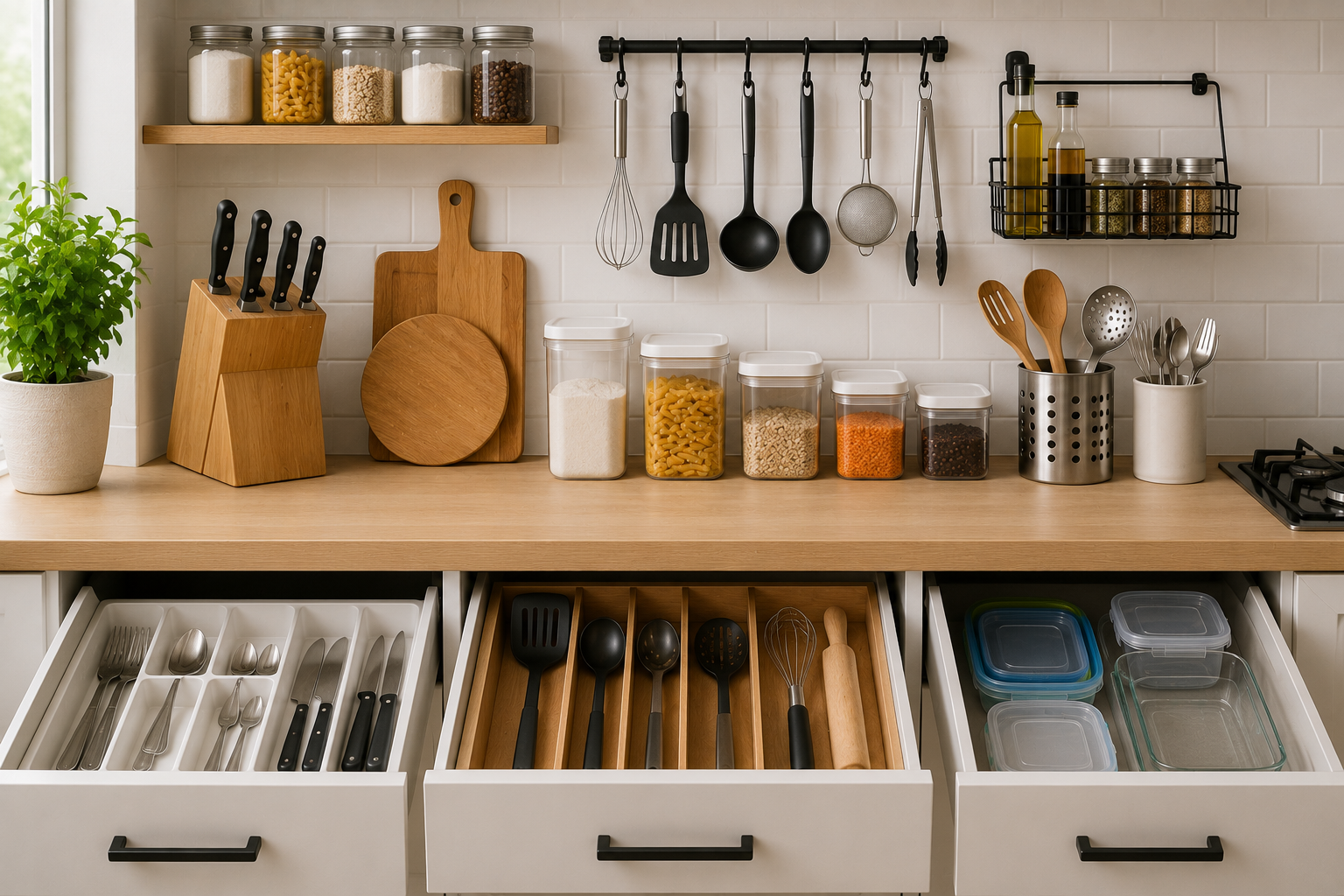
A well-organised kitchen is the backbone of smooth cooking, faster meal preparation, and a stress-free daily routine. When you arrange your kitchen tools properly, you spend less time searching and more time actually cooking. In contrast, a cluttered kitchen can slow everything down and make even simple tasks feel overwhelming.
The excellent news is that organizing kitchen tools for better efficiency doesn’t require a big budget or a complete kitchen makeover. With a few smart systems and simple habits, you can transform your kitchen into a highly functional space that supports your everyday cooking needs.
In this detailed guide, you’ll learn practical, beginner-friendly ways to organise kitchen tools, making your kitchen more efficient, clean, and easy to manage.
1. Start by Emptying and Reviewing All Kitchen Tools
Before organising anything, you need to understand what you actually have. Most kitchens have duplicate tools, broken items, or things that people rarely use.
Step-by-step process:
- Empty all drawers and cabinets
- Place all tools on a clean surface
- Group similar items together
Why this matters:
Seeing everything at once helps you identify clutter and unnecessary items. It also gives you a clear idea of how much storage space you truly need.
This step sets the foundation for a more efficient kitchen setup.
2. Categorize Kitchen Tools by Function
Once everything is out, the next step is sorting tools into functional categories. This makes organization easier and more logical.
Common categories include:
- Cooking tools (spatulas, ladles, tongs)
- Cutting tools (knives, peelers, scissors)
- Baking tools (whisks, measuring cups, baking trays)
- Serving tools (plates, spoons, serving bowls)
- Cleaning tools (scrubbers, cloths, brushes)
Pro tip:
Keep categories simple. The goal is clarity, not complexity.
When tools are grouped logically, finding them becomes effortless.
3. Declutter Before You Organize Anything
Decluttering is one of the most important steps in creating an efficient kitchen. Without it, you’re just organising clutter.
What to remove:
- Broken or damaged tools
- Items you haven’t used in over a year
- Duplicate utensils
- Low-quality or unnecessary gadgets
Simple decision rule:
Ask yourself:
- “Do I use this regularly?”
- “Would I buy it again today?”
If the answer is no, it’s better to remove it or store it elsewhere.
Less clutter = more efficiency.
4. Assign Specific Zones for Kitchen Tools
One of the most effective strategies for kitchen efficiency is creating dedicated zones. This reduces unnecessary movement and speeds up cooking.
Example kitchen zones:
- Cooking zone: stove, spatulas, ladles, spices
- Prep zone: knives, cutting boards, bowls
- Storage zone: dry goods, containers, pantry items
- Cleaning zone: sink, towels, dishwashing tools
Benefits:
- Faster cooking process
- Less searching for tools
- Better workflow and organization
When everything has a defined place, your kitchen naturally becomes more efficient.
5. Organize Tools Based on Frequency of Use
Not all kitchen tools are used equally. Some are daily essentials, while others are used occasionally.
How to organize:
- Daily-use tools: keep in top drawers or front sections
- Weekly use tools: store in middle cabinets
- Rarely used tools: place in upper shelves or back storage
Example:
Keep your cooking spoon, knife, and spatula within arm’s reach, while specialty baking tools can be stored away.
This system saves time during daily cooking.
6. Use Drawer Dividers and Simple Organizers
Drawers can quickly become messy without proper organization. Simple dividers can entirely change how efficient your kitchen feels.
Useful organizing tools:
- Drawer dividers for utensils
- Small trays for grouping items
- Containers for loose tools
- Adjustable organizers for deep drawers
Why it works:
When each item has its own place, you don’t waste time digging through clutter.
This is one of the easiest upgrades for kitchen efficiency.
7. Store Similar Tools Together for Faster Access
Grouping similar items reduces confusion and improves workflow. It also makes it easier to maintain the organization long-term.
Examples of grouping:
- All cutting tools in one drawer
- Baking tools in one container
- Cooking utensils in one holder
- Serving tools in one cabinet
Benefits:
- Faster meal preparation
- Less frustration while cooking
- Easier cleanup and storage
When everything is grouped logically, your kitchen feels more intuitive.
8. Maximize Vertical and Hidden Storage Space
Many kitchens waste valuable storage space. Using vertical and hidden areas can significantly improve efficiency.
Smart storage ideas:
- Use shelf risers inside cabinets
- Install hanging hooks for utensils
- Use cabinet doors for small racks
- Stack containers vertically
Why this helps:
It increases storage capacity without taking up extra space, making your kitchen more organized and functional.
Even small kitchens can feel spacious with smart storage.
9. Label Containers and Storage Areas
Labeling may seem small, but it plays a giant role in maintaining long-term organization.
What to label:
- Food containers
- Spice jars
- Storage bins
- Cabinet sections
Benefits:
- Everyone in the household knows where things belong
- Reduces misplacement of items
- Makes restocking easier
Simple labeling options:
- Handwritten stickers
- Printed labels
- Chalkboard tags
Clear labeling keeps your kitchen effortlessly organized.
10. Build Simple Daily Habits for Maintenance
Even the best-organized kitchen can become messy without maintenance. Simple habits ensure long-term efficiency.
Daily habits to follow:
- Put tools back immediately after use
- Wipe counters after cooking
- Return items to their designated zones
- Avoid leaving tools on the counter overnight
Weekly habits:
- Reorganize any misplaced items
- Clean drawers and shelves quickly
- Check for unused or broken tools
Consistency is the secret to maintaining an efficient kitchen.
Conclusion
Organizing kitchen tools for better efficiency is not about perfection—it’s about creating a system that works for your daily life. By decluttering, categorizing tools, assigning zones, and using simple storage solutions, you can transform your kitchen into a highly functional space.
Small habits like returning items after use and keeping tools grouped logically make a huge difference over time. When you organize your kitchen properly, cooking becomes faster, easier, and far more enjoyable.
With these simple strategies, you can build a kitchen that supports your lifestyle instead of slowing it down.
FAQs
1. What is the easiest way to organize kitchen tools?
Start by decluttering, then group tools by function and store frequently used items within convenient reach.
2. How do I keep kitchen tools organized long-term?
Use simple storage systems, label containers, and build habits like returning items after use.
3. Do I need expensive organizers for kitchen efficiency?
No, basic tools like dividers, baskets, and containers are enough to create an efficient system.
4. Where should I store frequently used kitchen tools?
Keep them in top drawers or front cabinets near your cooking area for quick access.
5. How often should I reorganize kitchen tools?
A quick weekly check and a deeper cleanup every few months are enough to maintain efficiency.