
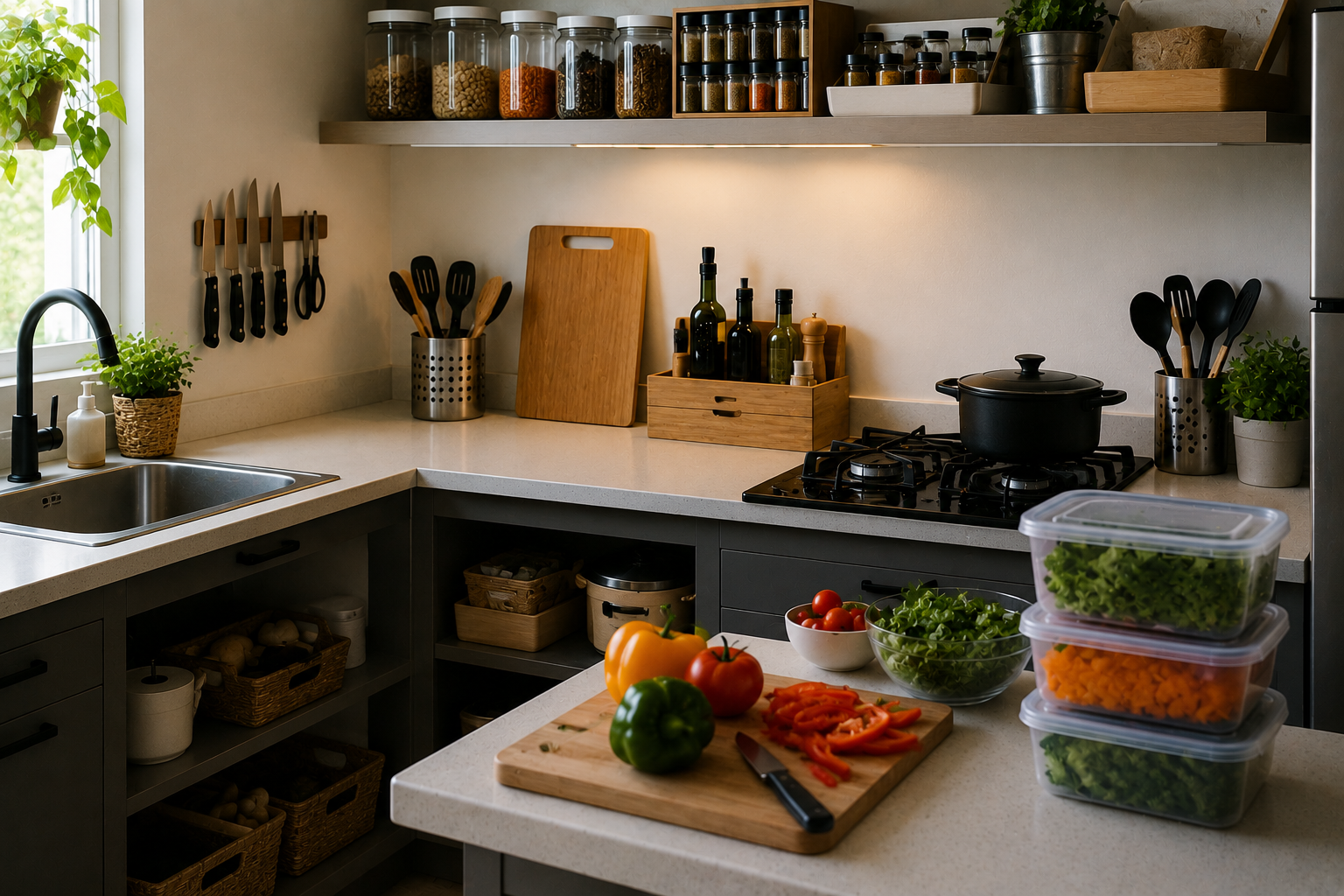
Cooking at home sounds simple in theory, but in reality, busy schedules, cluttered counters, and poor organisation can turn meal prep into a stressful chore. Many people assume cooking takes too much time, when the real problem is often how the kitchen is set up. A well-organised kitchen can cut cooking time in half, reduce stress, and make daily meals feel effortless instead of overwhelming.
If you often feel tired before you even start cooking, struggle to find tools, or waste time searching for ingredients, this guide will help you transform your kitchen into a space designed for speed and efficiency. Whether you cook every day or just want to get dinner on the table faster, these practical strategies will help you cook smarter, not harder.
Designing a Kitchen Layout That Supports Speed
Your kitchen layout plays a huge role in how fast you cook. If you constantly walk back and forth between the fridge, stove, and sink, you are wasting valuable time and energy.
Professional kitchens use the work triangle principle, which connects the three most-used areas:
- Refrigerator
- Sink
- Stove
To improve your home kitchen workflow:
- Keep the area between these three zones clear.
- Avoid placing obstacles like trash bins or chairs in the pathway.
- Store frequently used tools close to where they are used.
For example:
- Keep cutting boards near the sink for washing produce.
- Store cooking oils and spices near the stove.
- Keep mixing bowls near the prep counter.
When movement becomes natural and fluid, cooking feels faster and less tiring.
Decluttering Your Kitchen to Remove Daily Friction
Clutter is one of the biggest hidden time-wasters in cooking. Searching for a pan or digging through drawers interrupts your flow and drains your motivation.
Start by removing items you rarely use:
- Duplicate utensils
- Broken gadgets
- Unused appliances
- Expired pantry items
Ask yourself:
- Do I use this weekly?
- Does this make cooking easier?
- Is this worth the space it takes?
Create three categories:
- Keep
- Donate
- Store elsewhere
The less clutter you have, the easier it is to focus and move quickly during meal prep.
Creating Smart Kitchen Zones for Efficiency
Instead of random storage, divide your kitchen into functional zones. This system dramatically reduces decision fatigue and saves time daily.
Essential kitchen zones include:
Prep Zone
Store:
- Cutting boards
- Knives
- Mixing bowls
- Peelers
- Measuring cups
Cooking Zone
Store:
- Pots and pans
- Cooking oils
- Spices
- Utensils (spatulas, ladles, tongs)
Pantry Zone
Store:
- Dry ingredients
- Canned foods
- Snacks
- Baking supplies
Cleaning Zone
Store:
- Dish soap
- Sponges
- Trash bags
- Towels
When everything lives in its proper zone, cooking becomes intuitive and fast.
Organizing Your Pantry for Quick Ingredient Access
A messy pantry can add 10–15 minutes to every meal. The goal is to make ingredients visible and easy to grab.
Follow these simple pantry organisation tips:
Use clear containers.
Transparent containers allow you to see:
- Rice
- Pasta
- Flour
- Lentils
- Sugar
This prevents overbuying and speeds up meal planning.
Group by Category
Create sections such as the following:
- Breakfast foods
- Grains and pasta
- Baking ingredients
- Snacks
- Canned goods
Keep Frequently Used Items at Eye Level
Place daily essentials in the easiest-to-reach spots.
A tidy pantry saves time every single day.
Setting Up a Quick-Access Spice System
Spices can either speed up cooking or slow it down. Digging through a chaotic spice collection wastes precious minutes.
Create a simple spice system:
- Store spices near the stove.
- Use a drawer organiser or tiered rack.
- Arrange alphabetically or by cuisine.
Essential everyday spices to keep accessible:
- Salt
- Pepper
- Garlic powder
- Chili flakes
- Turmeric
- Cumin
- Paprika
Label jars clearly and discard expired spices regularly. Fresh, accessible spices make cooking faster and more enjoyable.
Choosing Time-Saving Kitchen Tools That Actually Help
Not every gadget saves time. Some create extra work. Focus on multi-purpose tools that simplify cooking.
Time-saving essentials include:
- Sharp chef’s knife
- Cutting board set
- Large skillet
- Nonstick saucepan
- Sheet pan
- Blender or food processor
- Measuring cups and spoons
Avoid buying trendy gadgets you’ll rarely use. A small collection of reliable tools speeds up daily cooking more than a crowded drawer of unused devices.
Preparing a Daily Prep Station for Faster Meals
A dedicated prep station helps you move smoothly through recipes.
Your prep station should always include:
- Cutting board
- Knife
- Mixing bowl
- Trash bowl or compost bin
Before cooking:
- Wash produce.
- Chop ingredients.
- Measure spices.
- Preheat appliances.
This process, known as mise en place, prevents rushing and mistakes during cooking.
Using Smart Storage to Reduce Cooking Time
Good storage solutions reduce both cooking and cleaning time.
Helpful storage upgrades:
- Drawer dividers for utensils
- Stackable containers for leftovers
- Lazy Susans for deep cabinets
- Hooks for hanging tools
Store frequently used items within arm’s reach. The less time you spend searching, the faster meals come together.
Building a Weekly Meal Prep Corner
You don’t need full meal prep to cook faster. Even small prep habits help.
Create a meal prep corner with:
- Food storage containers
- Labels and markers
- Zip bags
- Foil and parchment paper
Weekly prep ideas:
- Wash and chop vegetables
- Cook grains in batches
- Prepare sauces or marinades
- Portion snacks
This reduces daily cooking time dramatically.
Creating a Cleaning System That Saves Time
A messy kitchen slows everything down. Cleaning as you cook is the secret to faster meals.
Simple cleaning habits:
- Keep a sink of soapy water ready.
- Wash tools while food cooks.
- Wipe counters between steps.
- Empty trash regularly.
A clean workspace keeps you focused and prevents end-of-day cleanup stress.
Building Simple Daily Cooking Habits That Stick
Even a perfectly organised kitchen won’t help without good habits.
Adopt these simple routines:
- Reset the kitchen every night.
- Restock essentials weekly.
- Plan meals before grocery shopping.
- Keep counters clear.
- Put tools back immediately after use.
Consistency turns your kitchen into a fast, efficient workspace.
Conclusion
Setting up your kitchen for faster daily cooking is not about expensive renovations or fancy gadgets. It’s about creating a space that supports your natural workflow and removes unnecessary friction. By organising your layout, decluttering, creating zones, and building smart habits, you can cut cooking time, reduce stress, and make home cooking enjoyable again.
A well-planned kitchen turns daily meals from a chore into a smooth, efficient routine. Small changes made today can save hours every week and make cooking feel effortless for years to come.
FAQs
1. How long does it take to reorganise a kitchen for efficiency?
Most kitchens can be reorganised in a weekend. Start with decluttering and zoning, then gradually improve storage and habits over time.
2. Do I need expensive tools to cook faster?
No. A few high-quality basics like a sharp knife, good pans, and storage containers are enough to significantly speed up cooking.
3. How often should I reorganise my pantry and kitchen?
A quick monthly check helps maintain order. Do a deeper declutter every 3–6 months.
4. What is the fastest way to start improving my kitchen today?
Start by clearing your counters and creating a simple prep station. This single change can immediately make cooking faster and easier.
5. Can small kitchens be optimised for fast cooking?
Absolutely. Small kitchens benefit the most from smart zones, vertical storage, and minimal clutter.