
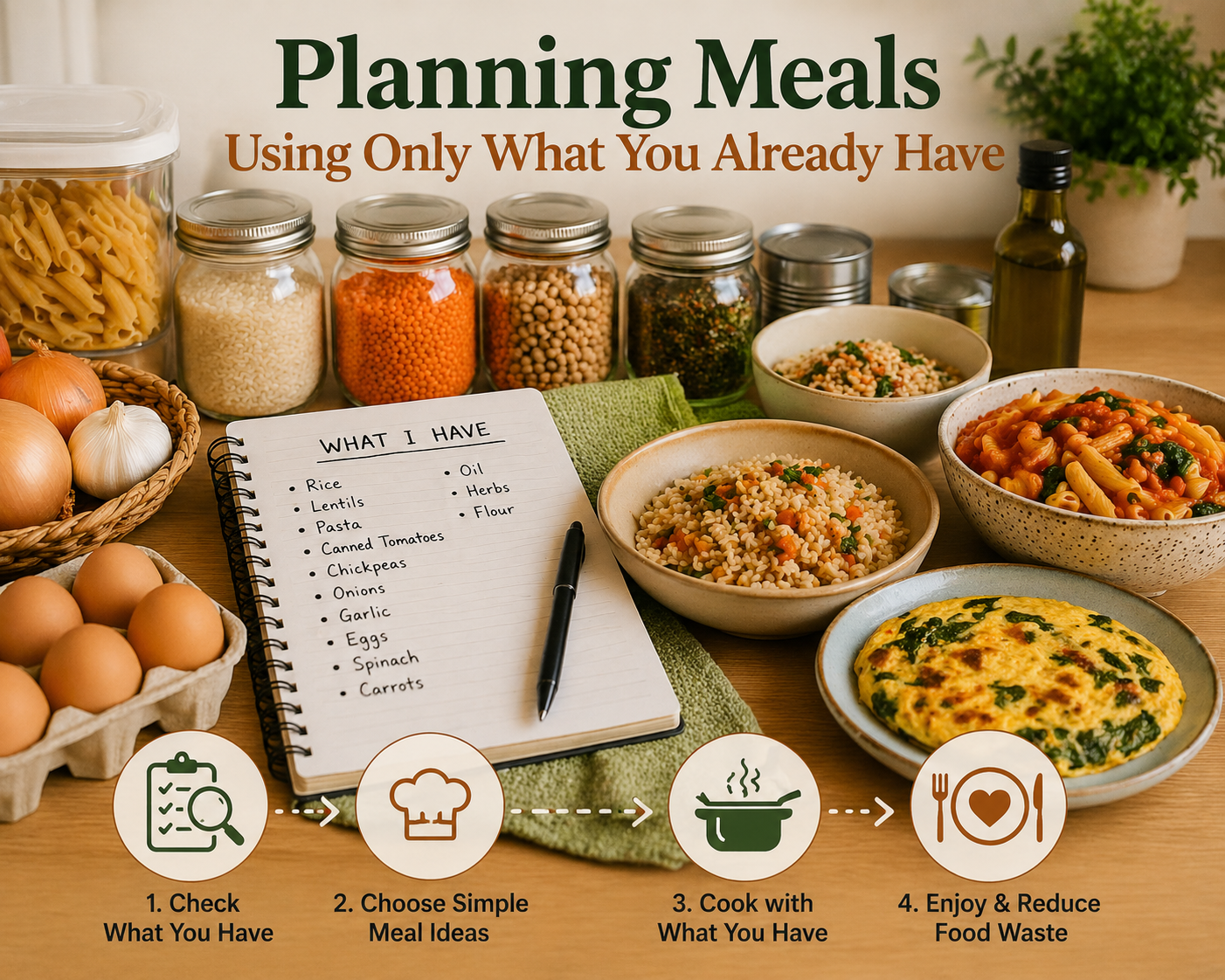
There was a time when I believed I needed a “perfect grocery run” before I could cook anything meaningful. If my fridge weren’t full of fresh vegetables or my pantry didn’t have a long list of ingredients, I’d immediately think, “There’s nothing to eat.”
But one evening changed that mindset completely. I remember opening my kitchen cabinets after a long day, feeling tired and slightly frustrated, and expecting emptiness. Instead, I found rice, a few eggs, half-used spices, some leftover vegetables, and basic sauces I had completely ignored.
That night, I made a simple fried-rice-style meal using only what I already had. It wasn’t fancy, but it was satisfying, warm, and surprisingly enjoyable More importantly, it taught me something powerful: most of us already have enough food at home—we just don’t know how to see it.
This is where the idea of planning meals using only what you already have can change your life. It saves money, reduces food waste, and removes the daily stress of “what should I cook?”
Why Cooking From What You Already Have Is a Game-Changer for Daily Life
Once you start focusing on existing ingredients instead of constantly buying new ones, your entire relationship with food changes.
Here’s what usually happens:
- You stop wasting money on unnecessary groceries
- You reduce food spoilage in the fridge
- You become more creative in the kitchen
- You save time on meal planning
- You feel less overwhelmed by cooking decisions
In my case, I noticed something even more interesting: I started enjoying cooking again. Instead of following strict recipes, I began experimenting. A random combination of rice, spices, and leftover vegetables suddenly became a new favourite dish.
This approach isn’t about restriction—it’s about awareness. It forces you to look at your kitchen as a collection of possibilities instead of limitations.
Step 1: The “Kitchen Inventory Check” That Changes Everything
Before planning any meal, you need to know exactly what you already have. This step is simple but incredibly powerful.
Start by checking three key areas:
Pantry
Look for:
- Rice, pasta, flour
- Lentils or beans
- Cooking oil
- Spices and seasoning
- Canned foods
Fridge
Look for:
- Vegetables (fresh or slightly soft)
- Eggs
- Dairy products
- Leftovers
Freezer
Look for:
- Frozen vegetables
- Meat or chicken
- Bread or frozen meals
When I started doing this weekly check, I realised I often had enough food for 3–5 meals without buying anything new.
The trick is not to judge ingredients as “not enough,” but to treat them as building blocks.
Step 2: Thinking in Meal “Combinations” Instead of Recipes
Most people struggle with cooking because they think in recipes: “I need exactly this dish.”
But when you’re using only what you already have, a better method is to think in combinations.
A basic meal formula looks like this:
- Base: rice, pasta, bread, or potatoes
- Protein: eggs, lentils, beans, chicken
- Flavor: spices, sauces, herbs
- Add-ins: vegetables, leftovers, cheese
For example, if you have:
- Rice
- Eggs
- Onions
- Soy sauce
You already have a full meal: a simple fried egg with rice.
This mindset shift removes pressure. You’re not “cooking without ingredients”—you’re assembling what’s already there.
Step 3: The “Mix and Match” Strategy for Endless Meal Ideas
One of the most useful habits I developed is what I call the ‘mix-and- match’ strategy. Instead of planning complicated dishes, I combine what I already have in different ways.
Here are a few real-life examples:
Example 1: Basic Pantry Meal
- Rice + lentils + spices
→ Simple dal rice bowl
Example 2: Leftover Transformation
- Leftover chicken + tortillas/bread + vegetables
→ Quick wrap or sandwich
Example 3: Fridge Clean-Out Stir-Fry
- Any vegetables + eggs + oil + seasoning
→ Vegetable omelet or stir-fry
The goal is not perfection—it’s functionality. Every ingredient gets used, nothing goes to waste, and meals still taste satisfying.
Step 4: How to Turn “Almost Empty Fridge” Days Into Creative Cooking Wins
We all have those days when the fridge looks almost empty. Instead of panicking or ordering takeout, such a moment is actually the best time to get creative.
Here’s what I do:
1. Start with what must be used first
Soft vegetables, leftovers, or items close to expiry.
2. Build a simple base
Even plain rice, toast, or boiled potatoes can become a foundation.
3. Add flavor aggressively
Spices, salt, chilli, garlic, soy sauce—this is where taste is created.
4. Keep it simple
Don’t overcomplicate. One-pan meals often work best.
For example, I once had only potatoes, onions, and a few spices. I made crispy spiced potatoes in a pan, and they became one of my favourite “empty fridge” meals ever.
Step 5: Smart Ways to Organize Ingredients for Easy Meal Planning
If your ingredients are scattered or forgotten in the fridge, planning becomes harder. Organisation makes everything easier.
Try these simple systems:
Group Similar Items Together
- All sauces in one section
- All vegetables in one drawer
- Dry goods in labeled containers
Keep “Use First” items visible.
Place older ingredients at the front so they don’t become wasted.
Create a “Quick Meal Shelf”
Store items you use often together:
- Eggs
- Bread
- Basic sauces
- Cooked leftovers
When everything is visible and organised, meal planning becomes almost automatic.
Step 6: Real-Life Example of a 3-Day Meal Plan Using Only Existing Ingredients
Let’s make this practical. Imagine you already have:
- Rice
- Eggs
- Onions
- Potatoes
- A few vegetables
- Basic spices
Here’s how you can stretch this into multiple meals:
Day 1
- Breakfast: scrambled eggs with onions
- Lunch: vegetable rice
- Dinner: spiced potato stir-fry
Day 2
- Breakfast: fried egg toast
- Lunch: leftover rice with vegetables
- Dinner: potato and egg curry-style dish
Day 3
- Breakfast: simple omelet
- Lunch: mixed vegetable rice
- Dinner: leftover combination bowl
This shows how flexible your kitchen actually is. You don’t need new ingredients every day—you just need new combinations.
Step 7: Common Mistakes People Make When Cooking From Existing Ingredients
Even though this method is simple, people often struggle because of a few common mistakes:
Overthinking the Meal
Trying to recreate restaurant-style dishes leads to frustration.
Ignoring Basic Ingredients
People overlook simple items like rice, eggs, and spices, even though they are highly versatile.
Not Using Leftovers Properly
Leftovers are often thrown away instead of transformed into new meals.
Lack of Confidence
Many people believe they “can’t cook without a recipe”, but this belief is just a mindset barrier.
Once you avoid these mistakes, cooking becomes much easier and more enjoyable.
Step 8: The Hidden Benefits of Cooking Only From What You Already Have
This approach does more than just save money. Over time, it creates deeper lifestyle changes:
- You become more mindful about food
- You waste significantly less
- You develop stronger cooking intuition
- You reduce dependency on grocery shopping
- You gain confidence in the kitchen
Personally, I noticed that I stopped stressing about meals completely. Cooking became something natural instead of a daily decision burden.
Step 9: How This Habit Helps With Budgeting and Financial Control
One of the biggest advantages of this method is financial stability. When you rely on existing food:
- Grocery bills decrease
- Impulse buying reduces
- Food waste costs disappear
- You shop more intentionally
Instead of buying random ingredients “just in case,” you only buy what is truly needed after using what you already have.
This creates a smarter, more controlled food budget without feeling restrictive.
Step 10: Making This a Long-Term Lifestyle Habit
To turn this approach into a sustainable habit, consistency matters more than perfection.
Here’s how to maintain it:
- Do a weekly kitchen inventory
- Plan 2–3 meals ahead using existing items
- Keep a flexible mindset
- Allow creativity instead of strict rules
- Avoid unnecessary grocery trips
Over time, you’ll naturally start seeing your kitchen differently—not as limited, but as resourceful.
Conclusion
Planning meals using only what you already have is not about limitation—it’s about awareness, creativity, and simplicity. Once you start observing your pantry, fridge, and freezer more carefully, you realise how many meals are already waiting to be made.
You don’t need perfect ingredients or complicated recipes to cook something satisfying. You just need to combine what’s already there in a smart way.
This habit reduces stress, saves money, and builds confidence in everyday cooking. Most importantly, it transforms your kitchen into a place of possibility instead of pressure.
FAQs
1. Can I really cook full meals without buying new ingredients?
Yes, most kitchens already have enough basic ingredients like rice, eggs, vegetables, and spices to create multiple meals.
2. What if my fridge feels completely empty?
Even in that case, check carefully—you may still have basics like sauces, frozen items, or dry goods that can be combined into simple meals.
3. How do I avoid repetitive meals when using the same ingredients?
Change cooking methods and seasonings. For example, rice can be fried, boiled, or turned into a stir-fry or bowl.
4. Is this method good for saving money?
Yes, it significantly reduces unnecessary grocery spending and helps prevent food waste.
5. How often should I check my kitchen inventory?
Once a week is ideal. It helps you stay aware of what needs to be used and what you already have available.