There’s a moment in cooking where everything depends on timing. A few minutes too early, and your food isn’t ready. A few minutes too late, and it’s dry, tough, or lacking flavor.
This stage is where many people struggle—not because they don’t know how to cook, but because they don’t know when to stop.
Overcooking is one of the most common kitchen problems, especially for beginners. It often comes from a positive intention: trying to make sure food is fully cooked. But instead of improving the result, it does the opposite.
Proper cooking, on the other hand, is about balance. It’s about knowing when food has reached the point where texture, flavor, and moisture come together perfectly.
In this guide, we’ll break down the real difference between overcooking and proper cooking, how to recognize both, and how you can consistently get it right without relying on guesswork.
What Proper Cooking Actually Means
It’s Not About Time—It’s About Results
Proper cooking isn’t defined by a fixed number of minutes. It’s defined by how the food turns out.
When food is properly cooked:
- It has the right texture
- It retains moisture
- It develops a balanced flavor
For example, properly cooked chicken is tender and juicy—not dry or rubbery.
Why It Feels Difficult at First
Beginners often rely on timing because it feels safe. But real cooking depends on observation, not just following instructions.
What Overcooking Really Does to Food
Texture Breakdown
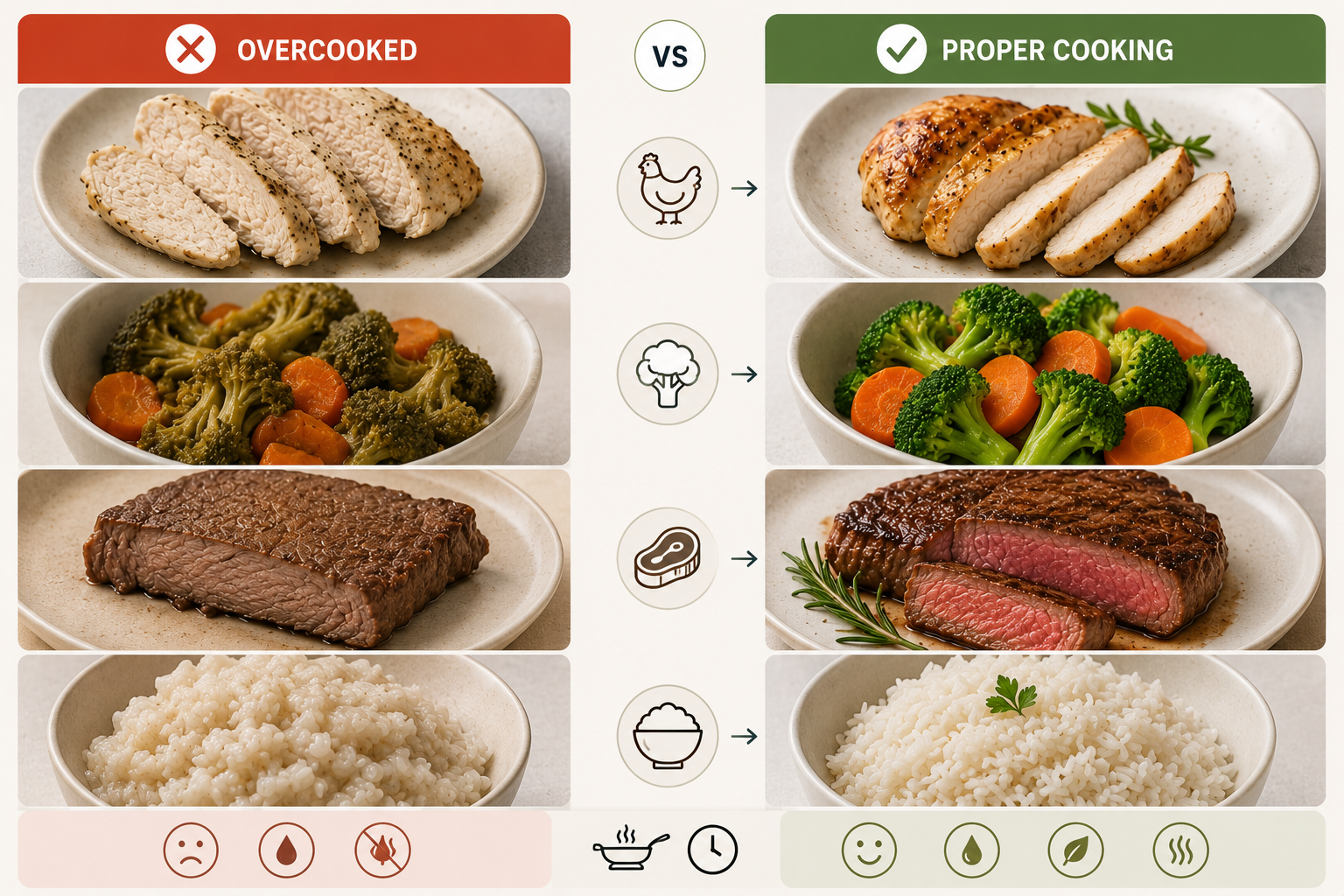
Overcooking changes how food feels:
- Meat becomes tough and dry
- Vegetables turn mushy
- Rice becomes sticky or clumpy
Flavor Loss
When food is cooked too long:
- Natural flavors fade
- Seasoning becomes unbalanced
- Burnt or bitter notes may appear
Moisture Evaporation
Heat removes moisture over time. The longer food cooks, the more moisture it loses, leading to dryness.
Why Beginners Tend to Overcook
Fear of Undercooking
Many people cook food longer than needed to avoid undercooking, especially with meat.
Lack of Confidence
Without experience, it’s difficult to trust when food is done. So the default reaction is to “give it a few more minutes.”
Poor Heat Control
Cooking on high heat can quickly push food from perfectly cooked to overcooked.
Recognizing Properly Cooked Food
Visual Indicators
Look for:
- Golden or balanced color
- Even cooking throughout
- No burnt or overly dark areas
Texture Indicators
- Meat: tender, slightly firm
- Vegetables: soft but not mushy
- Grains: separate and fluffy
Aroma Indicators
Properly cooked food smells rich and inviting—not burnt or overly sharp.
Recognizing Overcooked Food
Signs You Should Notice
- Dry or hard texture
- Faded or dull color
- Bitter or burnt smell
- Loss of natural shape
Example
Overcooked vegetables lose their bright color and become soft and lifeless, while properly cooked ones stay vibrant and slightly firm.
Heat and Timing: The Core Difference
Why Heat Control Matters
Overcooking often happens because of incorrect heat levels:
- Too high → fast burning
- Too low (for too long) → slow overcooking
Balanced Cooking Approach
- Start with appropriate heat
- Adjust as needed
- Avoid leaving food unattended
The Role of Cooking Methods
Different Methods, Different Risks
Each cooking method has its own risk of overcooking:
- Frying → burns quickly
- Boiling → softens too much
- Baking → dries out food
Understanding methods helps you control results better.
How to Avoid Overcooking in Daily Cooking
Use Medium Heat as your default.
Medium heat gives you better control and reduces the risk of burning or drying out food.
Check Food Gradually
Instead of waiting until the end, check your food during cooking:
- Observe color
- Test texture
- Adjust heat
Remove Food at the Right Time
Food continues to cook slightly even after you remove it from the heat. Removing it at the right time helps prevent overcooking.
Common Foods and Their Ideal Cooking Point
Meat
- Proper: juicy and tender
- Overcooked: dry and tough
Vegetables
- Proper: soft with slight firmness
- Overcooked: mushy and dull
Rice
- Proper: fluffy and separate
- Overcooked: sticky and clumped
The Importance of Attention While Cooking
Why Distraction Leads to Overcooking
Even a few extra minutes can change everything. Cooking requires awareness, especially near the end.
Stay Engaged
You don’t need to watch constantly, but you should stay aware of timing and changes.
Adjusting When Things Go Wrong
If Food Is Slightly Overcooked
You can sometimes fix it by:
- Adding moisture (like a sauce)
- Mixing with other ingredients
If Food Is Severely Overcooked
It’s better to learn from the mistake and improve next time.
Building Confidence in Cooking
Practice Makes Recognition Easier
The more you cook, the easier it becomes to recognize proper doneness.
Learn From Each Attempt
Ask yourself:
- Was it overcooked or undercooked?
- What signs did I notice?
- What can I adjust next time?
Avoiding Other Common Cooking Mistakes
Overcooking Is Often Connected to Other Issues
It can be linked to:
- Poor heat control
- Lack of preparation
- Rushing
Creating a Better Cooking Routine
Stay Organized
A smooth workflow helps you focus on timing and doneness.
Cook Regularly
Consistency helps you understand how food behaves.
Conclusion
The difference between overcooking and proper cooking is awareness, not complexity. It’s about knowing when to stop—not just when to start.
Most beginners overcook food because they’re unsure, not because they lack ability. But once you begin to observe your food—its color, texture, and smell—you gain control over the process.
Proper cooking is a balance. It’s where flavor, texture, and moisture come together at the right moment. And once you learn to recognize that moment, cooking becomes much easier and more enjoyable.
You don’t need to be perfect. You just need to pay attention, practice consistently, and trust what you see and feel.
Over time, the gap between overcooked and perfectly cooked becomes smaller—and eventually, you’ll hit that perfect point without even considering it.
FAQs
1. What is the main difference between overcooking and proper cooking?
Proper cooking maintains texture and moisture, while overcooking dries out food and reduces flavor.
2. Why do beginners often overcook food?
This is mostly due to fear of undercooking and a lack of experience in recognizing doneness.
3. Can overcooked food be fixed?
Sometimes it is slightly better, but in most cases, it is best to avoid overcooking in the first place.
4. How can I tell if I’m about to overcook something?
Watch for dryness, color changes, and strong smells. These are early warning signs.
5. Does heat level affect overcooking?
Yes, improper heat control is one of the main reasons food becomes overcooked.