
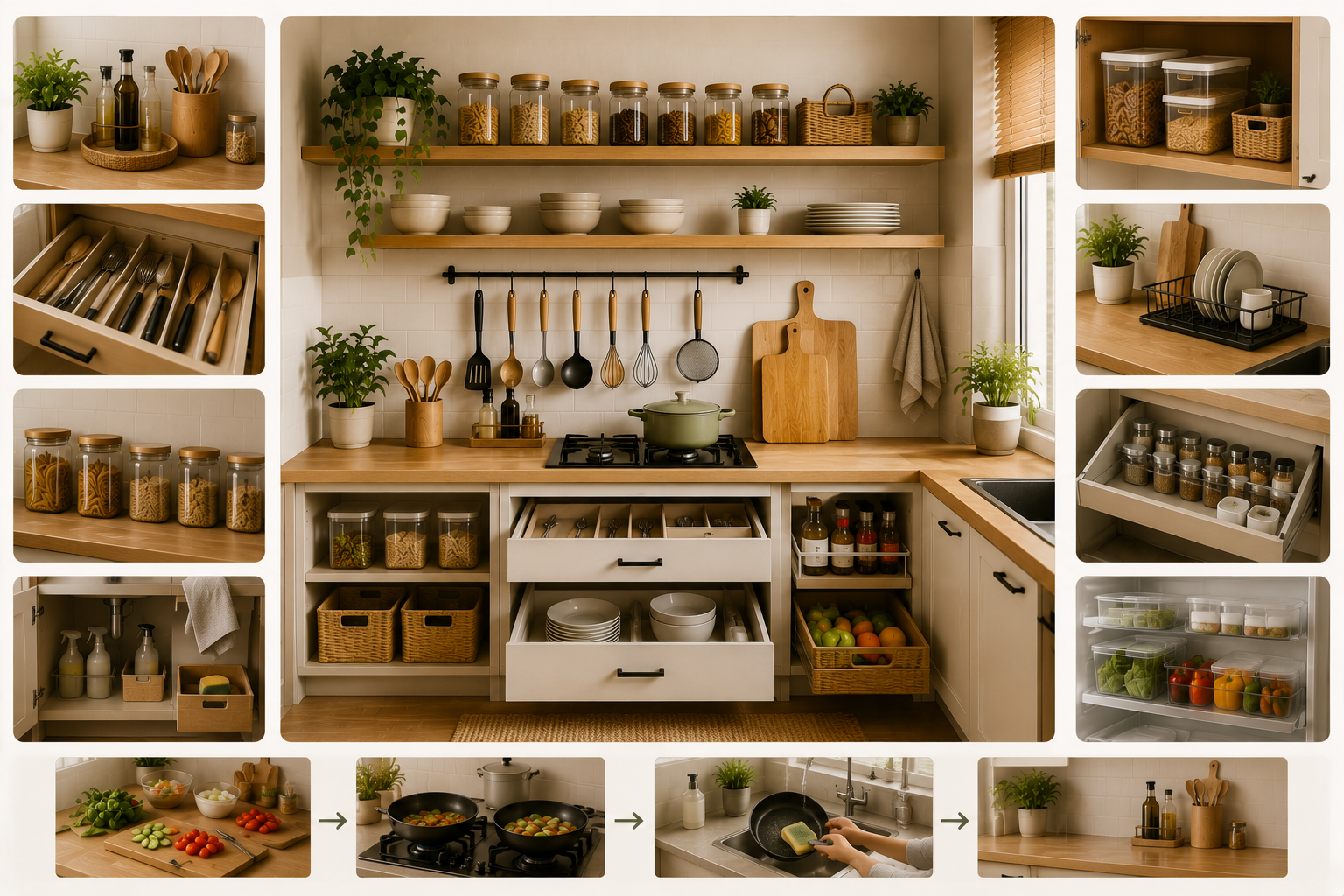
A well-organised kitchen is not just about looks—it directly affects how smoothly your daily cooking and cleaning routine goes. When everything has a place and you minimise clutter, you save time, reduce stress, and actually enjoy spending time in the kitchen. The excellent news is that you don’t need expensive storage systems or constant deep cleaning to maintain order. With the right habits and simple systems, you can keep your kitchen organised without any extra effort.
Below is a complete, practical guide to help you create a clutter-free, efficient kitchen that stays organised almost on its own.
1. Start With a “Daily Reset” Habit
One of the easiest ways to maintain kitchen organisation is to reset your space daily. Instead of letting a mess build up, spend just 10–15 minutes each day restoring order.
Simple daily reset tasks:
- Wash or load all dishes
- Wipe countertops and stove surface
- Put items back in their assigned place
- Empty trash or food waste if needed
Why it works:
A daily reset prevents small messes from turning into overwhelming clutter. It also creates a fresh environment every morning, making cooking more enjoyable and stress-free.
The key is consistency, not perfection.
2. Create “Zones” for Everything in Your Kitchen
A highly effective kitchen organization strategy is to divide your kitchen into functional zones. This reduces confusion and makes everything easier to find.
Common kitchen zones include:
- Cooking zone: stove, spices, cooking utensils
- Preparation zone: cutting boards, knives, mixing bowls
- Cleaning zone: sink, dish soap, towels
- Storage zone: pantry items, dry goods, snacks
Benefits of zoning:
- Faster meal preparation
- Less time searching for tools
- Cleaner workflow while cooking
When every item has a logical home, your kitchen will naturally stay organised without effort.
3. Keep Countertops as Clear as Possible
Cluttered countertops are one of the biggest reasons a kitchen feels disorganised. The more items you leave out, the harder it becomes to clean and maintain order.
What should stay on counters:
- Frequently used appliances (like kettle or toaster)
- One or two cooking essentials
- A small container for daily-use items
What should be stored away:
- Rarely used gadgets
- Excess utensils
- Food packaging and random items
Pro tip:
Adopt a “one-touch rule”—if you pick something up, either use it or put it away immediately. This prevents clutter build-up naturally.
4. Use Simple Storage Systems Instead of Complicated Ones
You don’t need expensive organisers to keep a tidy kitchen. Simple storage systems often work better because they are easier to maintain.
Easy storage ideas:
- Clear jars for grains, pasta, and snacks
- Stackable containers for pantry items
- Drawer dividers for cutlery and tools
- Baskets for grouping similar items
Why simplicity matters:
Complicated systems often fail because they require too much effort to maintain. Simple setups, on the other hand, encourage consistency and long-term use.
Keep it practical, not perfect.
5. Follow the “One In, One Out” Rule
Clutter often builds up when new items enter the kitchen but nothing leaves. The “one in, one out” rule helps control this problem effortlessly.
How it works:
- If you buy a new utensil, remove an old one
- If you add a new appliance, store or donate an unused item
- If you bring in extra pantry stock, finish older items first
Benefits:
- Prevents overcrowding
- Keeps storage manageable
- Reduces unnecessary buying
This simple habit ensures your kitchen never becomes overloaded again.
6. Optimize Your Cabinet Space Smartly
Most kitchens have unused or poorly used cabinet space. Optimising it can instantly improve your organisation without adding effort to your routine.
Smart cabinet tips:
- Store heavy items on lower shelves
- Keep frequently used items at eye level
- Use vertical space with shelf risers
- Group similar items together
Bonus idea:
Label shelves or containers so everyone in the household knows where things belong. This reduces confusion and keeps things in place automatically.
7. Make Cleaning Part of Cooking
Instead of treating cleaning as a separate task, combine it with cooking. This habit drastically reduces post-meal mess and keeps your kitchen organised every day.
How to do it:
- Wash utensils while food is cooking
- Wipe spills immediately
- Clean cutting boards after each use
- Put ingredients back after using them
Result:
By the time you finish cooking, your kitchen is already mostly clean. This eliminates the need for long cleanup sessions later.
It’s one of the most powerful time-saving habits you can adopt.
8. Declutter Regularly but Lightly
Decluttering doesn’t have to be a big seasonal task. Instead, do small, regular decluttering sessions that take only a few minutes.
What to check weekly:
- Expired food items
- Broken or unused tools
- Duplicate utensils
- Empty or half-used packaging
Quick declutter method:
- Keep what you use regularly
- Store or donate what you don’t
- Throw away what is expired or broken
By doing small declutters regularly, you avoid major cleanup stress later.
9. Build Smart Pantry Habits
A messy pantry can quickly ruin kitchen organisation. Building smart pantry habits helps maintain order effortlessly.
Pantry organisation tips:
- Group similar items together (grains, snacks, spices)
- Store older items in front and new ones behind
- Use labeled containers for visibility
- Avoid overstocking unnecessary items
Helpful habit:
Do a quick pantry check before shopping. This prevents duplicate purchases and reduces clutter over time.
A well-managed pantry makes everyday cooking much smoother.
10. Create a “Return Everything” Rule for the Whole Family
Even the most organised kitchen can become messy if you do not return items to their place. A simple household rule can solve the problem easily.
The rule:
- Every item must be returned immediately after use
- Nothing stays on counters after cooking
- Everyone is responsible for their own cleanup
How to make it work:
- Keep storage locations simple and accessible
- Explain zones clearly to everyone
- Lead by example consistently
When this behaviour becomes a habit in the household, the kitchen naturally stays organised without extra effort from one person.
Conclusion
Keeping your kitchen organised doesn’t require constant cleaning or complicated storage systems. It’s about building small, smart habits that work automatically in the background of your daily routine. From creating kitchen zones and keeping countertops clear to adopting simple storage systems and combining cooking with cleaning, each step reduces clutter and saves time.
The real secret is consistency, not effort. When these habits become part of your lifestyle, your kitchen stays clean, functional, and stress-free without you having to think about it. A well-organised kitchen ultimately makes cooking more enjoyable and your daily life much smoother.
FAQs
1. How can I keep my kitchen organised every day easily?
Focus on small daily habits like cleaning as you cook, clearing countertops, and doing a 10-minute nightly reset. Consistency is more important than deep cleaning.
2. What is the easiest way to reduce kitchen clutter?
Start by removing unused items and keeping only essentials on your counters. Use simple storage systems and follow the “one in, one out” rule.
3. Do I need expensive organisers to keep my kitchen tidy?
No, simple baskets, jars, and drawer dividers are enough. The key is functionality, not cost or complexity.
4. How often should I declutter my kitchen?
A light declutter once a week is ideal. It prevents buildup and keeps your kitchen manageable without overwhelming effort.
5. What is the biggest mistake in kitchen organisation?
Keeping too many items on countertops and not assigning proper places for everything. This leads to constant mess and confusion.