
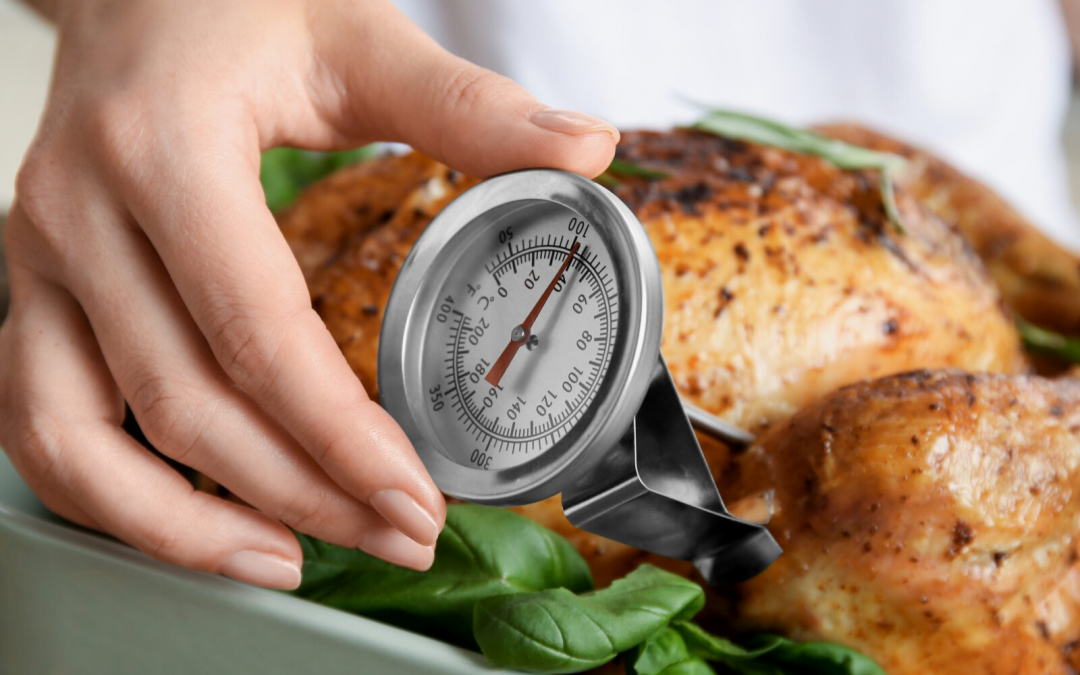
There is a moment in every cook’s journey when they stop guessing and start knowing. For me, that moment came the first time I pulled a chicken breast from the oven at exactly 165 degrees Fahrenheit and sliced into perfectly juicy meat. Before that, I was a timer person. I set the oven, walked away, and hoped everything would turn out well. Occasionally, I got lucky. More often, I got dry.
Temperature is the single most reliable indicator of doneness. Colour can lie. Texture can deceive. Time is a suggestion, not a rule. But a thermometer tells the truth. The good news is that you do not need to memorise a textbook of numbers. A handful of key temperatures covers the vast majority of what you cook at home.
This article breaks down the temperatures worth committing to memory, explains why they matter, and shows you how to use a thermometer correctly so you never serve undercooked or overcooked food again.
Why Temperature Beats Every Other Method
Let us be honest about what most home cooks do. They cut into the thickest part of a chicken breast and look for pink. With their finger, they press a steak and guess at its firmness. They poke a cake with a toothpick and hope it comes out clean. These methods are not useless, but they are inconsistent.
Colour is especially unreliable. A fully cooked chicken breast can still have a pink tinge near the bone, especially in younger birds. A turkey can be safe to eat at 165 degrees Fahrenheit and still look slightly pink in the centre. Ground beef turns brown well before it reaches a safe temperature if it has been sitting in the fridge. Relying on sight alone is a gamble.
Texture is even trickier. The poke test for steak takes months of practice to calibrate. A cake might pass the toothpick test and still be gummy inside. Time depends on your oven, your altitude, the starting temperature of your meat, and whether you opened the door to check on it.
A digital instant-read thermometer removes all of that uncertainty. It costs less than a good knife and pays for itself the first time you do not ruin a roast.
Which Thermometer to Buy: A ThermoPop or Thermapen is the gold standard, but any digital instant-read thermometer that gives a reading in three seconds or less will serve you well. Avoid dial thermometers. They are slow, inaccurate, and frustrating to read.
Poultry: The Most Important Numbers to Know
Poultry is where undercooking becomes dangerous. Salmonella and campylobacter are not theoretical risks. They are real, and they thrive in undercooked chicken and turkey. The USDA recommends 165 degrees Fahrenheit as the safe minimum internal temperature for all poultry, and this is the one number you should never forget.
| Cut of Poultry | Safe Minimum Temp | Target for Best Texture | Notes |
|---|---|---|---|
| Whole Chicken or Turkey | 165°F (74°C) | 165°F in thigh, 160°F in breast | Measure in the thickest part of the thigh, away from bone |
| Chicken Breast (Boneless) | 165°F (74°C) | 160°F, rest to 165°F | Pull at 160°F; carryover cooking finishes the job |
| Chicken Thighs (Bone-In) | 165°F (74°C) | 175-185°F | Higher temp breaks down connective tissue; thighs stay juicy |
| Ground Chicken or Turkey | 165°F (74°C) | 165°F | No exceptions; bacteria distribute throughout ground meat |
| Duck Breast | 165°F (74°C) | 130-135°F (medium-rare) | Duck is red meat, not poultry, in practice; cook like steak |
The table above reveals something important: not all parts of a bird cook at the same rate. A whole chicken roasted to 165 degrees in the thigh might have a breast that is already 175 degrees and dry as a bone. That is why experienced cooks often roast birds breast-side down for part of the cooking time, or they spatchcock the bird to expose the thighs to more heat while protecting the breast.
The Carryover Cooking Secret: Meat continues to cook after you remove it from heat. A chicken breast pulled from the oven at 160 degrees will climb to 165 within five to ten minutes of resting. This is why pulling poultry slightly early and letting it rest produces juicier results than cooking it all the way to 165 in the oven.
Beef, Pork, and Lamb: The Doneness Spectrum
Red meat is more forgiving than poultry because the dangerous bacteria live on the surface, not deep inside. A steak can be safely eaten rare because the searing heat kills surface pathogens. Ground meat is different — grinding distributes bacteria throughout, so burgers need higher temperatures.
| Doneness | Beef/Lamb (Steaks, Roasts) | Pork (Chops, Roasts) | What It Looks Like |
|---|---|---|---|
| Rare | 120-125°F (49-52°C) | Not recommended | Cool red center, very soft |
| Medium-Rare | 130-135°F (54-57°C) | 135-140°F | Warm red center, yielding |
| Medium | 135-145°F (57-63°C) | 145-150°F | Pink center, some firmness |
| Medium-Well | 145-155°F (63-68°C) | 150-155°F | Slight pink, mostly firm |
| Well-Done | 155°F+ (68°C+) | 160°F+ | No pink, fully firm |
Pork has come a long way from the days of cooking it to 165 degrees out of fear of trichinosis. Modern pork is safe to eat at 145 degrees with a three-minute rest. A pork chop cooked to 145 degrees is pink, juicy, and nothing like the grey, dry pork many of us grew up eating. If you have been overcooking pork your whole life, try 145 degrees once. It will change your mind.
Ground meat is the exception to the rare steak rule. When beef or pork is ground, surface bacteria get mixed throughout. The USDA recommends 160 degrees for ground beef and 165 degrees for ground poultry. A medium-rare burger is not worth the risk unless you grind the meat yourself from a whole cut.
Fish and Seafood: Less Is More
Fish is the category where most home cooks overcook by default. They treat fish like chicken, cooking it until it flakes and falls apart. By then, it is dry and disappointing. Fish is done when it is just opaque and barely flakes. Any further, and you have gone too far.
| Type of Seafood | Target Internal Temp | Visual Cue |
|---|---|---|
| Fin Fish (Salmon, Cod, Halibut) | 145°F (63°C) | Opaque throughout, flakes with gentle pressure |
| Tuna (Sashimi-Grade) | 115-125°F (seared only) | Raw center, seared exterior |
| Shrimp | 120°F (49°C) | Pink and curled into a C shape |
| Scallops | 130°F (54°C) | Opaque center, golden crust |
| Lobster | 140°F (60°C) | White and opaque, firm but not rubbery |
Salmon is a special case. The USDA says 145 degrees, but many chefs pull salmon at 125 to 130 degrees for a medium-rare centre that is buttery and moist. If you buy high-quality, sushi-grade salmon from a trusted source, this is safe and delicious. For standard grocery store salmon, stick closer to 140 degrees to balance safety and texture.
The Shrimp Rule: Shrimp cooked to 120 degrees are plump and sweet. At 140 degrees, they start to curl tightly and turn rubbery. At 160 degrees, they are inedible. Use a thermometer for shrimp just like you do for steak. The difference is dramatic.
Baking: When Temperature Matters Just as Much
Bread and cake do not carry food safety risks like meat does, but internal temperature is still the best way to know when they are done. A toothpick can come out clean while the centre is still gummy. A loaf can look golden on the outside and be raw inside.
| Baked Good | Done When Internal Temp Reaches | Why It Matters |
|---|---|---|
| Yeast Bread (Sandwich Loaf) | 190-200°F (88-93°C) | Starch gelatinization is complete; crumb is set |
| Artisan Bread (Sourdough, Baguette) | 205-210°F (96-99°C) | Higher hydration doughs need more heat to fully set |
| Quick Breads (Banana Bread, Muffins) | 200-205°F (93-96°C) | Ensures the center is cooked through without drying out |
| Cake (Layer Cake, Bundt) | 200-210°F (93-99°C) | Toothpick test can lie; temperature does not |
| Custard (Flan, Crème Brûlée) | 170-175°F (77-79°C) | Above 180°F, eggs curdle and texture breaks |
Professional bakers use thermometers more than home cooks do, and there is a reason for that. A $15 thermometer eliminates the guesswork from baking. No more sunken centres. No more dry edges with raw middles. Just consistent results.
How to Use a Thermometer Correctly
Owning a thermometer is only half the battle. Using it correctly is the other half. Here are the rules that separate accurate readings from misleading ones.
Insert into the thickest part. The coldest spot in a piece of meat is the centre of the thickest section. That is where bacteria survive longest. A reading from the edge tells you nothing useful.
Avoid bone. Bone conducts heat differently than meat and will give you a falsely high reading. Insert the probe at least half an inch away from any bone.
Go deep enough. For a thick steak or roast, insert the probe at least two inches. For thin cuts like burgers or pork chops, insert sideways so the probe tip reaches the centre.
Wait for the reading to stabilise. A good instant-read thermometer settles in two to three seconds. Cheap ones take longer. Do not pull the probe the moment numbers appear. Give it time.
Check multiple spots. Large roasts and whole birds cook unevenly. Check the breast, the thigh, and the opposite side. The lowest reading is the one that matters.
Thermometer Maintenance: Calibrate your thermometer periodically using the ice water method. Fill a glass with ice, add water, stir, and insert the probe. It should read 32°F (0°C). If it does not, adjust it according to the manufacturer’s instructions or replace it. An inaccurate thermometer is worse than no thermometer at all.
The Numbers Worth Tattooing on Your Brain
If you only memorise five temperatures, make them these. They cover the majority of what you cook.
| Food | The Number | Memory Trick |
|---|---|---|
| All Poultry | 165°F | One-six-five keeps you alive |
| Ground Meat (Beef/Pork) | 160°F | Ground gets one-sixty |
| Steak (Medium-Rare) | 130-135°F | One-three-five is steak paradise |
| Pork Chops | 145°F | Pink pork at one-four-five |
| Fish | 145°F | Fish and pork share a number |
Say them out loud a few times. Write them on a sticky note and tape it to your fridge. After a month of cooking with a thermometer, these numbers will be second nature. You will glance at a steak in a pan and know whether it needs two more minutes or is ready to rest.
Final Thoughts
Temperature is the great equaliser in cooking. It does not care about your experience level. It does not care whether you are using a $500 oven or a $50 one. It gives you the same information every time, and that information is the difference between guessing and knowing.
Buy a thermometer. Use it on everything. Pull your chicken at 160 degrees and let it rest. Take your steak off at 130 degrees for medium-rare. Check your banana bread at 200 degrees. Within weeks, you will cook with a confidence that timing and colour never gave you.
The best cooks are not the ones with the most talent. They are the ones with the most information. A thermometer is the cheapest and most powerful tool in your kitchen. Start using it today.
Related Articles
- Knowing When Your Food Is Properly Cooked Without Guessing
- The Difference Between Overcooking and Proper Cooking
- Simple Techniques That Improve Cooking Results
- Common Cooking Mistakes Beginners Should Avoid
- The Beginner’s Guide to Cooking Chicken Without Drying It Out
- Learning to Control Heat Without Burning Your Food
References and Sources
- USDA Food Safety and Inspection Service. (2025). Safe Minimum Internal Temperature Chart. Retrieved from fsis.usda.gov
- America’s Test Kitchen. (2024). The Science of Meat Doneness. Retrieved from americastestkitchen.com
- Serious Eats. (2025). The Food Lab’s Complete Guide to Sous Vide Steak. Retrieved from seriouseats.com
- Cook’s Illustrated. (2024). Why You Should Cook Pork to 145 Degrees. Retrieved from cooksillustrated.com
- King Arthur Baking. (2025). Using a Thermometer for Better Bread Baking. Retrieved from kingarthurbaking.com
- FDA. (2025). Fish and Shellfish: Selecting and Serving. Retrieved from fda.gov
- ThermoWorks. (2025). Thermometer Calibration Guide. Retrieved from thermoworks.com