
⏱ Reading time: 9 minutes | 🔄 Updated: June 4, 2026
I’ve ruined chicken for years. I would buy beautiful boneless breasts, season them with salt and pepper, throw them in a hot pan, and cook them until they were firm to the touch. They looked golden. They smelt great. Then I cut into them and found the texture of damp cardboard. Dry. Stringy. Sad. I would drown them in sauce to compensate, but you cannot sauce your way out of overcooked chicken. The damage is done.
The tragedy is that chicken is not supposed to be dry. A properly cooked chicken breast is juicy, tender, and flavorful. The problem is not the ingredient. The problem is how most of us were taught to cook it. High heat. Long time. Fear of pink. That combination destroys chicken every single time.
This guide is for anyone who has given up on chicken because it always turns out dry. It covers every common method — pan-searing, roasting, grilling, poaching, and slow cooking — with specific techniques to keep the meat moist. No fancy equipment required. No culinary school degree needed. Just a few principles that change everything.
Why Chicken Dries Out
Chicken breast is lean. It has very little fat to keep it moist during cooking. When you apply heat, muscle fibers contract and squeeze out moisture like a sponge being wrung. The higher the heat and the longer the cook time, the more moisture you lose. By the time the center reaches 165 degrees Fahrenheit, the outer layers are often well past 180 degrees and completely desiccated.
Dark meat — thighs and legs — is more forgiving because it contains more fat and connective tissue. That fat melts during cooking and self-bastes the meat. Connective tissue breaks down into gelatin, which adds moisture and richness. This is why chicken thighs can survive a little overcooking while breasts cannot.
The solution for breast meat is simple in theory: cook it gently and pull it off the heat before it is fully done. Carryover cooking will finish the job. In practice, this requires trusting your thermometer more than your eyes.
The Temperature Truth: Chicken breast is perfectly safe and juicy at 160 degrees Fahrenheit. Pull it from the heat at 155 to 160 degrees, let it rest for five to ten minutes, and carryover cooking will bring it to 165. Every degree over 165 is a degree closer to dryness. A thermometer is not optional if you want moist chicken.
Method 1: Pan-Seared Chicken Breast
This is the method most home cooks use, and it is the method most home cooks get wrong. The standard approach—sear both sides in a hot pan until cooked through—guarantees dry chicken. The outside looks beautiful while the inside turns to sawdust.
The better approach is called the reverse sear, or more practically for beginners, the sear-and-finish method. Here is how it works.
Start with chicken breasts that are roughly the same thickness. If one end is twice as thick as the other, the thin end will be dry before the thick end is safe. Pound the thick end gently with a meat mallet or rolling pin until the breast is even. Do not pulverise it. You want uniform thickness, not chicken pancakes.
Pat the chicken completely dry with paper towels. Moisture is the enemy of browning. Season generously with salt at least fifteen minutes before cooking or up to overnight in the fridge. Salt draws moisture to the surface initially, but over time it reabsorbs and seasons the meat throughout.
Heat a heavy skillet—cast iron or stainless steel—over medium-high heat. Add a thin layer of oil with a high smoke point, like vegetable or avocado oil. When the oil shimmers, add the chicken. Do not crowd the pan. Crowding drops the temperature and steams the meat instead of searing it.
Sear for three to four minutes without moving. The chicken will release naturally when the crust is ready. Flip and sear the other side for two to three minutes. Now here is the critical step: lower the heat to medium-low, add a tablespoon of butter, and tilt the pan. Spoon the melted butter over the chicken repeatedly for two to three minutes. This is called basting, and it keeps the surface moist while the center gently comes up to temperature.
Pull the chicken when the thickest part reads 155 to 160 degrees on an instant-read thermometer. Transfer to a plate, tent loosely with foil, and rest for five to ten minutes. The internal temperature will climb to 165. The juices will redistribute. The chicken will be moist.
Method 2: Oven-Roasted Chicken
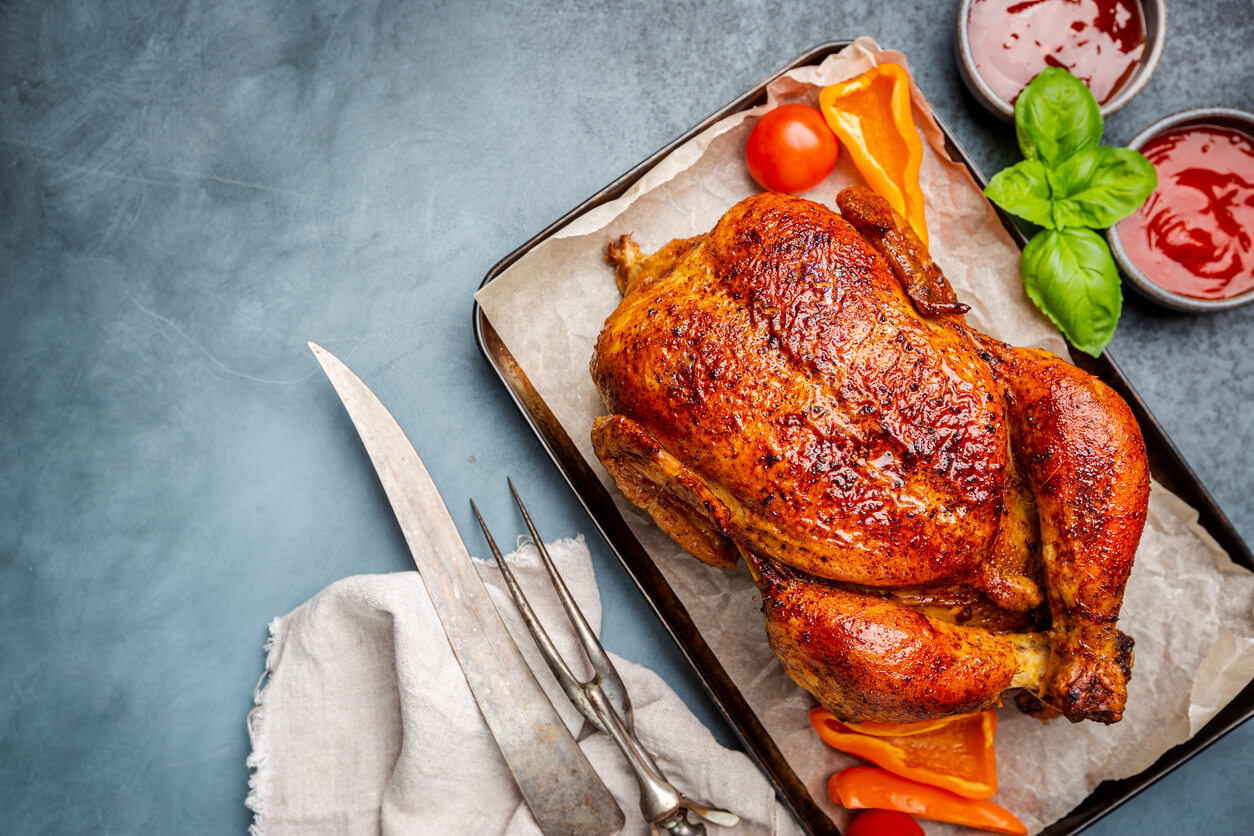
Roasting a whole chicken is one of the most satisfying things you can make, and it is surprisingly forgiving if you do two things right: dry the skin thoroughly and do not overcook the breast.
Start by removing the chicken from the fridge at least thirty minutes before cooking. Cold chicken straight into a hot oven cooks unevenly. The outside burns while the center stays raw. Room-temperature chicken cooks more uniformly.
Pat the skin completely dry with paper towels. Every drop of moisture on that skin is a barrier to crispness. Some cooks leave the chicken uncovered in the fridge overnight to dry the skin further. This works beautifully if you plan ahead.
Season the skin and the cavity aggressively. Salt, pepper, garlic powder, paprika, herbs — whatever you like. Get under the skin if you can without tearing it. Rub softened butter or olive oil all over the surface. This helps browning and adds flavor.
Trust the legs and tuck the wingtips. This keeps the bird compact, which helps it cook evenly. Place it on a rack in a roasting pan. The rack allows air to circulate underneath, cooking the bottom and preventing sogginess.
Roast at 425 degrees Fahrenheit for the first fifteen minutes. This blast of high heat starts the browning. Then drop the temperature to 350 degrees and continue roasting until the thickest part of the thigh reads 165 degrees. A four-pound chicken takes roughly sixty to seventy minutes total.
The Breast Protection Trick: If the breast is browning too fast before the thighs are done, tent it loosely with foil. Even better, start the bird breast-side down for the first thirty minutes, then flip it breast-side up. The juices pool in the breast meat during that first half, keeping it moist. Flip carefully using tongs and a spatula.
Rest the chicken for fifteen to twenty minutes before carving. This is non-negotiable. Cut into a chicken straight from the oven, and the juices run all over your cutting board instead of staying in the meat. Resting lets the muscle fibers relax and reabsorb moisture.
Method 3: Grilled Chicken
Grilled chicken is where dryness happens fastest. Direct flame, high heat, and the temptation to flip constantly create the perfect storm for desiccated meat. The solution is two-zone grilling and patience.
Set up your grill with a hot side and a cool side. On a gas grill, turn one burner to high and the other to low. On charcoal, pile coals on one side and leave the other empty. This gives you control.
Season the chicken and oil it lightly to prevent sticking. Sear over the hot side for three to four minutes per side to get grill marks and flavor. Then move the chicken to the cool side, close the lid, and finish cooking indirectly. This is the key. Indirect heat cooks the chicken gently, allowing the center to reach temperature without incinerating the outside.
Use a thermometer. Pull boneless breasts at 155 to 160 degrees. Pull thighs and legs at 170 to 175 degrees—dark meat can handle more heat and actually improves with it. Rest for five to ten minutes before serving.
Marinating helps with grilled chicken, but not for the reason most people think. Marinade does not penetrate deeply into meat. It flavors the surface. What it does do is add a protective layer of fat and sugar that helps prevent drying and creates a beautiful crust. A simple marinade of oil, acid, salt, and herbs will improve any grilled chicken.
Method 4: Poached Chicken
Poached chicken sounds boring. It is not. Done right, it produces the juiciest, most tender chicken breast you will ever eat. It is also the most foolproof method for beginners because it is nearly impossible to overcook.
The secret is temperature control. Not boiling. Not simmering aggressively. Barely simmering. Think lazy bubbles, not rolling water.
Place chicken breasts in a single layer in a wide pot. Cover with cold water or chicken stock by about an inch. Add aromatics—salt, peppercorns, bay leaf, garlic, and herbs. Bring to a gentle simmer over medium heat. As soon as bubbles appear, reduce the heat to low. The water should barely move.
Poach for ten to fifteen minutes depending on thickness. The chicken is done when it reaches 160 degrees internally. Remove from the liquid immediately. Let it rest for five minutes, then slice or shred.
The poaching liquid is now infused with chicken flavor. Do not pour it down the drain. Strain it and use it as a base for soup, sauce, or cooking grains. You have just made homemade chicken stock without trying.
The Cold Start Advantage: Starting chicken in cold liquid and bringing it up slowly is gentler than dropping it into boiling water. The proteins set gradually, trapping more moisture. This is why poached chicken is consistently more tender than boiled chicken. The difference is the starting temperature.
Method 5: Slow-Cooked Chicken
Slow cookers and braises are forgiving by nature. Low heat, a long time, and plenty of liquid create an environment where chicken stays moist almost no matter what you do. Almost.
The danger with slow cooking is actually the opposite of other methods: chicken can become too tender. Breast meat cooked for eight hours on low falls apart into dry, stringy threads. It is technically moist—there is liquid everywhere—but the texture is unpleasant.
For slow cookers, use dark meat. Thighs and legs have the fat and connective tissue needed to survive long cooking. They become tender and succulent instead of falling apart. If you must use breast meat, cook it on low for no more than three to four hours, or use a recipe that adds dairy or coconut milk to buffer the meat.
For braises—think coq au vin or chicken cacciatore—brown the chicken first for flavor, then simmer gently in liquid until the thighs reach 185 degrees. The higher temperature breaks down collagen into gelatin, which gives the sauce body and the meat a silky texture. This is one case where cooking chicken past 165 is not just safe but desirable.
Brining: The Insurance Policy
If you want to guarantee moist chicken every time, brine it. Brining is soaking chicken in a saltwater solution before cooking. The salt denatures proteins, allowing them to hold more moisture. The result is chicken that stays juicy even if you overcook it slightly.
For a basic wet brine, dissolve a quarter cup of kosher salt in four cups of cold water. Submerge the chicken and refrigerate for at least thirty minutes, up to four hours for breasts and overnight for whole birds. Rinse and pat dry before cooking. The salt has penetrated the meat, so adjust your seasoning accordingly.
Dry brining is even simpler. Salt the chicken generously and leave it uncovered in the fridge for several hours or overnight. The salt draws moisture out, then the moisture reabsorbs with the salt, seasoning the meat throughout and drying the skin for better browning. This is my preferred method for roasted chicken. No water. No mess. Better results.
| Brine Type | Ratio | Time | Best For |
|---|---|---|---|
| Wet Brine (Basic) | 1/4 cup salt per 4 cups water | 30 min to 4 hours | Boneless breasts, quick turnaround |
| Wet Brine (Whole Bird) | 1 cup salt per gallon water | 8 to 12 hours | Thanksgiving turkey, whole roasted chicken |
| Dry Brine | 1 teaspoon salt per pound | 4 hours to overnight | Roasted chicken, turkey, any skin-on poultry |
| Buttermilk Brine | Full buttermilk coverage | 4 to 24 hours | Fried chicken, Southern-style preparations |
The Resting Rule (Do Not Skip This)
I have mentioned resting multiple times because it is that important. When chicken cooks, muscle fibers contract and push juices toward the center. If you cut into the meat immediately, those juices flood out onto your cutting board. The meat left behind is dry.
Resting allows the fibers to relax and the juices to redistribute evenly throughout the meat. A five-minute rest for a breast. A ten to fifteen-minute rest for a whole bird. The longer the rest, the more even the moisture distribution.
Tent loosely with foil if you are worried about the chicken getting cold. Do not wrap tightly — trapped steam softens the crust you worked hard to create. A loose tent keeps the surface warm without sacrificing texture.
Quick Reference: Method by Cut
Not every cut of chicken works best with every method. Here is a practical guide to matching cut with technique.
| Cut | Best Methods | Target Temp | Why It Works |
|---|---|---|---|
| Boneless Breast | Pan-sear, poach, grill (indirect) | 155-160°F, rest to 165°F | Lean meat needs gentle heat and early removal |
| Bone-In Breast | Roast, grill (indirect), braise | 160-165°F | Bone insulates and slows cooking; it’s more forgiving |
| Thighs (Boneless) | Pan-sear, stir-fry, grill | 170-175°F | Higher fat content stays juicy at higher temps |
| Thighs (Bone-In) | Braise, roast, slow cook, grill | 175-185°F | Connective tissue breaks down into gelatin; it’s better with time |
| Whole Bird | Roast, spatchcock, rotisserie | 165°F in thigh, 160°F in breast | Multiple temps in one bird: protect the breast |
| Wings | Bake, fry, grill, braise | 175-185°F | Skin and fat render beautifully; higher temperature crisps skin |
Final Thoughts
Moist chicken is not about secret ingredients or expensive equipment. It is about understanding what chicken needs and giving it exactly that. Gentle heat for breasts. Higher heat for thighs. A thermometer instead of guesswork. A rest instead of immediate carving. Brine when you have time. A base when you do not.
The best chicken I ever made was a simple roasted bird. I dry-brined it overnight, roasted it breast-down for the first half, pulled it at the right temperature, and let it rest for twenty minutes. The skin was crackling. The breast was succulent. The thighs fell off the bone. It required no sauce, no gravy, no disguise. The chicken was enough.
That is what proper technique gives you. Not complexity. No fuss. Just chicken that tastes like chicken should. Juicy, flavorful, and worth eating. Once you taste the difference, you will never go back to dry meat again.