One of the most overlooked skills in cooking isn’t chopping, seasoning, or even following recipes—it’s knowing when food is actually done.
Most beginners rely heavily on timing. If a recipe says to “cook for 10 minutes,” they expect perfect results after exactly 10 minutes. But in real kitchens, things don’t work that precisely. Heat levels vary, cookware behaves differently, and ingredients are never the same.
That’s why food often ends up undercooked, overcooked, or just not right—even when you follow instructions carefully.
The real solution is learning how to read your food. When you understand the signs—how it looks, smells, feels, and even sounds—you stop guessing and start cooking with confidence.
In this guide, you’ll learn practical ways to tell when your food is properly cooked without relying solely on timers. These are real-world techniques you can use every day, no matter what you’re cooking.
Why Timing Alone Doesn’t Work
The Problem with Fixed Cooking Times
Recipes give time estimates, but they don’t account for:
- Stove strength
- Pan thickness
- Ingredient size
- Starting temperature
For example, cooking chicken for 10 minutes on low heat is very different from cooking it for 10 minutes on high heat.
What You Should Rely On Instead
Use time as a guideline, not a rule. Combine it with observation and awareness for better results.
Visual Signs: What to Look For
Color Changes Tell a Story
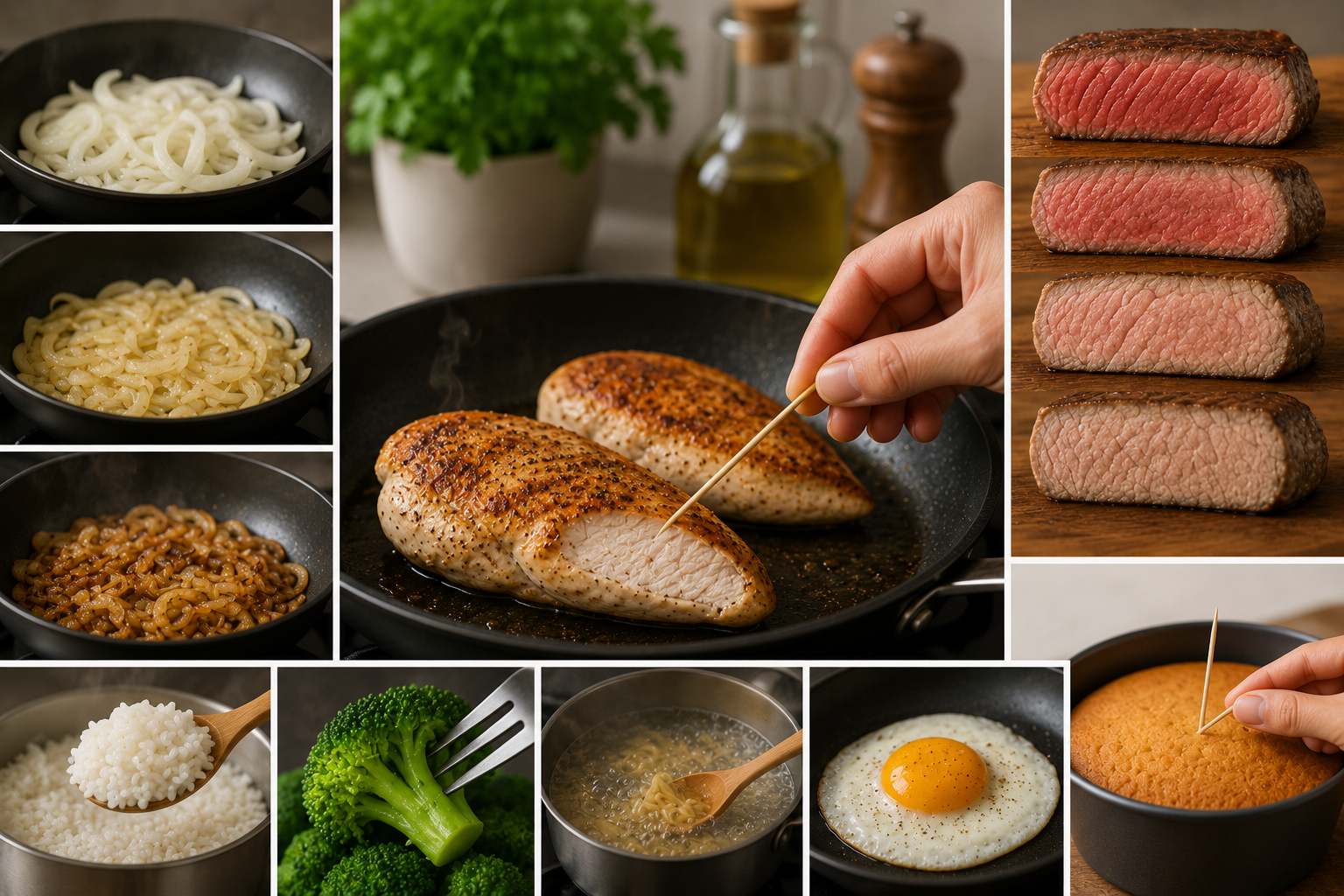
Food changes color as it cooks. Learning these changes is one of the easiest ways to judge doneness.
Examples:
- Raw chicken → pink to white
- Vegetables → dull to vibrant
- Meat → red to brown
If the color hasn’t changed properly, the food likely isn’t done yet.
Texture Transformation
As food cooks, texture changes:
- Softens (vegetables, grains)
- Firms up (meat, eggs)
- Crisps (fried or roasted food)
Touch or press gently (when safe) to understand these changes.
Smell: An Underrated Indicator
Your Nose Knows More Than You Think
Cooking releases aromas that change over time:
- Raw smell → neutral
- Cooking smell → rich and inviting
- Overcooked smell → sharp or burnt
If something smells slightly burnt, it’s often already overcooked.
Sound: Listening While You Cook
The Meaning Behind Sizzling
Sound gives real-time feedback:
- Gentle sizzle → controlled cooking
- Loud crackling → heat too high
- No sound → heat too low
Learning to recognize these sounds helps you adjust heat instantly.
The Touch Test for Different Foods
Meat
Cooked meat feels firmer than raw meat. Press gently:
- Too soft → undercooked
- Slightly firm → properly cooked
- Very firm → overcooked
Vegetables
- Crunchy → undercooked
- Tender but firm → perfect
- Mushy → overcooked
Grains (Like Rice)
Rice should be:
- Soft but not sticky
- Separate, not clumped
Checking Internal Doneness Without Tools
Cutting or Breaking
For foods like chicken or potatoes:
- Cut a small piece
- Check the inside texture and color
This is simple and effective for beginners.
Observing Juices
For meat:
- Clear juices → cooked
- Pink or red juices → needs more time
Common Mistakes That Lead to Guessing
Cooking on High Heat Only
High heat cooks the outside faster than the inside, making it difficult to judge doneness.
Constantly Checking Too Early
Opening lids, flipping too often, or cutting too soon interrupts cooking and creates confusion.
Not Understanding Cooking Basics
Many guessing issues stem from weak fundamentals.
How Heat Affects Doneness
Uneven Cooking Problems
Incorrect heat leads to:
- Burnt outside, raw inside
- Dry or tough food
- Inconsistent texture
Controlled Heat = Better Results
Use medium heat for most dishes and adjust as needed.
Different Foods Require Different Signals
Eggs
- Runny yolk → soft-cooked
- Firm white → fully cooked
Chicken
- No pink inside
- Juices run clear
- Firm texture
Vegetables
- Bright color
- Slight resistance when pressed
Bread and Baked Goods
- Golden surface
- Firm structure
- Hollow sound when tapped (for some items)
Building Confidence Without Guessing
Practice With Simple Foods
Start with:
- Eggs
- Rice
- Basic vegetables
These help you understand cooking signals without complexity.
Repeat the Same Dishes
Cooking the same dish multiple times helps you notice patterns and improve quickly.
Avoiding Overcooking vs Proper Cooking
Know the Difference
Many people think “extra cooking” means safer or better food. In reality:
- Overcooking → dry, tough, flavor loss
- Proper cooking → balanced texture and taste
Creating a Smooth Cooking Process
Stay Organized
When your kitchen is organized, you can focus better on cooking signals instead of rushing.
Practical Daily Habits That Improve Accuracy
Slow Down Slightly
Rushing leads to guessing. A bit more patience improves results.
Pay Full Attention
Avoid distractions, especially when cooking something new.
Adjust as You Go
Cooking is dynamic. Lower or increase the heat based on what you observe.
Long-Term Skill Development
Learn From Each Meal
After cooking, reflect:
- Was it undercooked?
- Was it overcooked?
- What signs did I miss?
Trust Your Senses
Over time, your eyes, nose, and ears become more reliable than any timer.
Conclusion
Knowing when your food is properly cooked is not about memorizing exact timings—it’s about understanding the signals your food gives you.
Once you start paying attention to color, texture, smell, and sound, cooking becomes much more predictable. You stop relying on guesswork and start making informed decisions in real time.
This shift doesn’t happen overnight, but it also doesn’t take years. With consistent practice and awareness, you’ll quickly notice improvement. Meals become more consistent, mistakes become less frequent, and your confidence grows naturally.
In the end, cooking becomes less about following instructions and more about understanding what’s happening in front of you. And when you reach that point, you’re no longer guessing—you’re cooking with control.
FAQs
1. How can I tell if my food is fully cooked without a thermometer?
Look for color changes, texture, and smell. These are reliable indicators when used together.
2. Why does my food look cooked but taste undercooked?
This often occurs when high heat cooks the outside too quickly while the inside remains raw.
3. Is it permissible to cut food to determine if it’s done?
Yes, especially for beginners. It’s one of the simplest ways to check doneness.
4. How do I avoid overcooking food?
Use medium heat, monitor closely, and remove food once it reaches the right texture.
5. Does experience really make a big difference in cooking?
Yes, experience helps you recognize cooking signals faster and more accurately, reducing the need for guessing.