
Pasta is the great equalizer of the kitchen. It is cheap, it is shelf-stable, and it feeds a crowd with minimal effort. But here is the thing most people do not realise: the gap between mediocre pasta and restaurant-quality pasta is not the sauce. It is the noodle itself. And the noodle is made or broken in the pot.
I spent years thinking I was cooking pasta correctly. I boiled water, added the noodles, set a timer, drained them, and considered it dinner. The sauce was homemade. The cheese was freshly grated. But the pasta underneath was always a little off. Sometimes gummy. Sometimes clumpy. Sometimes, the dish is so bland that even a rich Bolognese could not save it.
The problem was not my sauce. The problem was that I was treating pasta like a background actor when it deserved to be the co-lead. Properly cooked pasta has texture, flavour, and a surface that grips sauce instead of letting it slide off into a puddle at the bottom of the bowl. Achieving that takes more than boiling water and a timer. It takes understanding what is actually happening in the pot.
The Water: Your First and Biggest Mistake
The most common pasta mistake is not using enough water. Most home cooks fill a medium pot halfway, drop in a pound of spaghetti, and watch the noodles stick together like they are hugging for warmth. Pasta needs room to move. Without it, the starch released during cooking concentrates in the water, turning it into a gluey bath that coats the noodles in a slimy film.
The rule is simple: use at least four to six quarts of water per pound of pasta. That sounds like a lot, and it is. A large stockpot, filled about two-thirds of the way, is what you want. The pasta should be able to swirl freely as it cooks. If your noodles are lying still on top of each other, you do not have enough water.
The Cold Start Myth: Some cooks advocate starting pasta in cold water to save time and energy. Do not do this. Pasta needs a rapid boil from the start to set the exterior starch quickly. Cold-start pasta turns mushy on the outside before the centre cooks through. Always start with a full rolling boil.
Salt: The Flavor Foundation
This step is where most home cooks fall short. They add a pinch of salt to a giant pot of water and wonder why their pasta tastes like nothing. Pasta water should taste like the sea. Not the Dead Sea, but definitely seawater. That means roughly one to two tablespoons of kosher salt per gallon of water.
Salt does two things. First, it seasons the pasta thoroughly. Pasta is porous. It absorbs water as it cooks, and if that water is seasoned, the noodle itself becomes flavourful. Second, salted water boils at a slightly higher temperature, which helps the pasta cook more evenly.
I know it feels like a lot of salt. It is. But remember: most of that salt stays in the water, not the pasta. The noodle only absorbs a fraction of it. What it absorbs is enough to make the pasta taste like something on its own, which is the whole point. Bland pasta makes every sauce work harder than it should.
The Boil: Aggressive and Unapologetic
Pasta needs a rolling boil. Not a simmer. Not a gentle bubble. A full, aggressive, surface-churning boil. This does two critical things. It keeps the pasta moving, which prevents sticking. And it keeps a steady temperature so the pasta cooks evenly throughout.
When you add pasta to the pot, the water temperature drops. That is normal. But you need to bring it back to a boil as quickly as possible. Cover the pot for a minute or two to help things cook faster. Once it is back at a rolling boil, leave the lid off. Covered pots boil over easily, and you would rather not deal with that mess.
Stir the pasta immediately after adding it, then stir again after the first minute. This prevents the noodles from settling and sticking to each other or the bottom of the pot. After that, an occasional stir is enough.
Timing: Al Dente Is Not a Suggestion
The package directions on a box of pasta are a starting point, not gospel. They usually suggest a range, like nine to eleven minutes. Start testing at the low end of that range. Pull a noodle out, let it cool for five seconds, and bite into it. The centre should have a tiny white dot of resistance — what Italians call the anima, or soul. That is al dente. It means “to the tooth”, and it describes pasta that is cooked through but still firm enough to offer a little chew.
Most people overcook pasta because they are afraid of undercooking it. They wait for the full eleven minutes, then drain, then toss with sauce, then serve. By the time it hits the plate, it is well past done. Pasta continues to cook from residual heat after draining. If it is already soft in the pot, it will be mushy on the plate.
The Two-Minute Rule: Drain your pasta two minutes before the package says it will be done. It will finish cooking in the sauce, absorbing flavour instead of just sitting in plain water. This is the single biggest upgrade you can make to your pasta game.
Do Not Rinse. Ever.
I constantly see this. Someone drains their pasta and runs it under cold water to stop the cooking. Please do not do that. Rinsing washes away the surface starch, which is the glue that helps sauce cling to the noodle. Without it, your sauce sits on top of the pasta instead of becoming one with it.
The only exception is if you are making a cold pasta salad. In that case, rinsing is fine because you want the noodles to stay firm and separate. For hot pasta dishes, never rinse. Drain quickly and move the pasta directly into your sauce.
The Pasta Water: Liquid Gold
Before you drain your pasta, scoop out a cup of the cooking water and set it aside. This starchy, salty liquid is the secret weapon of every exceptional pasta cook. It thins out thick sauces without making them watery. It helps emulsify oil-based sauces into a creamy coating. It adds body and clings to everything from marinara to carbonara.
Think of pasta water as a bridge between the noodle and the sauce. When you toss hot pasta with sauce and a splash of pasta water over low heat, the starch in the water helps the sauce bind to the surface of the noodle. The result is pasta that is coated, not dressed. It is the difference between a dish that looks like pasta with sauce and a dish that looks like pasta in sauce.
Tossing in the Sauce: The Step Most People Skip
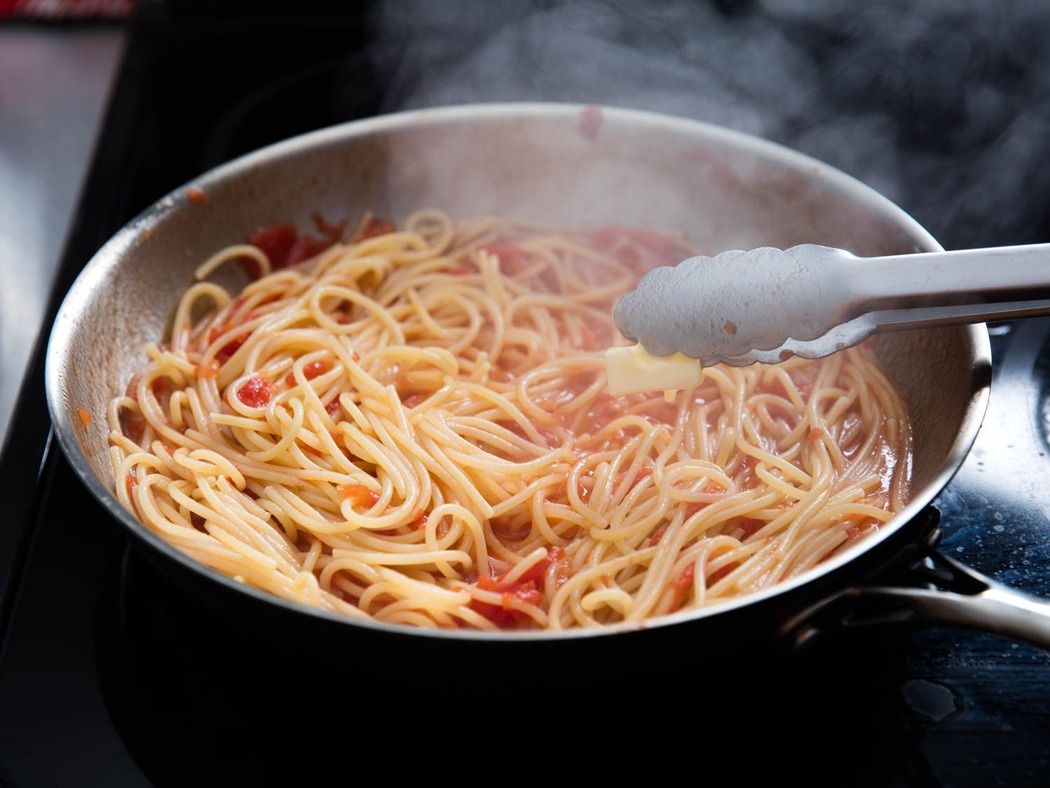
Here is the thing that separates home cooking from restaurant cooking. At home, most people cook pasta, drain it, put it in a bowl, and ladle sauce on top. In restaurants, pasta is almost always finished in the sauce. The noodles go from the pot directly into the pan with the sauce, along with a splash of pasta water, and everything is tossed together over heat for a minute or two.
This step matters more than you think. When pasta finishes cooking in the sauce, it absorbs flavour. The starch on the noodle surface melds with the sauce. The pasta water creates an emulsion that turns a loose sauce into a glossy coating. You cannot achieve this effect by pouring sauce over drained noodles. It has to happen in the pan.
Use a large skillet or sauté pan for this step step. It gives you room to toss without sending noodles flying across the kitchen. Keep the heat on medium-low. Add the pasta, add the sauce, add a quarter cup of pasta water, and toss continuously with tongs. The sauce will tighten and cling. The pasta will shine. When it looks right, it is right.
Matching Pasta to Sauce: A Quick Reference
Not all pasta shapes are interchangeable. The shape of the noodle determines how it interacts with the sauce. Long, thin pasta works with light, smooth sauces. Short, tubular pasta works with chunky, hearty sauces. Ridged pasta holds more sauce than smooth pasta. Here is a practical guide.
| Pasta Type | Fresh or Dried | Cooking Time | Best Sauce Pairing |
|---|---|---|---|
| Spaghetti | Dried | 8-10 minutes | Tomato, aglio e olio, carbonara |
| Fettuccine | Fresh | 2-3 minutes | Alfredo, cream-based |
| Penne | Dried | 10-12 minutes | Arrabbiata, pesto, baked dishes |
| Farfalle | Dried | 10-11 minutes | Light cream, vegetable-based |
| Linguine | Dried | 9-11 minutes | Seafood, white wine, clam |
| Rigatoni | Dried | 12-14 minutes | Meat sauce, ragu, baked |
| Orecchiette | Dried | 11-13 minutes | Broccoli rabe, sausage |
| Pappardelle | Fresh | 3-4 minutes | Wild boar ragu, mushroom |
| Orzo | Dried | 8-9 minutes | Soups, salads, pilaf-style |
Fresh pasta cooks much faster because it is already hydrated. Dried pasta needs time to reabsorb water. Do not use the same timing for both. Fresh pasta is done when it floats to the surface and feels tender to the bite. Dried pasta needs the full al dente test.
Fresh vs. Dried: When to Use Which
Fresh pasta is not automatically better than dried. They are different products for different purposes. Dried pasta is made from durum wheat semolina and water. It is extruded through bronze dies that create a rough surface perfect for gripping sauce. Fresh pasta contains eggs, which give it a richer flavour and softer texture.
Use dried pasta for hearty, chunky sauces like Bolognese or amatriciana. The firm texture stands up to aggressive tossing and thick coatings. Use fresh pasta for delicate, butter-based or cream-based sauces where the noodle itself is meant to shine. A simple fettuccine Alfredo is better with fresh pasta. A rigatoni alla vodka is better with dried.
De Cecco vs. Barilla: Not all dried pasta is equal. Look for pasta extruded through bronze dies rather than Teflon. Bronze-die pasta has a rough, matte surface that sauce clings to beautifully. Teflon-extruded pasta is smooth and shiny, and sauce slides right off. The package will usually say “bronze die” or “trafilata al bronzo” if it is the good stuff.
The Most Common Pasta Mistakes Ranked
Let us put it all together. Here are the mistakes I see most often, ranked by how much they affect the final dish.
| Rank | Mistake | Why It Ruins the Dish | The Fix |
|---|---|---|---|
| 1 | Not enough water | Starch concentration makes pasta gummy and sticky | Use 4-6 quarts per pound of pasta |
| 2 | Under-salting the water | Pasta has no internal flavor; sauce cannot compensate | 1-2 tablespoons kosher salt per gallon |
| 3 | Overcooking | Mushy texture, no bite; sauce will not adhere | Test early; drain 2 minutes before package time |
| 4 | Rinsing after draining | Removes surface starch; sauce slides off | Drain and move directly to sauce |
| 5 | Not finishing in the sauce | Pasta and sauce remain separate; no flavor absorption | Toss pasta in sauce with pasta water for 1-2 minutes |
| 6 | Throwing away pasta water | Missed opportunity to emulsify and bind sauce | Reserve 1 cup before draining |
The One-Pot Method: A Shortcut Worth Knowing
If you are short on time or dishes, the one-pot pasta method works surprisingly well. You put the pasta, sauce ingredients, and water into one pot and cook everything together. The starch released by the pasta thickens the sauce naturally. The flavour penetrates the noodle as it cooks.
The key is getting the water ratio right. Too much water and the sauce is thin. Too little and the pasta sticks. Start with just enough liquid to barely cover the pasta, then add more as needed. Stir frequently to prevent sticking. This method works best with shorter pasta shapes like penne or orecchiette. Long pasta like spaghetti is harder to manage in a crowded pot.
It is not traditional. It will not win you points with Italian grandmothers. But it makes a genuinely good weeknight dinner with one pot to wash. That is a fair trade.
Final Thoughts
Pasta is simple, but simple does not mean thoughtless. The difference between a bowl of noodles with sauce and a bowl of pasta that makes you close your eyes and sigh is a handful of small decisions. Use enough water. Salt it well. Cook to al dente. Do not rinse. Finish in the sauce. Save the pasta water.
None of these steps are difficult. None require special equipment or advanced skills. They just require paying attention. The next time you make pasta, try doing it the right way once. Taste the noodle before you add the sauce. Notice how it has flavour on its own. Notice how the sauce clings instead of pools. That is what pasta is supposed to be. And now you know how to get there.