
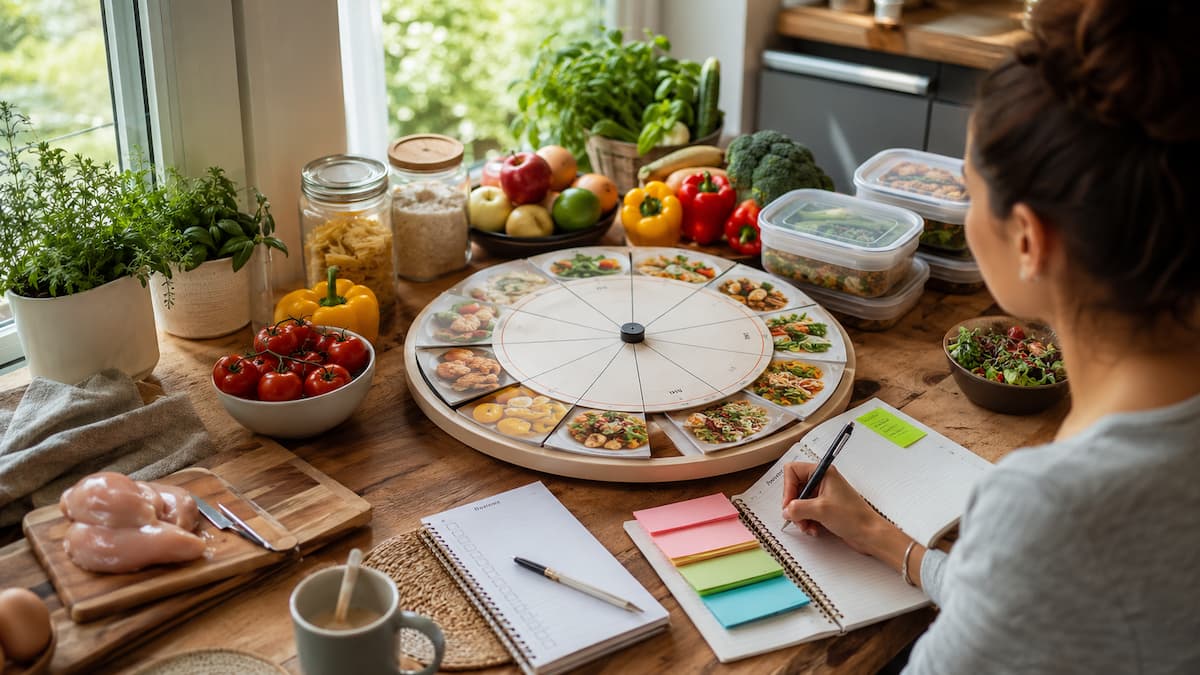
Deciding what to cook sounds like a small task until you have to do it several times every week. By the end of a busy day, the question can become surprisingly tiring: What should we eat tonight? What about tomorrow? Did we just have pasta? Is there anything in the refrigerator that needs to be used? Even people who enjoy cooking can eventually find themselves making the same few meals simply because choosing something different takes more thought than they want to spend.
A rotating meal calendar offers a practical way around that problem. Instead of planning every meal from scratch, you create a limited collection of meals and let them return on a predictable cycle. The goal is not to eat the same dinner every Tuesday forever. It is to reduce the number of decisions that have to be made while leaving enough room for changes, cravings, leftovers, seasonal ingredients, and unexpectedly busy evenings.
The best rotation is therefore not the most ambitious one. It is the one that is easy to remember, flexible enough to survive a disrupted week, and varied enough that cooking does not begin to feel repetitive.
The Calendar Should Reduce Decisions, Not Control Every Meal
A meal calendar works because it moves some decisions from the end of a tiring day to a calmer planning moment. Instead of asking, “What do I feel like cooking tonight?” you can start with a smaller question: “Which meal from this part of the rotation fits tonight?”
That difference may sound minor, but it changes the mental workload. A completely open-ended choice might involve dozens of possibilities. A rotation narrows the field without requiring you to eliminate choice altogether.
The calendar also does not have to dictate exactly what happens every day. If Wednesday’s planned meal is unavailable because you have unexpected plans, the meal can move to Thursday. If you have leftovers, the rotation can pause. A useful system provides structure without turning dinner into an obligation.
Think in rotations rather than rigid schedules
A rigid calendar might say:
| Day | Dinner |
|---|---|
| Monday | Chicken |
| Tuesday | Pasta |
| Wednesday | Soup |
| Thursday | Rice bowl |
| Friday | Tacos |
That can work, but it becomes fragile if Tuesday changes. A rotation is more forgiving. You might instead maintain a sequence of meals and simply continue where you left off.
For example:
Meal A → Meal B → Meal C → Meal D → Meal E → repeat
If Meal C gets skipped, you do not have to redesign the entire week. You simply return to Meal C when the schedule allows.
That small distinction makes the system much easier to maintain over months rather than just during the first enthusiastic week.
Start With Meals You Already Know You Will Make
A common mistake is building a meal calendar around recipes you hope to cook rather than meals you actually cook. The result looks impressive on paper but becomes difficult to maintain.
Start by listing meals that already fit your household’s normal habits. Include simple dishes, reliable favorites, meals that use ingredients you regularly buy, and recipes that can be prepared without unusual equipment or lengthy preparation.
The list does not need to be enormous. A rotation containing 12 dependable meals can be more useful than a list of 50 recipes that you rarely make.
Separate meals by the kind of evening they suit
Not every dinner needs to require the same amount of effort. One useful way to build a rotation is to classify meals according to the circumstances in which they work best.
You might have:
- Quick meals for busy evenings
- Comfort meals for when you want something familiar
- Cooking projects for days when you have more time
- Leftover-friendly meals that produce useful second servings
- Flexible meals that can absorb whatever ingredients need using
This creates a calendar that responds to real life rather than pretending every evening has the same amount of time and energy.
Choose a Rotation Length That Feels Natural
There is no universally correct rotation length. A seven-day rotation is easy to understand, but it can make meals feel repetitive if the same dishes appear every week. A two-week or four-week rotation can create more variety without requiring an enormous collection of recipes.
The right length depends on how often you cook, how many people you feed, how much variety you want, and how comfortable you are repeating meals.
For a household that enjoys familiar food, a shorter rotation may be perfectly adequate. Someone who dislikes repeating dinners may prefer a longer cycle. The important thing is to avoid making the system unnecessarily complicated.
A longer rotation is not automatically better
It is tempting to create a calendar with dozens of different dinners because variety sounds appealing. But every additional meal introduces another recipe to remember, another set of ingredients to purchase, and another decision about whether the meal is worth making again.
A smaller rotation also makes it easier to notice what works. If several meals repeatedly get skipped, they probably do not belong in the core rotation.
A good rule is to start smaller than you think you need. Expand only when the existing rotation feels genuinely repetitive.
Build the Calendar Around Categories, Not Just Recipes
Another way to prevent the calendar from becoming repetitive is to assign meals to broad categories.
For example, instead of deciding on 14 completely unrelated dinners, you might create a pattern such as:
Pasta → rice-based meal → vegetable-focused meal → chicken → soup or stew → flexible leftovers → favorite
The specific dishes can change while the general rhythm remains familiar.
This gives you the psychological benefit of structure without requiring identical meals. If Tuesday is your “rice-based meal” slot, one week might feature fried rice while another uses a rice bowl with roasted vegetables. The category remains stable while the actual dinner changes.
That is often easier to maintain than trying to invent a completely different meal every night.
Keep a Small Core of Repeat Favorites
A rotating calendar should not become an attempt to prove how many different meals you can cook.
Some meals deserve to return frequently because they are reliable, inexpensive, familiar, or simply enjoyable. Keeping those dishes in the rotation gives the calendar an anchor.
The trick is to distinguish between repetition that feels comforting and repetition that feels monotonous. If everyone is happy to eat a particular meal regularly, there is no need to remove it merely for the sake of variety.
At the same time, if a meal repeatedly gets postponed, replaced, or left unfinished, that is useful information. A calendar should reflect actual preferences rather than an idealized version of them.
Use Variations Instead of Constantly Adding New Recipes
Variety does not always require a completely new recipe.
A familiar cooking format can take on a different character when the protein, vegetables, sauce, grain, or seasoning changes. A basic grain bowl, for example, can move in several directions without requiring an entirely new cooking system.
The same principle works with pasta, roasted vegetables, soups, sandwiches, tacos, and other flexible formats.
This approach is particularly useful for reducing decision fatigue because the cooking process remains familiar while the final meal does not feel identical.
Create “variation slots”
Instead of writing a specific meal into every position, some calendar entries can deliberately remain flexible.
For example:
Thursday: Pasta variation
That could become tomato pasta, garlic and vegetable pasta, a creamy sauce, or another familiar combination depending on what is available.
The calendar still answers the question of what type of meal to make, but it leaves the final decision small enough that it does not feel overwhelming.
Give Busy Days Their Own Meals
A meal calendar becomes much more realistic when it recognizes that energy levels change.
Planning a complicated dish for the evening after a long workday is a common reason meal plans fail. The problem is not necessarily the recipe. The problem is that the plan assumes a level of time and energy that may not exist.
Identify the evenings that are predictably difficult and reserve your simplest meals for them. Save more involved cooking for days when you have enough time to enjoy it.
This also prevents the calendar from creating guilt. If a demanding meal is repeatedly postponed because it does not fit the day, move it to a more appropriate place instead of treating the missed meal as a failure.
Leave Empty Space in the Rotation
One of the strongest features of a good meal calendar is what it leaves unscheduled.
If every dinner is assigned weeks in advance, there is little room for leftovers, spontaneous meals, unexpected invitations, restaurant meals, or ingredients that suddenly need to be used.
Leaving one or two flexible positions in a rotation can solve this problem. Those spaces might be used for leftovers, pantry meals, takeout, freezer food, or whatever sounds appealing at the time.
The calendar then provides structure without taking away spontaneity.
Flexible does not mean disorganized
There is a difference between having intentional flexibility and abandoning the plan entirely.
A flexible slot still has a purpose. You might label it “use what needs using,” “leftovers,” or “easy meal.” That gives you a decision framework without requiring a predetermined recipe.
The goal is to make fewer decisions, not to eliminate every decision.
Build Around Your Real Shopping Habits
Although this article is about meal rotation rather than grocery planning, the two systems naturally influence each other.
If your rotation repeatedly calls for ingredients you rarely buy, the calendar will become inconvenient. Likewise, if several meals depend on completely unrelated ingredients, the system may create unnecessary shopping complexity.
Look for meals that share useful ingredients without making the entire rotation taste the same. A few vegetables, grains, herbs, proteins, sauces, or pantry staples can appear across different meals while being used in noticeably different ways.
This makes the rotation easier to maintain and can reduce the number of ingredients that sit unused.
Review the Rotation Instead of Starting Over
A meal calendar should evolve.
After using it for several weeks, look at which meals were made enthusiastically, which were repeatedly skipped, which produced too many leftovers, and which required more effort than expected.
You can then make small adjustments.
| What keeps happening | What it may suggest |
|---|---|
| The same meal is always chosen first | It may deserve a permanent place in the rotation |
| Several meals are repeatedly skipped | They may not fit your real routine |
| Too many leftovers accumulate | Reduce portions or change the meal frequency |
| Cooking feels repetitive | Add more variations or extend the rotation |
| Shopping becomes complicated | Favor meals with overlapping ingredients |
| Busy evenings cause constant changes | Add more quick meals to those positions |
This is much better than designing a new calendar every month. Small corrections preserve the useful structure while gradually making the system more personal.
When a Rotation Starts Feeling Boring
Even a well-designed rotation can become stale. The answer is not necessarily to throw it away.
First, identify what is actually causing the boredom. Are the same flavors repeating? Are the cooking methods too similar? Are the meals visually similar? Or are you simply seeing the same dish too frequently?
Sometimes one small change is enough. Rotate the seasoning style, change the vegetables, introduce a different sauce, or move a favorite meal further apart in the cycle.
A four-week rotation does not need four completely different versions of every meal. It only needs enough variation that the overall pattern remains enjoyable.
Avoid Turning the Calendar Into Another Chore
The irony of meal planning is that a system designed to reduce mental work can become a source of mental work itself.
If maintaining the calendar requires constantly updating spreadsheets, searching for recipes, calculating every ingredient, and rearranging meals whenever plans change, the system has become too complicated.
Keep the calendar easy to edit. A paper calendar, notes app, simple spreadsheet, or printed list can all work. The technology matters far less than whether you can understand the plan quickly.
The best system is usually the one you will still use when you are tired.
A Simple Method for Building Your First Rotation
If you are starting from scratch, begin with a list of around 12 to 16 meals you already know how to prepare. Remove anything that feels unnecessarily complicated or repeatedly gets skipped.
Next, divide those meals into practical groups such as quick, moderate-effort, flexible, and longer cooking. Then arrange them into a rotation that avoids putting several demanding meals together.
Add a few flexible spaces rather than assigning every available dinner. Finally, use the rotation for several weeks before making major changes.
You are not trying to create the perfect calendar on the first attempt. You are testing a system against real life.
What a Good Rotation Looks Like After a Few Weeks
A successful calendar should eventually become almost invisible.
You should spend less time asking what to cook. Grocery decisions should become somewhat easier because you recognize the meals that are coming up. Favorite dishes should return often enough to remain familiar without dominating the menu. Busy days should have realistic options, while more relaxed days can leave room for experimentation.
Most importantly, changing the calendar should not feel like starting over.
That is a useful test of whether the system is working. If one missed meal destroys the entire plan, the calendar is too rigid. If you can skip, swap, postpone, or modify a meal without losing the overall structure, the rotation is doing its job.
The Goal Is Fewer Decisions, Not Fewer Choices
A rotating meal calendar works best when it removes unnecessary decisions while preserving meaningful ones. You do not need to decide from hundreds of possible dinners every evening, but you should still have enough freedom to respond to your appetite, schedule, ingredients, and circumstances.
Start with meals you already trust. Build around categories rather than an endless collection of recipes. Keep dependable favorites, allow variations, protect busy evenings from ambitious cooking plans, and leave some space for leftovers or spontaneous choices.
Over time, the calendar becomes less about following a schedule and more about creating a reliable default. When you know roughly what kinds of meals are coming next, dinner requires less mental negotiation. That is the real benefit of a rotation: it does not make cooking automatic, but it removes one of the most tiring parts of cooking—the need to decide from scratch every single time.
Frequently Asked Questions
How many meals should be in a rotating meal calendar?
There is no ideal number for everyone. Starting with around 12 to 16 dependable meals is often enough to create useful variety without making the system difficult to maintain. You can expand the rotation later if the meals begin to feel repetitive. A smaller collection of meals you actually enjoy is generally more useful than a huge list that rarely gets used.
Should a rotating meal calendar repeat the same meals every week?
It does not have to. A weekly rotation can work for households that enjoy frequent repeats, but a two-week or four-week cycle can provide more breathing room. You can also rotate meal categories instead of exact recipes, allowing the same general format to return while the ingredients and flavors change.
What should I do if I do not feel like eating the planned meal?
Treat the calendar as a guide rather than a rule. Swap the meal with another position in the rotation, use a flexible slot, or postpone it. The purpose of the system is to reduce decision fatigue, so it should not create frustration when real-life preferences change.
How can I keep a meal rotation from becoming boring?
Use variations rather than constantly adding completely new recipes. Change vegetables, sauces, seasonings, grains, or proteins while keeping familiar cooking formats. You can also increase the length of the rotation or move frequently repeated meals farther apart. The goal is enough variation to maintain interest without creating unnecessary planning work.
Is a rotating meal calendar the same as weekly meal planning?
Not exactly. A rotating calendar establishes a repeatable structure for deciding what kinds of meals return over time. Weekly meal planning is more specific to a particular week and may include shopping, preparation, leftovers, schedules, and other practical details. The rotation can serve as the foundation, while weekly planning handles the details.
What if my schedule changes frequently?
A flexible rotation is especially useful in that situation. Avoid assigning every meal to a specific date and leave several openings for leftovers, quick meals, or unexpected changes. You can continue through the sequence rather than feeling that the entire plan has failed because one dinner was moved.