
⏱ Reading time: 8 minutes
So here’s the thing. I used to cook dinner every single night. Like a chump. Return home from work, gaze into the refrigerator, assemble a meal, dine at nine, wash the dishes until ten, and then collapse. Rinse and repeat. Five nights a week. For years.
Then I got tired. I’m not tired of cooking; I’m just tired of the rhythm of it. The constant starts from zero. The chopping was at 7 PM, when my brain was already done. The “what should I make” decision fatigue that hits every day like clockwork. Something had to give.
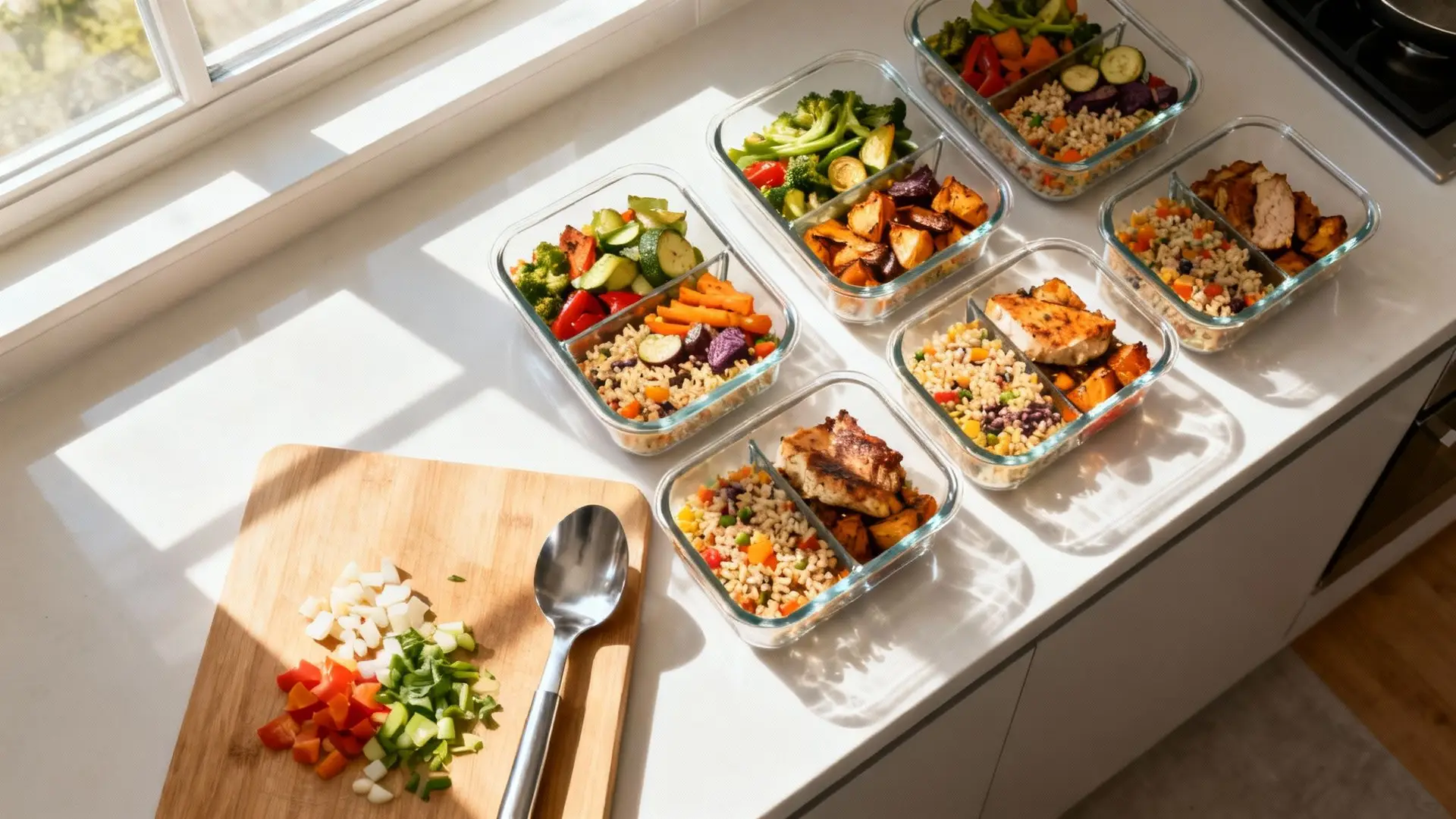
Batch cooking was my escape hatch. It’s not the Instagram kind where you spend Sunday prepping fourteen identical containers of chicken and broccoli. Screw that. I mean the realistic kind where you cook a big pot of something on Sunday, eat it in different ways all week, and actually enjoy your evenings. That kind.
This is not meal prep culture. This is just cooking smarter. One session, multiple meals, minimal repetition. Here’s how it actually works without making you hate your life.
What Batch Cooking Actually Means (Spoiler: Not Boring)
People hear “batch cooking” and picture sad Tupperware towers. Same lunch every day. Same sad chicken. No thanks. That is not what I am talking about.
Real batch cooking means making a base — one big component — and then building different meals around it all week. A pot of beans becomes tacos, soup, salad, and a grain bowl. A roasted chicken becomes sandwiches, pasta, stir-fry, and stock. You are not eating the same thing. You are eating variations on a theme.
The magic is in the base. Pick something versatile, something that plays well with others. Then get creative with sauces, toppings, and sides. Same foundation, entirely different vibes. That is the sweet spot.
Pick Your Base Wisely
Not everything cooks well in batches. Delicate fish? No. Crispy fried anything? Absolutely not. You want things that hold up, that improve with time, that reheat without turning to mush.
My go-tos are simple. Beans — any kind, cooked from dried or canned, seasoned simply. Roasted chicken — a whole bird, seasoned with salt and whatever, thrown in the oven for an hour. A big pot of rice or grains — farro, quinoa, brown rice, or whatever you like. Roasted vegetables — sturdy ones like sweet potatoes, carrots, cauliflower, Brussels sprouts.
These four bases cover most of my week. Mix and match. Add different sauces. Throw in fresh stuff as you go. The base is cooked. The rest is assembly.
| Base | Cook Time | Keeps For | Best Because |
|---|---|---|---|
| Pot of Beans | 1.5 to 2 hours (mostly hands-off) | 5 days in the fridge, 6 months in the freezer | Infinitely versatile, cheap, filling |
| Whole Roasted Chicken | 1 to 1.5 hours | 4 days in the fridge, 3 months in the freezer (shredded) | Meat + carcass for stock are two wins |
| Big Batch of Grains | 20 to 45 minutes | 5 days in the fridge, not great frozen | Instant meal foundation, reheats perfectly |
| Roasted Vegetables | 30 to 40 minutes | 5 days in the fridge, 3 months in the freezer | Sweetens and deepens as it sits |
| Slow-Cooked Pork Shoulder | 6 to 8 hours (hands-off) | 4 days in the fridge, 3 months in the freezer | Tacos, sandwiches, bowls, pizza topping |
The Sunday Session (Or Whatever Day Works)
I cook my base on Sunday because that is when I have time. You do you. Saturday morning, Wednesday night, whatever. The point is picking one block of time and protecting it.
My Sunday looks like this. Oven goes on to 425. Chicken goes in. While that roasts, I start a pot of beans on the stove. Somewhere in there, I chop the vegetables, toss them with oil and salt, and place them on another sheet pan. Rice simmers on the back burner. Everything happens at once because everything is left alone.
Total active time? Maybe forty-five minutes. The oven and stove do the rest. I fold laundry, watch a show, and scroll on my phone. By the time the chicken is resting, everything else is done. I have a fridge full of components and I did not even try that hard.
The Oven Is Your Friend: Use it for multiple things at once. Chicken on the middle rack. Vegetables on the lower rack. If you are feeling ambitious, a tray of bacon or tofu on the top rack. One hot box, three things cooked. That is batch cooking efficiency right there.
Turning One Base Into Four Meals
This is where people get stuck. They make a big pot of beans and then eat beans for four days. No wonder they quit. The trick is changing the context, not the base.
Here is what I mean. Same pot of black beans. Monday: beans over rice with salsa, avocado, and a fried egg. Tuesday: blended with stock and spices into black bean soup. Wednesday: mashed slightly, spread on tortillas with cheese, turned into quesadillas. Thursday: tossed with roasted vegetables, farro, and a lime vinaigrette into a grain bowl.
Same beans. Four entirely different meals. The base stays constant. Everything around it changes. That is the entire game.
| Base | Meal 1 | Meal 2 | Meal 3 | Meal 4 |
|---|---|---|---|---|
| Roasted Chicken | Roast chicken dinner with vegetables | Chicken salad sandwiches with greens | Shredded chicken tacos with slaw | Chicken soup from the carcass |
| Pot of Lentils | Lentil soup with crusty bread | Lentil salad with vinaigrette and feta | Lentil tacos with pickled onions | Lentil shepherd’s pie topping |
| Cooked Rice | Stir-fry with whatever vegetables | Fried rice with egg and soy sauce | Rice bowl with beans and salsa | Rice pudding with cinnamon |
| Slow-Cooked Pork | Pulled pork sandwiches with slaw | Pork tacos with pineapple salsa | Pork fried rice with vegetables | Pork and beans with barbecue sauce |
Sauces and Toppings: The Secret Weapon
Batch cooking lives or dies by what you add at the end. A bowl of rice and beans is boring. A bowl of rice and beans with salsa, avocado, hot sauce, and a squeeze of lime is dinner. The base is just the canvas. The toppings are the art.
I keep a rotation of quick sauces that can transform any dish. A jar of delicious salsa. A bottle of hot sauce. A tub of Greek yoghurt that works as sour cream. A block of parmesan that shaves over everything. Fresh herbs when I have them. Lemon and lime always.
Homemade sauces are even better and they keep for a week. Chimichurri. Tahini dressing. Peanut sauce. Garlic yoghurt. Make one on Sunday and use it all week. It takes ten minutes and elevates everything it touches.
Storage Without the Sadness
Leftovers get a bad rap because people store them wrong. They were shoved into random containers, forgotten in the back of the fridge, and discovered a week later as a science experiment. No. We are not doing that.
Glass containers with tight lids. That is the whole trick. They do not stain. They do not hold smells. You can see what is inside. They stack. They go from fridge to microwave without complaint. Get a set of five or six containers in various sizes, and your storage game will change completely.
Label everything. I know, I know. It sounds like organisational overkill. But “mystery container” equals “container I will never open. ” You will need a piece of masking tape and a Sharpie. “Black beans, Sunday.” Takes two seconds. Saves you from throwing out food you forgot about.
The Freezer Stash: Not everything gets eaten in four days. Some bases freeze beautifully. Beans in their liquid. Shredded chicken in portions. Roasted vegetables in bags. Soup in containers. Label and date everything. Three months from now, you will thank yourself when you find a bag of pulled pork you forgot about.
What to Cook Fresh
Batch cooking does not mean everything is pre-made. Some things are better when they are fresh and take almost no time to prepare. Eggs. Salad greens. A quick pan sauce. Toast. These are your weeknight moves that take five minutes and make the prepped base feel like a real meal.
I always keep eggs around. Fried egg on top of anything instantly makes it dinner. Same with a fried egg on leftover rice, beans, roasted vegetables, or even soup. It is the ultimate lazy garnish that looks intentional.
Fresh vegetables that do not roast well — lettuce, cucumber, tomatoes, and fresh herbs — are worth buying mid-week. They take thirty seconds to chop and add crunch, brightness, and the illusion that you just cooked something elaborate.
When Batch Cooking Fails (And How to Fix It)
Let us be real. Occasionally you make too much. Occasionally you get sick of the base by day three. Sometimes life happens, and you eat out twice, leaving you with a fridge full of beans that are going bad. It is fine. It happens.
The fix is simple. Freeze what you will not eat in four days. Do not wait until day six to decide. Portion it on day two or three, while it is still fresh, and stash it. Future you will be grateful.
If you are bored of the base, change the format. Sick of bean bowls? Blend them into soup. Tired of shredded chicken? Make fried rice. The base is just an ingredient. You are allowed to get weird with it.
| Problem | Why It Happens | The Fix |
|---|---|---|
| Bored by day three | Not enough variety in preparation | Change the format — soup, salad, tacos, stir-fry |
| Food goes bad before you eat it | Poor planning or life got in the way | Freeze portions on day two or three |
| Everything tastes the same | Same seasonings on the base | Keep the base plain, season at serving time |
| Too much time on Sunday | Trying to cook too many things at once | Pick one or two bases, not four |
Start Small
If this sounds overwhelming, start with one base. Just one. Make a big pot of rice this Sunday. That is it. Eat it different ways all week. See how it feels. Next week, add roasted vegetables. The week after, maybe a protein. Build the habit slowly.
Batch cooking is not about being perfect. It is about being slightly less exhausted on Wednesday night. It is about having something in the fridge that can become dinner in ten minutes. It is about taking a break without resorting to delivery.
One base. Four meals. One cooking session. That is the whole thing. And honestly? It kind of rules.
Final Thoughts
I am not going to tell you batch cooking changed my life. That is dramatic. But it definitely changed my weeks. I cook less often. I eat better. I spend less money. I do not stand in front of the fridge at 8 PM. wondering what I am going to do with a bell pepper and some mustard.
The system is simple. Cook a base. Store it properly. Mix it up with fresh stuff and good sauces. Eat well without trying hard. That is the goal. Not perfection. Just… easier. And better. And honestly, that is enough.
References and Sources
- Toni Okamoto. (2018). Plant-Based on a Budget: Delicious Vegan Recipes. BenBella Books.
- Serious Eats. (2025). Batch Cooking Strategies for Real People. Retrieved from seriouseats.com
- America’s Test Kitchen. (2024). The Best Make-Ahead Meals for Busy Weeks. Retrieved from americastestkitchen.com