
⏱ Reading time: 7 minutes | 🔄 Updated: June 4, 2026
The best sauce in your kitchen does not come from a jar. It comes from the bottom of the pan you just cooked in. Those brown bits stuck to the surface—the ones you are tempted to scrub away—are concentrated flavor. They are the caramelized proteins, sugars, and fats that fell from your meat. With a splash of liquid and five minutes, they become a pan sauce that tastes like you spent hours on it.
I learned this technique from watching a line cook in a small bistro. He seared a steak, poured wine into the same pan, scraped, stirred, and finished with butter. The whole thing took longer to explain than to make. The result was a glossy, rich sauce that made a $15 steak taste like $50. I went home and tried it that night. It worked. It always works.
This guide teaches you one master method that adapts to whatever you have in your kitchen. No recipe needed. No measuring required. Just a hot pan, a liquid, and a few minutes.
What the Brown Bits Actually Are
Those sticky brown remnants are called fond, from the French word for “base.” They form when proteins and natural sugars in meat hit a hot pan and undergo the Maillard reaction — the same chemical process that creates the crust on a seared steak. Fond is not burnt food. It is deeply flavored, intensely savory, and the foundation of every great pan sauce.
The key is achieving funds without burning them. A dark mahogany color is perfect. Black and smoking are ruined. Medium-high heat, a dry or lightly oiled pan, and patience create the ideal fond. If your pan looks black and acrid, the sauce will taste bitter. Start over with a clean pan.
The Master Method: Five Steps
Every pan sauce follows the same sequence. Learn these five steps, and you can improvise endlessly.
Step 1: Sear your protein and remove it. Cook your meat — steak, chicken, pork chops, or whatever — until well-browned. Transfer to a plate to rest. Do not clean the pan. Leave the fond exactly where it is.
Step 2: Add aromatics (optional). If you want depth, toss in minced shallots, garlic, or herbs for thirty seconds. They soften in the residual fat and add another layer. Skip this if you are in a hurry.
Step 3: Deglaze with liquid. Pour in your chosen liquid—wine, stock, vinegar, or even water. It will sizzle violently. Immediately scrape the bottom of the pan with a wooden spoon or spatula. The fond dissolves into the liquid, creating the sauce base.
Step 4: Reduce. Let the liquid bubble and reduce by half. This concentrates flavor and thickens the sauce naturally. It takes three to five minutes. Stir occasionally.
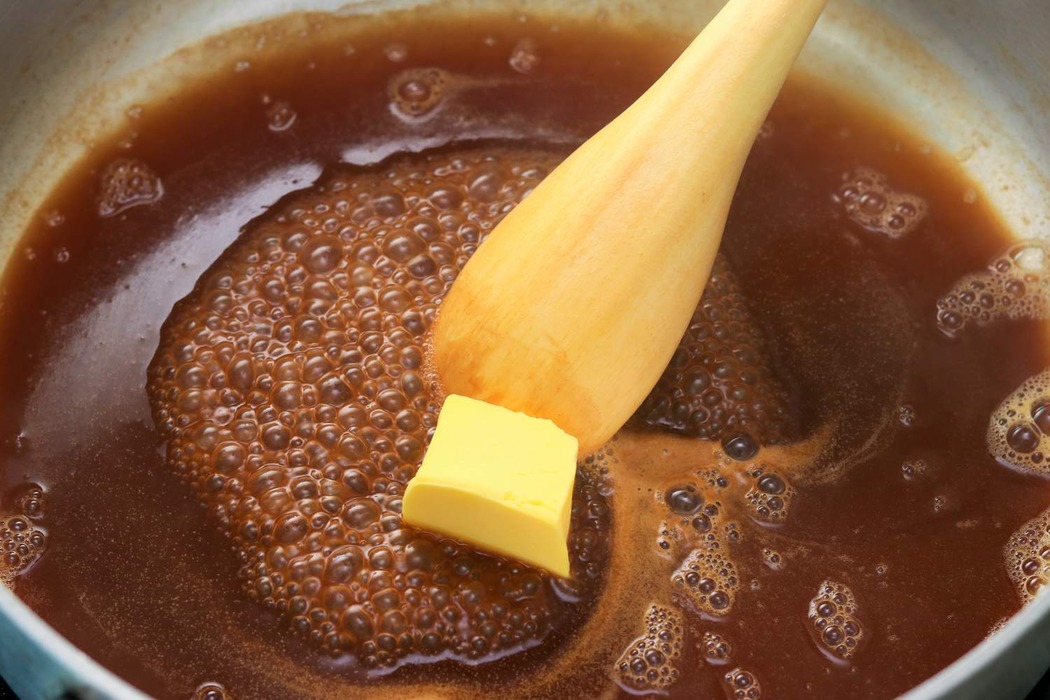
Step 5: Finish and enrich. Remove from heat. Swirl in a pat of cold butter, a splash of cream, or a drizzle of good olive oil. This adds body, shine, and richness. Taste. Adjust salt and pepper. Pour over your rested meat.
The Cold Butter Trick: Cold butter emulsifies into a warm sauce, creating a silky, glossy finish. Warm butter separates and makes the sauce greasy. Cut your butter into small cubes and add them off the heat, one at a time, swirling until each melts before adding the next.
Choosing Your Liquid
The liquid you deglaze with determines the sauce’s character. Here is a quick guide to matching a liquid with a dish.
| Liquid | Best With | Flavor Profile | Amount to Use |
|---|---|---|---|
| Red Wine | Beef, lamb, duck | Bold, fruity, tannic | 1/2 to 3/4 cup |
| White Wine | Chicken, pork, fish | Bright, acidic, clean | 1/2 to 3/4 cup |
| Chicken Stock | Universal | Savory, mild, versatile | 3/4 to 1 cup |
| Beef Stock | Beef, lamb, mushrooms | Deep, rich, meaty | 3/4 to 1 cup |
| Vinegar (Balsamic, Sherry) | Pork, chicken, vegetables | Tangy, sweet, complex | 2 to 3 tablespoons |
| Citrus Juice | Fish, chicken, vegetables | Sharp, fresh, bright | 2 to 3 tablespoons |
| Water | Emergency only | Neutral, relies on fond | 1/2 cup |
You can also combine liquids. Half wine and half stock is a classic restaurant move. A splash of vinegar with stock adds brightness without overwhelming. A squeeze of lemon at the end freshens any sauce. Experiment. The worst that happens is you learn what not to do next time.
Building Flavor With Aromatics
Aromatics are optional but transformative. Thirty seconds in the hot pan before deglazing builds layers that make the sauce taste complex instead of thin.
Shallots are the gold standard. They are milder than onions and dissolve into the sauce beautifully. Garlic adds punch but burns quickly — add it for only fifteen seconds. Fresh thyme, rosemary, or sage infuse the liquid with herbal notes. A pinch of red pepper flakes adds subtle heat.
Add aromatics after removing the meat, while the pan is still hot. Stir constantly. They should soften and smell fragrant, not brown and bitter. If they start to color too fast, pour your liquid in immediately to stop the cooking.
The Herb Stem Secret: Herb stems contain more flavor than leaves and hold up better to heat. Toss thyme or rosemary stems into the pan with your aromatics and let them simmer in the liquid. Remove before serving. The leaves, delicate and quick to brown, are better saved for garnish at the end.
Reducing: The Step That Concentrates Everything
Reduction is where sauce happens. Without it, you have flavored liquid. With it, you have something that coats a spoon and clings to meat.
Bring your deglazed liquid to a brisk simmer. Let it bubble, stirring occasionally, until it has reduced by half. For a standard pan sauce starting with half a cup of liquid, this takes three to five minutes. The sauce should look slightly syrupy. It will thicken more as it cools.
Do not rush reduction with high heat. Aggressive boiling breaks the emulsion and makes the sauce separate. A steady, lively simmer is perfect. You will know it is ready when the sauce coats the back of a spoon and leaves a clean line when you drag your finger through it.
Finishing Moves That Elevate
The final thirty seconds of a pan sauce are where good becomes great. These additions happen off the heat, after reduction.
Cold butter. Swirled in piece by piece, it creates a glossy, restaurant-quality sheen. This is called monter au beurre in French, and it is the difference between home cooking and bistro cooking.
Heavy cream. A splash turns a thin sauce into a velvety one. It also mellows acidity from wine or vinegar. Add it after reducing, then simmer gently for one minute to thicken slightly.
Dijon mustard. A teaspoon whisked in at the end adds tang and helps emulsify the sauce. It works especially well with pork and chicken.
Fresh herbs or citrus zest. Chopped parsley, chives, or dill added at the last second brings color and freshness. Lemon or orange zest brightens everything without adding liquid.
Grated cheese. Parmesan or pecorino stirred into a cream-based sauce adds umami depth. Do not boil after adding cheese—it gets grainy.
Common Mistakes and How to Avoid Them
Pan sauces are forgiving, but a few errors will ruin them fast.
| Mistake | Why It Happens | The Fix |
|---|---|---|
| Bitter sauce | Fond burned before deglazing | Discard burnt fond and start fresh. Fond should be brown, not black. |
| Thin, watery sauce | Not reduced enough or too much liquid added | Reduce longer over medium heat. Or whisk in a teaspoon of cold butter to thicken. |
| Greasy, separated sauce | Butter or oil added while sauce is too hot | Remove from heat before adding fat. Swirl; do not stir aggressively. |
| Bland sauce | Weak fond or too much liquid | Use less liquid next time. Add a splash of soy sauce or Worcestershire for depth. |
| Sauce breaks or curdles | Acid added to cream over high heat | Add acid off the heat. If curdled, whisk in a splash of warm stock to rescue it. |
Three Sauces to Memorize
Once you understand the master method, these three combinations cover most situations. Memorize them and you will never be without a sauce.
The Red Wine Reduction. Sear steak. Remove. Add shallots and thyme. Deglaze with red wine. Reduce by half. Finish with cold butter. Season. Pour over steak. Classic, elegant, and takes six minutes.
The Lemon Butter Sauce. Sear chicken or fish. Remove. Add garlic for fifteen seconds. Deglaze with white wine and lemon juice. Reduce by half. Finish with cold butter and chopped parsley. Bright, clean, perfect for lighter proteins.
The Creamy Peppercorn. Sear steak. Remove. Add crushed peppercorns and shallots. Deglaze with brandy or stock. Add heavy cream. Simmer one minute. Finish with Dijon mustard. Rich, peppery, indulgent.
What Pan to Use
Not every pan makes a good pan sauce. Nonstick pans do not develop fond—the coating prevents sticking, which means nothing browns and sticks to the surface. You need a pan that allows fond to form.
Stainless steel is ideal. It creates a beautiful fond, deglazes perfectly, and lets you see exactly what is happening. Cast iron works too, though it can be harder to judge fond color against the dark surface. Avoid nonstick for this technique entirely.
The pan should be hot enough to sear but not so hot that the fond burns. Medium-high heat for searing. Medium heat for aromatics. Medium-high again for reduction. Learn your stove. Every burner behaves differently.
One Pan, One Meal: The beauty of a pan sauce is that it turns a single pan into a complete meal. You sear, you sauce, you serve. The pan goes straight to the sink. This is weeknight cooking at its most efficient and its most delicious. Master this and you will cook at home more often than you order in.
Final Thoughts
A pan sauce is the closest thing to a cooking superpower. It requires no special ingredients. No advance planning. No hours of simmering. Just the pan you already used, a splash of whatever is open, and five minutes of attention.
The first time you make one, you will be shocked by how good it tastes. The tenth time, it will feel automatic. By the twentieth time, you will stop buying jarred sauces entirely. Why would you? You can make something better in less time than it takes to open a bottle.
Start tonight. Sear something. Pour wine into the pan. Scrape. Stir. Reduce. Finish with butter. Taste. Adjust. Pour. Eat. That is all there is to it. And that is everything.