
A dish can be made with perfectly good ingredients and still taste strangely flat. You may have followed the recipe, cooked everything for the recommended amount of time, and even added the listed seasonings, yet the result does not have the depth you expected. In many cases, the problem is not that the food needs more ingredients. It is that the different parts of its flavor are not working together.
Learning to build flavor is less about memorizing complicated recipes and more about understanding what different ingredients contribute. Salt can make existing flavors clearer, fat can add richness and carry aromas, acid can provide contrast, and heat or aromatics can give a dish character. These four elements are not a strict formula that every meal must follow in equal amounts. They are a practical way to understand why a dish feels balanced, heavy, dull, sharp, fragrant, or satisfying.
Once you start thinking about flavor this way, everyday cooking becomes more flexible. You can look at a basic pot of beans, a pan of vegetables, a simple pasta, or a piece of chicken and understand what it might need without automatically reaching for another seasoning blend.
Flavor Begins Before You Add Seasoning
The first mistake people make when thinking about flavor is assuming that seasoning creates everything. It does not. Every ingredient already brings its own combination of sweetness, bitterness, acidity, savoriness, aroma, moisture, and texture. Cooking changes those characteristics, sometimes dramatically.
An onion slowly cooked in a little fat becomes sweeter and more mellow. A tomato becomes more concentrated as moisture cooks away. Mushrooms develop a deeper savory character when their surface browns properly. Garlic can become soft and sweet with gentle cooking or sharp and assertive when used raw. These changes are part of flavor building before you have even considered the final seasoning.
That is why the same seasoning approach does not work equally well for every ingredient. A naturally sweet roasted carrot does not need to be treated like a neutral grain. A rich cream sauce has a different balancing problem from a fresh vegetable salad. Good flavor starts by noticing what the food already has and then deciding what would make those qualities clearer or more balanced.
The Four Elements and What They Actually Do
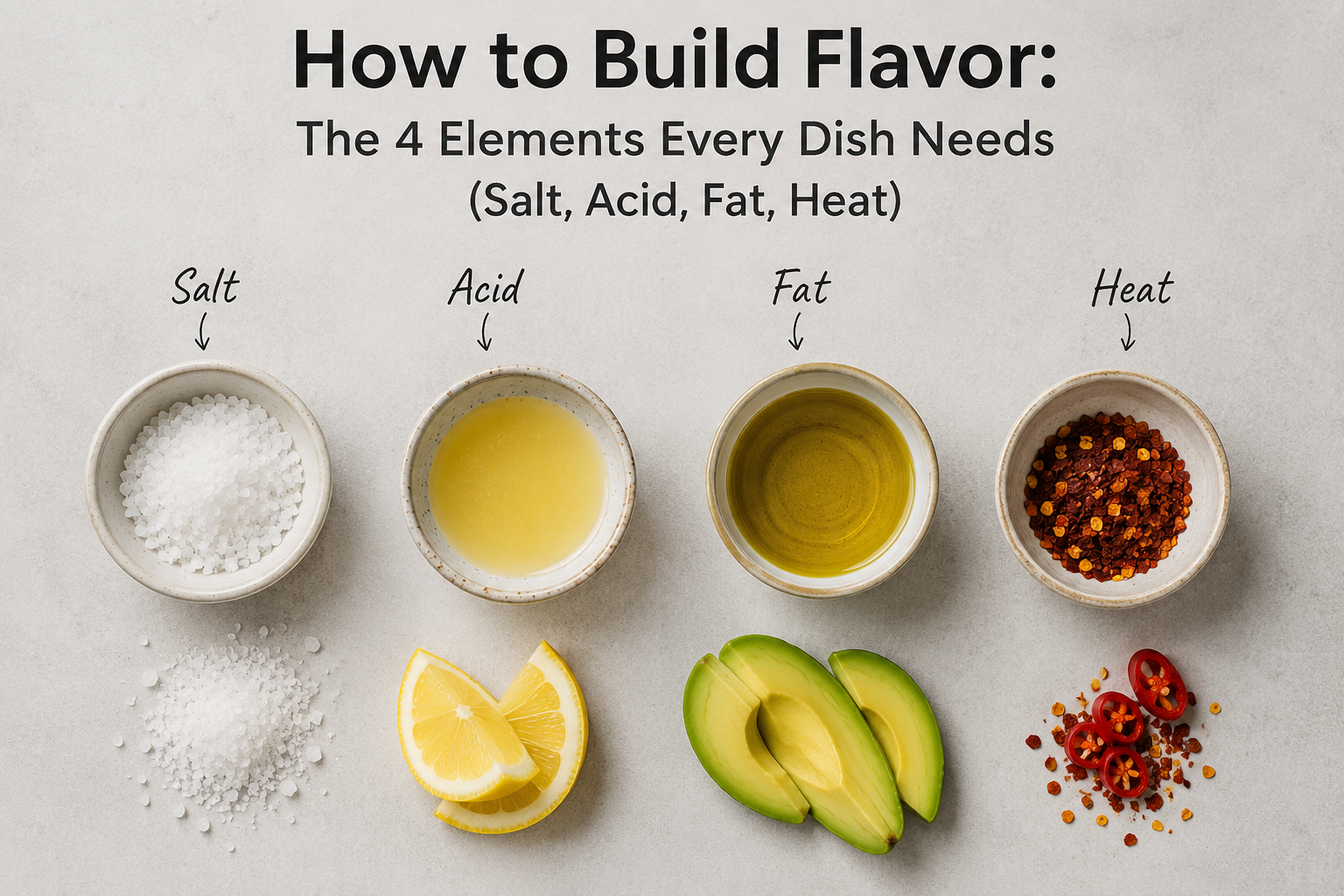
A useful starting framework is to think about four broad elements: salt, fat, acid, and heat or aromatics. Each performs a different job, although individual ingredients can contribute to more than one category.
| Element | What it contributes | Examples |
|---|---|---|
| Salt | Brings existing flavors into clearer focus | Salt, soy sauce, miso, salted stock |
| Fat | Richness, mouthfeel and aroma distribution | Butter, olive oil, cooking oils, cream |
| Acid | Brightness and contrast | Lemon, vinegar, citrus, tomatoes, yogurt |
| Heat & aromatics | Fragrance, intensity and personality | Garlic, onion, ginger, chili, herbs, spices |
The important point is that these elements do not need to be equally strong. A dish may intentionally be rich and mild, bright and fresh, spicy and aromatic, or deeply savory. Balance does not mean making every flavor identical in strength. It means preventing one quality from making the dish feel incomplete.
The framework is also not limited to adding ingredients at the end. Flavor can be built throughout the cooking process. Aromatics may establish the foundation, browning may deepen the main ingredient, fat may carry seasoning, liquids may distribute flavors, and a finishing acid may bring everything into focus.
Salt: The Element That Makes Other Flavors Noticeable
Salt is often described simply as something that makes food salty, but its role is broader. In appropriate amounts, salt can make the natural characteristics of other ingredients easier to perceive. A vegetable soup without enough seasoning may taste vague, while the same soup with properly distributed salt can suddenly taste more like the vegetables, stock, herbs, and other ingredients that are already present.
This is why adding salt is not necessarily about creating a salty flavor. It is often about removing the impression that something is missing. The distinction matters because it changes how you approach seasoning. Instead of repeatedly adding salt until the food tastes obviously salty, the goal is to reach a point where the ingredients become more defined without the seasoning becoming the dominant feature.
The timing of salt can matter as well. A dish that contains a significant amount of liquid may become more concentrated as it cooks, meaning its seasoning level can change along with the volume. A piece of meat, a pot of beans, and a vegetable stir-fry each present different seasoning challenges. Understanding how the food is changing during cooking is more useful than following a rigid rule about when salt must always be added.
More salt is not the same as more flavor
When a dish tastes dull, adding salt is an understandable first response, but it is not always the missing piece. If the food already has enough salt, adding more can make the dish harsh while leaving the underlying problem untouched.
This is where the other elements become important. A rich dish may need acidity. A flat dish may need aromatic intensity. A thin dish may need more richness or concentration. Salt is powerful precisely because it is one part of a larger system.
Fat Does More Than Make Food Rich
Fat changes the physical experience of food as much as its flavor. It can make a sauce feel smoother, give roasted vegetables a more satisfying surface, and provide richness to ingredients that might otherwise taste lean or dry. It can also help distribute certain aromatic compounds throughout a dish.
The type of fat matters because fats can contribute their own character. A neutral cooking oil may allow the other ingredients to remain prominent, while butter adds dairy richness and a distinct aroma. Olive oil can function as both a cooking medium and a noticeable finishing ingredient. Cream, coconut milk, and other rich ingredients can change not only flavor but also texture.
The useful question is therefore not simply whether a dish needs more fat. It is what role the fat is supposed to play. It may be there to cook an ingredient, carry aromatics, provide richness, create a sauce, or finish a dish. Adding additional fat without knowing which job it needs to perform can make food heavy without making it more interesting.
Fat can also connect flavors
A dish containing several aromatic ingredients can sometimes feel disjointed when there is nothing to bring those flavors together. Fat can provide that connection, particularly in sauces and cooked preparations. It helps create a fuller mouthfeel and allows aromatic ingredients to become part of the overall dish rather than tasting like isolated additions.
This does not mean that every dish should be rich. Fresh cooking often benefits from restraint. The goal is to use enough fat to support the food’s character without allowing richness to overpower ingredients that are meant to taste light.
Acid Brings Contrast to Rich and Heavy Foods
Acid is one of the easiest elements to overlook because it does not always announce itself as a separate flavor. When used well, you may not think, “This needs lemon.” You may simply notice that the food suddenly tastes fresher and more complete.
Lemon juice, vinegar, tomatoes, citrus, yogurt, buttermilk, and other acidic ingredients can provide this effect. Acid can cut through richness, sharpen certain flavors, and keep a dish from feeling heavy. This is particularly noticeable in creamy sauces, fatty meats, beans, fried foods, and dishes that contain several rich ingredients.
The amount matters enormously. Too little acid may make little difference, while too much can make the dish sour or harsh. The best use of acid is often subtle enough that it supports the other ingredients rather than becoming the headline flavor.
Acid is especially useful near the finish
Some acidic ingredients are incorporated during cooking, while others work particularly well as finishing touches. A splash of vinegar or squeeze of lemon added near the end can retain a brighter character than an acidic ingredient that has been simmered for a long period.
This gives cooks another way to create contrast. Instead of changing the entire recipe, a small finishing element can shift the relationship between richness, saltiness, and freshness.
Heat and Aromatics Give a Dish Its Identity
The fourth element is broader than chili heat. It includes the aromatic ingredients that give food much of its personality: onions, garlic, ginger, herbs, spices, black pepper, chilies, toasted seeds, and many others.
Two dishes can contain similar amounts of salt, fat, and acid and still taste completely different because their aromatic profiles are different. Garlic and rosemary create one impression. Ginger and scallions create another. Cumin, coriander, chili, and toasted spices produce another again.
Aromatics also change depending on how they are cooked. An onion browned slowly develops very different characteristics from a raw onion. Garlic cooked gently becomes softer and sweeter, while fresh garlic remains much sharper. Spices can become more fragrant when briefly toasted in fat. Fresh herbs can provide a different type of aroma when added near the end rather than cooked for a long period.
Heat is about more than making food spicy
Chili can add warmth and intensity, but it should not be treated as mandatory. The broader purpose of this category is to give the dish an aromatic and sensory identity.
A mild dish can have plenty of aromatic complexity without being spicy. Likewise, a very hot dish can still taste poorly balanced if the heat overwhelms the salt, acidity, richness, and main ingredients.
Spiciness is therefore a choice, not a substitute for flavor.
The Real Skill Is Knowing How the Elements Interact
The four elements become most useful when you stop viewing them independently. A rich sauce may need acid because the fat creates heaviness. A tomato-based dish may already have enough acidity and instead need richness to soften the sharpness. A bland bean dish may need salt, but it may also benefit from aromatics and a small amount of acid.
This interaction explains why adding the same ingredient repeatedly does not always improve food. If a dish already has enough salt, additional salt will not create the missing contrast. If a dish is already rich, adding more butter may make it heavier rather than better.
A good cook gradually learns to recognize relationships. Instead of asking, “What else can I add?” the more useful question becomes, “What quality is missing from the overall experience?”
Build Flavor in Layers
Flavor rarely comes from a single moment. It develops as ingredients are prepared, cooked, combined, reduced, and finished.
An aromatic base might begin the process. Browning can create additional depth. A cooking liquid can bring ingredients together. Herbs or spices can introduce another layer. A finishing acid can provide brightness once the richer flavors have developed.
This layered approach also prevents a common problem: trying to create all the flavor at the very end. Finishing seasoning has an important role, but it cannot always replace flavor that should have developed earlier through cooking.
Early, middle, and finishing flavors
Early-stage ingredients often establish the foundation. This is where onions, garlic, ginger, spices, or other aromatics may begin developing their character.
During the middle of cooking, ingredients can brown, soften, reduce, or release their juices. This stage often creates much of the dish’s depth.
Near the end, fresh herbs, citrus, vinegar, finishing oils, and other delicate ingredients can add brightness and aroma. Their purpose is often not to create the foundation but to make the existing flavors feel more complete.
Browning Can Create Depth Without Extra Seasoning
Seasoning is only one part of building flavor. Cooking technique can create entirely new flavors from ingredients that were already in the pan.
Browning is a good example. When suitable foods develop a browned surface, complex compounds form that contribute savory, roasted, nutty, or caramelized characteristics. This is why a properly browned piece of meat or a tray of roasted vegetables can taste considerably more developed than the same ingredients that were simply heated.
Moisture is an important factor. If a pan is crowded and ingredients release a large amount of water, the food may steam rather than brown effectively. Surface contact, heat level, quantity, and cooking time all influence the result.
This is one reason flavor-building cannot be separated completely from technique. Sometimes the missing flavor is not another seasoning at all. It is the result of changing how the ingredient is cooked.
Don’t Turn Every Dish Into a Spice Cabinet
There is a temptation to associate complexity with the number of ingredients in a recipe. More spices, sauces, herbs, and seasonings can seem like they should automatically produce more interesting food.
In practice, too many competing flavors can make a dish difficult to understand.
A simple roasted vegetable dish might need nothing more than appropriate salt, enough fat to encourage good cooking, a complementary aromatic, and a small amount of acidity at the end. Adding six more seasonings may obscure the natural flavor that made the vegetable worth cooking in the first place.
Complexity is not the same as quality. Sometimes the best flavor comes from giving a few ingredients enough room to be noticed.
Consider Texture Alongside Flavor
Flavor is experienced together with texture, temperature, aroma, and mouthfeel. A dish can have excellent seasoning and still feel incomplete because everything in it is soft, heavy, or similar in texture.
A creamy soup might benefit from something crisp on top. Roasted vegetables can become more interesting with a fresh herb garnish. A rich pasta can feel lighter when paired with something acidic and fresh.
Texture is not one of the four flavor elements, but it affects how those elements are perceived. Contrast can make a meal more satisfying without requiring additional seasoning.
This is particularly useful when cooking simple meals. You do not always need another ingredient to make food more interesting. Sometimes a change in texture or temperature can provide the contrast that was missing.
A Simple Example: Building a Better Bean Dish
Beans are a useful example because they are relatively mild and can take on many different flavor profiles. Start with cooked beans that already have a good texture. Salt can bring their earthy flavor forward, while onion, garlic, herbs, or spices can establish an aromatic foundation.
A little fat can add richness and help carry those aromatics. If the finished dish feels heavy or lacks brightness, a small amount of lemon juice or vinegar can provide contrast. None of these additions needs to dominate.
The result comes from the relationship between the elements. The beans remain the main ingredient, while salt clarifies, fat enriches, aromatics add personality, and acid prevents the final dish from feeling dull or heavy.
Another Example: Roasted Vegetables
Roasted vegetables demonstrate how cooking itself contributes to flavor. Proper heat and enough space allow the vegetables to develop browned surfaces and concentrated flavors. A little cooking fat helps with the roasting process and contributes richness.
Salt can make the natural flavor more pronounced, while herbs, spices, garlic, or pepper can introduce another aromatic dimension. Once the vegetables are cooked, a small amount of lemon juice or vinegar can provide a fresh contrast to their roasted character.
The important point is that the final result does not depend on a complicated seasoning mixture. The flavor comes from several small decisions that support one another.
Flavor Building Is Not a Fixed Formula
There is no universal measurement for how much salt, fat, acid, or aromatic intensity every dish requires. Cuisine, ingredients, cooking method, personal preference, and the intended character of the meal all influence the balance.
A delicate vegetable preparation may need very little intervention. A slow-cooked stew can handle stronger seasoning and deeper aromatics. A creamy dish may benefit from acidity, while a naturally acidic preparation may need richness.
Use the four elements as questions rather than rules. What does the main ingredient already contribute? Where is the richness coming from? Is there enough contrast? What gives the dish its aroma and identity?
Those questions are far more useful than trying to force every recipe into an identical structure.
The Four Elements Are a Starting Point, Not the Finish Line
Salt, fat, acid, and heat or aromatics provide a practical vocabulary for understanding flavor, but they are only part of what makes food enjoyable. Browning, fermentation, cooking time, texture, temperature, ingredient quality, and cultural traditions all influence the final result.
The value of the framework is that it gives you somewhere to look when a dish does not feel quite right. Instead of randomly adding ingredients, you can consider whether the dish needs clearer seasoning, more richness, greater contrast, or stronger aromatic character.
Over time, this becomes less like a checklist and more like instinct. You begin to recognize why a bowl of beans needs brightness, why a rich sauce benefits from acidity, why fresh herbs can change the impression of a finished dish, and why properly browned ingredients can taste more developed without any additional seasoning.
A More Useful Way to Think About Flavor
Building flavor is ultimately about creating relationships between ingredients rather than collecting them.
Salt should help the food taste more like itself. Fat should provide richness or carry the flavors that need it. Acid should create contrast and prevent heaviness. Aromatics and heat should give the dish character without overwhelming its foundation.
When those elements are considered together, even ordinary ingredients become easier to work with. You do not need a complicated recipe every time you cook. You need to understand what is already happening in the pan and make additions that have a clear purpose.
That is what turns seasoning from guesswork into cooking judgment.
Frequently Asked Questions
What are the four elements used to build flavor?
A practical framework is salt, fat, acid, and heat or aromatics. Salt helps make existing flavors more noticeable, fat contributes richness and mouthfeel, acid provides contrast and brightness, while aromatics and heat give food fragrance and personality. They do not need to appear in equal amounts.
Does every dish need all four elements?
No. The four elements are a way to understand flavor rather than a mandatory recipe formula. Some dishes may rely heavily on aromatics and salt, while others may need more acidity or richness. The appropriate balance depends on the ingredients and the style of food being prepared.
Why does acidic food sometimes taste brighter?
Acidity can create contrast and make rich or muted flavors seem more defined. Ingredients such as lemon juice and vinegar can provide this effect when used carefully. The goal is usually not to make the food obviously sour but to prevent the overall flavor from feeling heavy or flat.
Can too many spices make food taste worse?
Yes. More spices do not automatically mean more complexity. If several strong seasonings compete with each other, they can obscure the main ingredients and make the dish difficult to identify. A smaller number of well-chosen ingredients often creates a clearer flavor profile.
When should I add fresh herbs?
The best timing depends on the herb and the dish. Some herbs can withstand longer cooking, while delicate herbs often retain a fresher aroma when added toward the end. Adding herbs at different stages can also create different layers of flavor.
Why does browning improve flavor?
Browning can create new flavor compounds on the surface of foods, contributing deeper roasted, savory, nutty, or caramelized characteristics. The result depends on factors such as heat, moisture, surface contact, and cooking time.
What should I add when food tastes flat?
There is no single answer. First consider whether the dish lacks seasoning, richness, acidity, or aromatic character. Adding more of the wrong element can make the imbalance worse. Thinking about what quality is missing is more useful than automatically adding more salt or spices.
Is fat necessary for flavorful food?
No. Fat is one useful flavor element, but it is not required in large amounts for every dish. Its role can include richness, cooking, mouthfeel, and carrying aromas. Fresh dishes may deliberately use very little fat and rely more on acidity, herbs, spices, and the natural flavor of the ingredients.
How can I build more flavor without making recipes complicated?
Focus on purposeful additions rather than adding more ingredients. Develop aromatics properly, allow suitable foods to brown, season thoughtfully, use richness where it helps, and consider a small finishing element such as fresh herbs or acidity. A few well-timed decisions can have more impact than a long ingredient list.