
Cooking at home is one of the best habits you can build—but let’s be honest, it often feels time-consuming. After a long day, the idea of spending an hour in the kitchen can be enough to push anyone toward takeout or instant meals.
But here’s the reality: cooking doesn’t have to take that long. Most of the time, it’s not the cooking itself that slows you down—it’s the lack of structure, preparation, and simple techniques that make everything flow smoothly.
This guide focuses on practical, real-world methods to reduce cooking time without sacrificing food quality. These are not complicated chef tricks. They are simple habits that anyone can follow, even in a busy daily routine.
Why Cooking Feels Slower Than It Should
Before fixing the problem, it’s important to understand where time is actually being lost.
Common time-wasting mistakes
Most people:
- Start cooking without preparing ingredients
- Search for tools and spices while cooking
- Clean everything after finishing instead of during
- Use inefficient cooking methods
- Try to multitask without a plan
These small issues add up, turning a 20-minute meal into a 60-minute process.
If you’ve ever felt overwhelmed in the kitchen, chances are you’re making some of the common errors explained here: https://golazo.vip/common-cooking-mistakes-beginners-should-avoid/
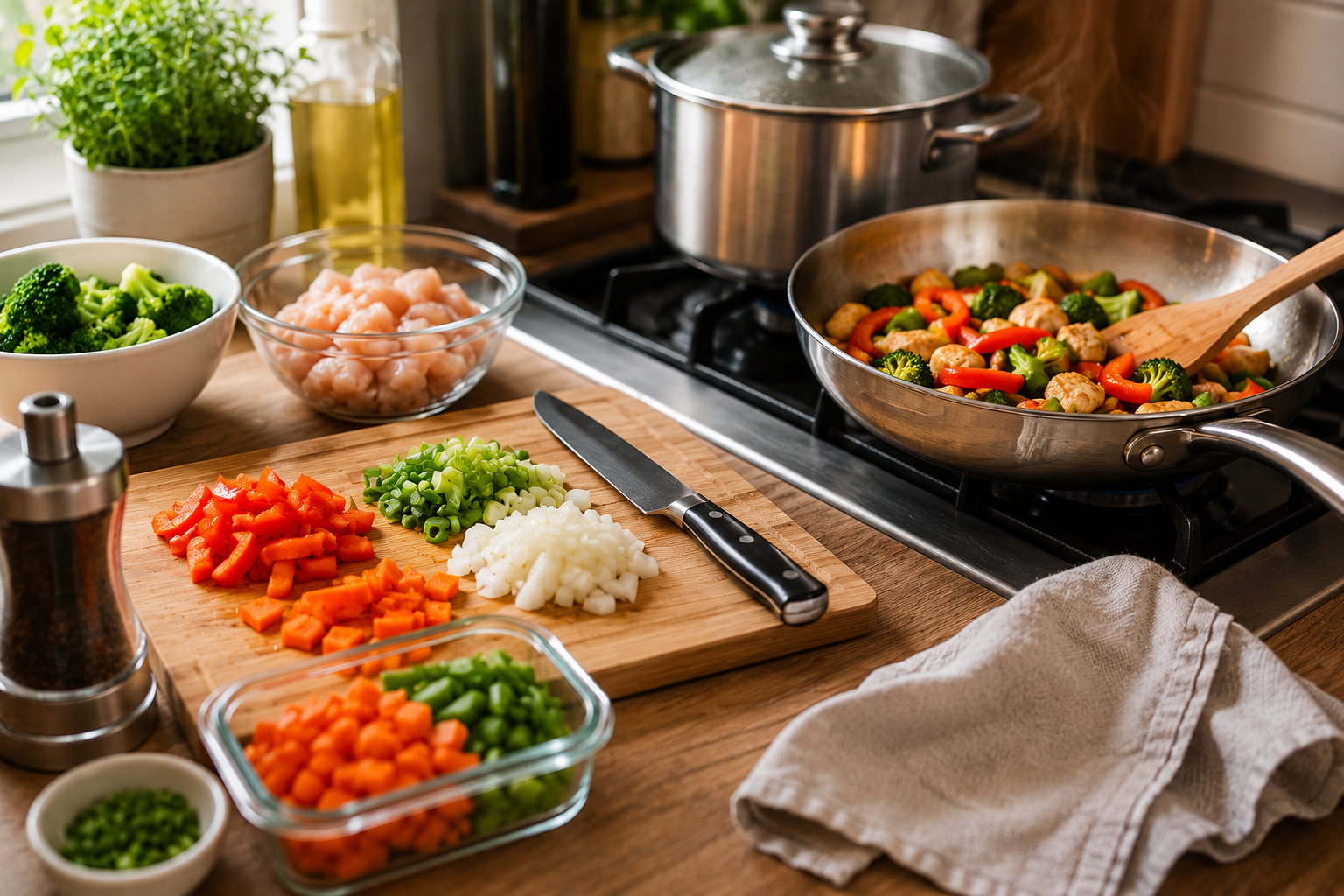
Start With Preparation, Not the Stove
Why preparation saves the most time
Many people rush to turn on the stove first. That’s where the chaos begins.
A better approach is simple:
- Wash and cut all ingredients
- Measure spices
- Arrange everything in order
The real benefit
When everything is ready before cooking:
- You don’t stop midway
- You avoid burning food
- You move faster with fewer mistakes
This method alone can cut your cooking time by 30–40%.
For a more detailed approach, you can explore https://golazo.vip/preparing-ingredients-faster-without-creating-a-mess/.
Use the Right Cooking Method for Each Dish
The hidden time killer
Using the wrong cooking method can double your cooking time.
For example:
- Boiling something that could be sautéed
- Cooking on low heat when medium works better
- Overcrowding the pan, which slows everything down
What to do instead
Understand basic methods:
- Sautéing for quick cooking
- Boiling for simple meals
- Stir-frying for speed and efficiency
If you’re unsure which method fits your dish, this guide can help: https://golazo.vip/understanding-the-most-common-cooking-methods-at-home/
Control Heat Instead of Guessing
The common mistake
Many people either cook on high heat all the time or keep adjusting randomly.
This leads to:
- Burnt food
- Uneven cooking
- Constant interruptions
A better approach
- Start with medium heat
- Increase or decrease gradually
- Let the pan heat properly before adding food
Why this matters
Proper heat control reduces mistakes, which saves time in the long run.
If this is something you struggle with, this guide explains it clearly: https://golazo.vip/learning-to-control-heat-without-burning-your-food/
Keep Your Kitchen Setup Efficient
The problem
Walking back and forth across the kitchen wastes more time than you realize.
The solution
Keep frequently used items within reach:
- Oil and spices near the stove
- Knives near the prep area
- Plates near the serving space
The result
You reduce unnecessary movement and keep your workflow smooth.
A well-organized kitchen setup makes a huge difference, as explained here: https://golazo.vip/setting-up-your-kitchen-for-faster-daily-cooking/
Cook Multiple Things Smartly (Not All at Once)
The mistake
Trying to cook everything at the same time without planning.
The smarter approach
- Start with items that take longer
- Prep the next step while something is cooking
- Avoid handling too many things at once
Why this works
You stay in control instead of feeling overwhelmed.
Use Simple, Repeatable Recipes
Why complicated recipes slow you down
New or complex recipes require:
- More attention
- More ingredients
- More time
What works better
Stick to:
- Simple meals you already know
- Recipes with fewer steps
- Ingredients you’re familiar with
The benefit
You cook faster because you don’t have to think too much.
Reduce Cleaning Time While Cooking
The common issue
Leaving all cleaning for the end creates a huge mess.
A better habit
- Wash utensils while food is cooking
- Wipe surfaces immediately
- Put things back after use
The result
By the time you finish cooking, most of the cleaning is already done.
Cut Ingredients Faster With Better Technique
The real problem
Slow cutting is not about speed—it’s about technique.
What helps
- Use a sharp knife
- Keep ingredients stable
- Practice simple cutting methods
Why this matters
Faster prep directly reduces total cooking time.
Avoid Overcrowding the Pan
The mistake
Adding too much food at once.
What happens
- Food cooks unevenly
- Moisture builds up
- Cooking slows down
The fix
Cook in batches if needed.
The benefit
Food cooks faster and tastes better.
Plan to Save Daily Time
Why planning matters
Last-minute decisions slow everything down.
What to do
- Decide on meals in advance
- Keep ingredients ready
- Store pre-cut items when possible
The impact
You spend less time thinking and more time cooking.
Use Simple Ingredient Shortcuts
Practical shortcuts
- Pre-washed vegetables
- Ready-to-use spices
- Basic sauces
Why this helps
You cut down prep time without affecting quality too much.
Keep Your Workflow Simple and Consistent
What most people miss
Cooking is faster when you follow a system.
A simple workflow
- Prepare ingredients
- Start cooking
- Clean as you go
- Serve immediately
Why it works
Consistency reduces confusion and saves time.
Don’t Aim for Perfection Every Time
The hidden time trap
Trying to make everything perfect.
A better mindset
- Focus on “good enough.”
- Accept small mistakes
- Improve gradually
The result
You cook faster and with less stress.
Build Daily Habits That Save Time
Small habits that matter
- Keep your kitchen organized
- Restock essentials regularly
- Clean after every session
Why this works
These habits prevent delays before they even happen.
FAQs
How can I reduce cooking time daily?
Focus on preparation, organization, and simple recipes. Small changes in workflow make a big difference.
What is the fastest way to cook meals at home?
Use quick cooking methods like sautéing or stir-frying and prepare ingredients in advance.
Does meal planning really save time?
Yes, it reduces decision-making and ensures you have everything ready before cooking.
How do I avoid wasting time in the kitchen?
Keep your workspace organized, clean as you go, and avoid multitasking without a plan.
Is it okay to use shortcuts like pre-cut vegetables?
Yes, they can save time, especially on busy days, without significantly affecting results.
Conclusion
Reducing cooking time isn’t about rushing—it’s about working smarter. Most delays in the kitchen come from disorganization, poor planning, and inefficient habits, not the actual cooking process.
When you:
- Prepare before you start
- Use the right techniques
- Keep your setup organized
- Follow a simple workflow
Cooking becomes faster, easier, and far less stressful.
The goal isn’t to become a professional chef. It’s to make everyday cooking fit into your life without feeling like a burden.
Start with one or two changes today. Maybe prepare your ingredients first, or clean as you cook. Over time, these small improvements will completely change how you experience cooking.
And once you realize how quick and manageable it can be, you’ll find yourself cooking more often—with better results and less effort.