
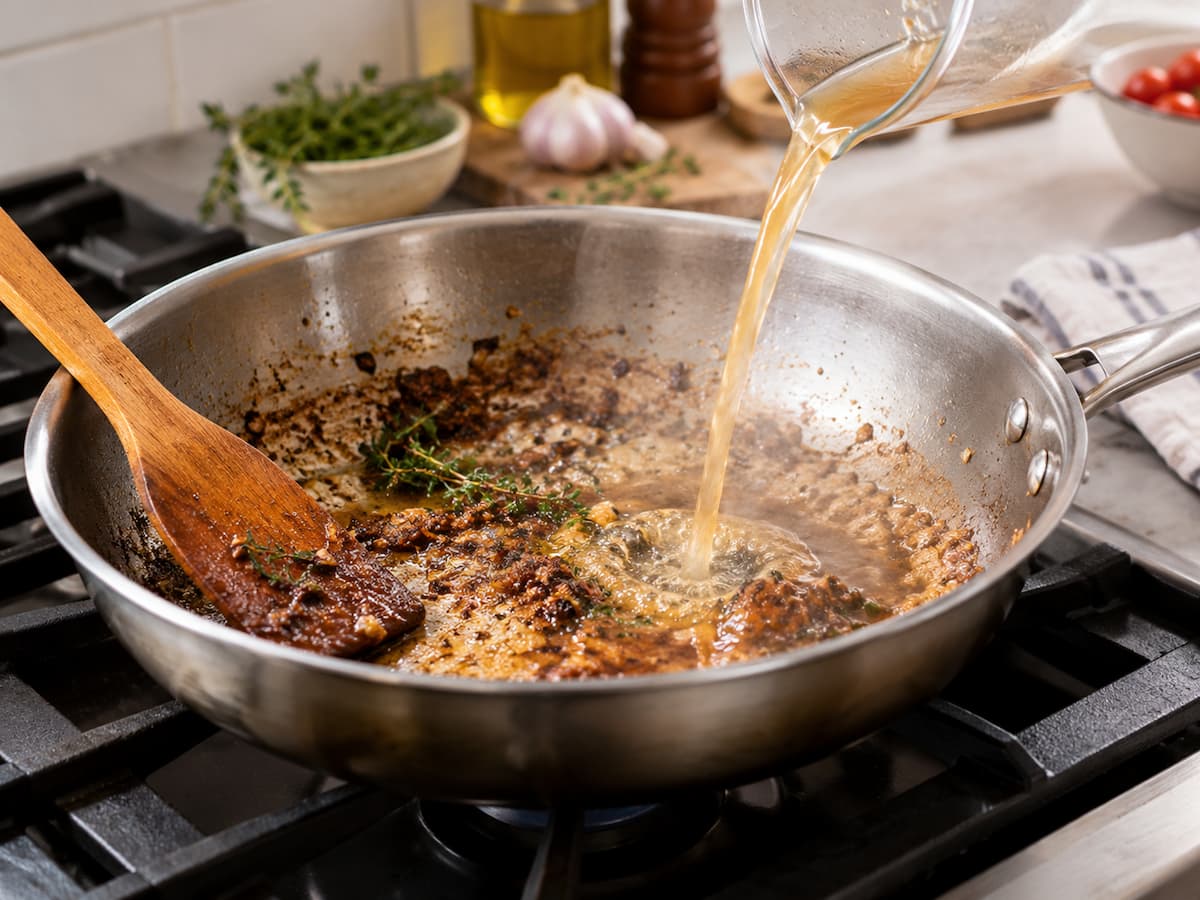
A pan can look almost clean after cooking, yet still hold some of the most useful flavour from the meal. The browned bits left behind after searing chicken, cooking mushrooms, browning ground meat, or sautéing vegetables are not just something to scrub away. With the right liquid and some heat, they can become the foundation of a quick sauce. That technique is called deglazing.
Deglazing means adding liquid to a hot pan after cooking, then loosening the browned material stuck to the bottom so it can become part of a sauce or cooking liquid. It is a simple technique, but the result depends on understanding what is actually happening in the pan. The liquid you choose, how browned the pan is, when you add it, and what you do afterward all affect the final flavour. Once you understand those details, deglazing becomes useful for ordinary meals—not just restaurant-style dishes.
What Deglazing Actually Does
During cooking, ingredients can leave behind browned pieces on the bottom of a pan. These pieces are often called fond, a French culinary term referring to the browned residue that develops during cooking. Fond is different from food that has simply burnt.
When meat or vegetables are cooked in a hot pan, their surfaces undergo browning reactions that create new flavours. Some of the material remains attached to the cooking surface. If it is pleasantly browned rather than blackened and bitter, it can contribute depth to a sauce. Deglazing uses liquid to loosen this material.
A simplified sequence looks like this:
- Food is cooked in the pan.
- Browned material remains on the cooking surface.
- The pan is heated enough for the residue to release more easily.
- A suitable liquid is added.
- The liquid loosens the browned pieces.
- The cook scrapes the bottom with a suitable utensil.
- The resulting liquid can be reduced or used as part of a sauce.
The important point is that deglazing is not merely about cleaning the pan. The goal is to transfer useful browned flavour from the pan to the food.
Why Browned Bits Can Make a Simple Meal Taste Deeper
A plain piece of chicken can taste good on its own, but the cooking process can leave additional flavour behind in the pan. Imagine searing chicken thighs and removing them when they are properly cooked. The chicken has developed a browned exterior, while small pieces of its surface and cooking juices may remain on the pan. If you wash the pan immediately, that flavour goes down the drain. If you instead add a little liquid and loosen the residue, you can turn it into the starting point for a sauce.
The same principle works with many everyday foods:
- Mushrooms can leave behind deeply browned pieces.
- Ground meat can also produce flavourful browned residue.
- Sausages can leave savoury bits in the pan.
- Chicken can create a useful fond when it is seared.
- Onions can leave sweet, browned particles after sautéing.
- Some roasted or sautéed vegetables can leave behind flavourful residue.
This phenomenon is one reason deglazing is particularly useful for simple meals. You do not necessarily need many ingredients to create a more developed sauce. The cooking process has already created some of the flavour.
Deglazing Is Not the Same as Making a Pan Sauce
The two techniques are closely related, but they are not identical.
- Deglazing is the step where liquid is added to loosen the browned material from the pan.
- A pan sauce is what you may make afterward using that deglazed liquid.
For example, you might cook chicken, remove it from the pan, add stock, scrape the browned bits loose, and reduce the liquid. You could then add butter, herbs, mustard, or another ingredient to finish the sauce. The deglazing step provided a flavourful base. The later steps turned that base into a finished sauce. This distinction matters because deglazing does not require a complicated sauce. You can simply deglaze the pan and use the flavourful liquid in the meal.
The Pan Does Not Need to Look Perfect
One common mistake is waiting for the pan to develop an enormous layer of browned material. That is unnecessary. A thin scattering of well-browned residue can be enough to improve a small amount of sauce. The amount depends on what you cooked, the pan size, how much moisture was released, and how aggressively the food browned.
A pan with a few caramel-coloured or dark-brown patches can be useful. A pan covered with black, smoking residue is a different situation. This distinction is important because ‘browned’ and ‘burnt’ are not interchangeable. If the residue smells acrid or tastes bitter, adding liquid does not magically turn it into a good flavour.
Choosing the Right Liquid
There is no single liquid that must always be used for deglazing. The best choice depends on the food and the flavour you want.
1. Water
Water is the simplest option. It can loosen the fond without adding any strong flavour. This makes it useful when you want the taste of the cooked ingredients to remain prominent. Water can also be practical when you have very little in the kitchen. The resulting liquid may need additional seasoning or other ingredients to become a complete sauce.
2. Stock or Broth
Chicken, beef, vegetable, or other suitable stocks can add another layer of flavour. Stock works particularly well when the liquid is reduced afterward. As water evaporates, the remaining flavours become more concentrated. However, be careful with heavily salted stock if you plan to reduce it substantially. Reduction removes water but leaves salt behind.
3. Wine
Wine can be used when its acidity and flavour suit the dish. It is often useful with foods such as chicken, mushrooms, pork, or certain vegetables, but the choice should make sense with the meal. A strongly flavoured wine can change the sauce’s character more than a neutral liquid would. The goal is not to add wine simply because deglazing sounds more sophisticated. Use it when the flavour fits.
4. Beer or Other Cooking Liquids
Beer, cider, and other liquids can also work in appropriate dishes. The important question is not whether a particular liquid is considered a traditional deglazing ingredient. Ask instead:
Will this liquid taste good with the food after it is reduced or concentrated?
That simple question prevents many mismatched sauces.
When Should You Deglaze the Pan?
Timing matters. For many stovetop preparations, deglazing happens after the main ingredient has been removed from the pan. This provides you with access to the cooking surface and prevents the liquid from interfering with the browning process while the main food is still being seared.
A typical sequence might be:
Cook → remove food → assess the pan → add liquid → scrape → reduce or continue cooking → finish the sauce.
There is no requirement to follow that exact sequence in every dish, but it illustrates the basic idea. If you add liquid too early, you can prevent the pan from developing the dry, browned surface that makes deglazing worthwhile. This is especially relevant when trying to sear meat or brown vegetables.
The Pan Temperature Matters
A freezing pan and an extremely overheated pan can both create problems. If the pan is still reasonably hot after cooking, adding liquid can quickly loosen the fond. The sudden addition of liquid also creates steam, so you should pour carefully and avoid placing your face directly over the pan.
At the same time, there is no benefit to letting the residue continue burning while you prepare the liquid. If the pan is smoking heavily or the residue is progressing from brown to black, deal with the situation before proceeding. A slightly browned pan is useful; a badly burnt one may produce an unpleasant sauce.
What You Should Scrape—and What You Should Leave Behind
Once liquid is in the pan, use a suitable wooden, silicone, or other pan-safe utensil to loosen the browned material. You do not need to scrape aggressively just for the sake of removing every mark. Watch for anything that is coming loose.
Good signs:
- Brown or golden-brown particles
- A savoury smell
- Residue that releases fairly easily
- Liquid that becomes richer in colour
Warning signs:
- Black flakes
- Acrid or harsh smells
- A distinctly bitter taste
- Smoke that continues after liquid is added
If the residue is badly burnt, forcing all of it into the sauce can make the result worse. Deglazing is about recovering useful flavour, not treating every piece of stuck food as an ingredient.
Why Reduction Changes the Result
After deglazing, you may have a thin, flavourful liquid. It can taste quite different after some of the water evaporates. Reduction simply means cooking a liquid so that some water evaporates, leaving a more concentrated mixture.
For example, a pan might contain a relatively large amount of thin stock after deglazing. Cooking it for a while can reduce the volume and make the remaining liquid more concentrated. This is where many simple pan sauces become more noticeable in flavour.
But reduction needs attention. A liquid that tastes perfectly balanced at the beginning can become too salty, too acidic, or too intense if reduced excessively. This is especially important when the starting liquid already contains salt.
A Simple Example: Deglazing After Cooking Chicken
Suppose you cook chicken pieces in a skillet. After removing the chicken, you notice several browned patches on the bottom. There may also be a small amount of cooking fat.
Rather than immediately cleaning the pan, you could:
- Check that the residue is browned rather than badly burnt.
- Carefully add a suitable amount of liquid.
- Scrape the bottom with a pan-safe utensil.
- Allow the liquid to simmer while the browned material dissolves into it.
- Taste and decide whether it needs further reduction or seasoning.
- Return the chicken to the pan if appropriate, or spoon the finished liquid over it.
The important part is not the exact ingredient list. It is the sequence of using the pan’s existing flavour before washing it. That same approach can be adapted to other meals.
Deglazing Vegetables Can Work Too
Deglazing is sometimes associated mainly with meat, but vegetables can leave useful browned material behind as well. Mushrooms are a prime example because they can develop substantial browning when cooked properly. Onions and other vegetables can also create flavourful residue when sautéed. Suppose you cook mushrooms until their surfaces are browned and remove them from the pan. A small amount of stock or another compatible liquid can loosen the browned material.
You could then return the mushrooms to the pan or use the liquid in another part of the meal. The flavour will depend heavily on how the vegetables were cooked in the first place. Deglazing does not replace browning; it makes use of the flavour created by browning.
Why Adding Too Much Liquid Can Weaken the Result
More liquid does not automatically mean more flavour, though. If you pour a large amount into a small pan, the fond becomes highly diluted. You may end up with a lot of thin liquid that requires significant reduction. That is not always a problem, especially if you are deliberately making a larger sauce. But for a quick pan sauce, using an amount appropriate to the pan and the quantity of food often makes the process easier. Think about the result you want. If you only need enough sauce to coat a couple of servings, you usually do not need to flood the entire skillet.
Deglazing a Crowded Pan Is Different
A crowded pan may produce a different kind of residue than a pan where ingredients have enough room to brown. When food releases a lot of moisture and the cooking surface stays wet, it limits browning. You may end up with more steaming and less fond. This does not mean deglazing is impossible. It simply means there may be less concentrated browned material to recover.
If pan space is regularly a problem in your kitchen, the Pan & Pot Space Planner can be useful when thinking through cookware and available cooking space. The key distinction is that deglazing works with what the cooking process has created. It cannot manufacture the same browned flavour that would have developed under better browning conditions.
Common Deglazing Mistakes
Deglazing a Burnt Pan
This is probably the most important mistake to avoid. A dark pan is not automatically a bad pan, but blackened residue and a burnt smell are warning signs. If the fond is badly burnt, scraping it all into the sauce can transfer bitterness.
Adding Liquid Before Browning Is Finished
If your goal is to brown meat or vegetables, adding liquid too early can interfere with that process. Let the intended browning happen first, assuming the food and cooking method call for it.
Using a Liquid That Does Not Fit the Meal
A deglazing liquid becomes part of the dish. A strongly flavoured liquid can dominate the sauce after it has been reduced. Consider the complete meal rather than choosing a liquid simply because it is available.
Forgetting About Salt
Reduction can intensify saltiness because water evaporates while dissolved salt remains. If you plan to reduce the sauce substantially, season gradually and taste along the way.
Scraping With the Wrong Utensil
A metal utensil may be inappropriate for some cookware surfaces. Use an implement that is suitable for your pan.
Treating Deglazing as a Fixed Recipe
There is no universal amount of liquid or exact cooking time that works for every pan. A wide skillet, a small sauté pan, a heavily browned piece of meat, and a batch of lightly browned vegetables will all produce different results. Watch the pan rather than relying on one rigid formula.
What If the Pan Has Almost No Browned Residue?
You can still add liquid, but the reason for doing so changes. Without much fond, deglazing will not suddenly create a deeply flavoured sauce. The liquid may still collect concentrated cooking juices or loosen small amounts of residue, but the result may be relatively mild. That is perfectly fine. Not every meal needs a pan sauce, and not every pan produces enough fond to justify one. Deglazing is most useful when the cooking process has left something worth recovering.
Can You Deglaze a Nonstick Pan?
Yes, liquid can loosen cooking residue from a nonstick pan, but the amount and type of browning may differ from that in other cookware. You should follow the cookware manufacturer’s care guidance and use utensils appropriate for the coating. The broader principle remains the same: if useful browned material is present, liquid can help release it. However, the exact performance of a pan depends on its construction, surface, heat distribution, and cooking method, so it is better to focus on what you can actually observe in the pan rather than assuming every skillet behaves identically.
A Useful Way to Think About Deglazing
Instead of memorising a list of liquids or recipes, ask three questions while cooking:
1. What is on the bottom of the pan?
If the residue is pleasantly browned, it may be useful. If it is badly burnt, be cautious.
2. What liquid would fit the food?
Choose something whose flavour works with the finished meal.
3. What do I want the final liquid to become?
You might want a light cooking liquid, a concentrated sauce, or simply enough flavourful liquid to spoon over the food.
Those questions make deglazing much more adaptable than following a fixed recipe.
When Deglazing Is Most Useful
Deglazing is especially practical when you want to turn a simple stovetop meal into something more complete without preparing a separate sauce.
It works well when:
- You have browned chicken or another protein in a skillet.
- Mushrooms or vegetables have left behind flavourful residue.
- You want to use the flavour you created while cooking.
- You need a quick sauce for a small meal.
- You have limited ingredients but a useful cooking pan.
- You want to avoid throwing away flavourful cooking residue.
It is less useful when there is little browning, when the pan is badly burnt, or when the finished dish does not benefit from an additional sauce or cooking liquid.
How Deglazing Fits Into Everyday Cooking
The real value of deglazing is not that it makes every meal more elaborate. It gives you another way to use the ingredients and cooking process you already have. A skillet used for chicken can become the starting point for its sauce. A pan used for mushrooms can produce a flavourful liquid for the same dish. A simple piece of meat can be served with a quick reduction made from what was already left behind. That makes the technique particularly useful for everyday cooking, where efficiency matters.
You are not adding another complicated cooking project. You are making better use of the pan you are already using. If you regularly encounter several different cooking problems—such as sauces that become too thin, food that sticks, or dishes that need adjustment—the Cooking Problem Fixer can provide a practical starting point for identifying possible causes and adjustments.
The Main Idea to Remember
Deglazing works because cooking can leave flavourful browned material on the bottom of the pan. Adding an appropriate liquid loosens that material and gives you a chance to incorporate it into the meal. The best results come from recognising the difference between useful browning and burnt residue, choosing a liquid that suits the food, and paying attention to the concentration as the liquid cooks.
You do not need expensive ingredients or complicated equipment. Often, the flavour is already sitting in the pan. The next time you finish cooking and see a layer of browned residue left behind, pause before washing the skillet. If it smells good and looks properly browned, a little suitable liquid and a few minutes of attention may be all you need to turn that residue into something useful.