
There was a phase in my life when evenings felt more stressful than mornings. I would finish work or daily tasks, sit for a moment, and then suddenly remember: “I still have to cook.” That single thought was enough to drain my energy.
Most nights, I ended up opening the fridge repeatedly, hoping something new would magically appear. Instead, I’d stand there confused, hungry, and frustrated. Either I’d rush to make something random, order takeout, or settle for something I didn’t really enjoy.
One particular evening changed how I think about cooking. I had very few ingredients left—just rice, eggs, and some vegetables that were close to being used. Instead of overthinking, I simply started cooking with what was available. It wasn’t perfect, but it was calm. No panic. No stress.
That moment made me realise something important: last-minute cooking stress doesn’t come from lack of food—it comes from lack of planning.
And the good news is, with a few simple habits, this stress can almost completely disappear.
Why Last-Minute Cooking Feels So Overwhelming in the First Place
Most people assume cooking stress is about being “too busy”, but that’s only part of the truth. The real issue is decision fatigue.
At the end of the day, your brain is already tired. Now you’re asking it to:
- Decide what to cook
- Check available ingredients
- Estimate cooking time
- Consider taste preferences
- And still prepare something satisfying
That’s a lot for a tired mind.
Other common reasons include:
- No clear meal plan
- Random grocery buying habits
- Poor ingredient organization
- Lack of go-to simple meals
- Fear of repeating the same dishes
When I noticed this pattern in my own routine, I realised I wasn’t struggling with cooking itself—I was struggling with decisions under pressure.
The Power of Simple Meal Planning Before the Week Starts
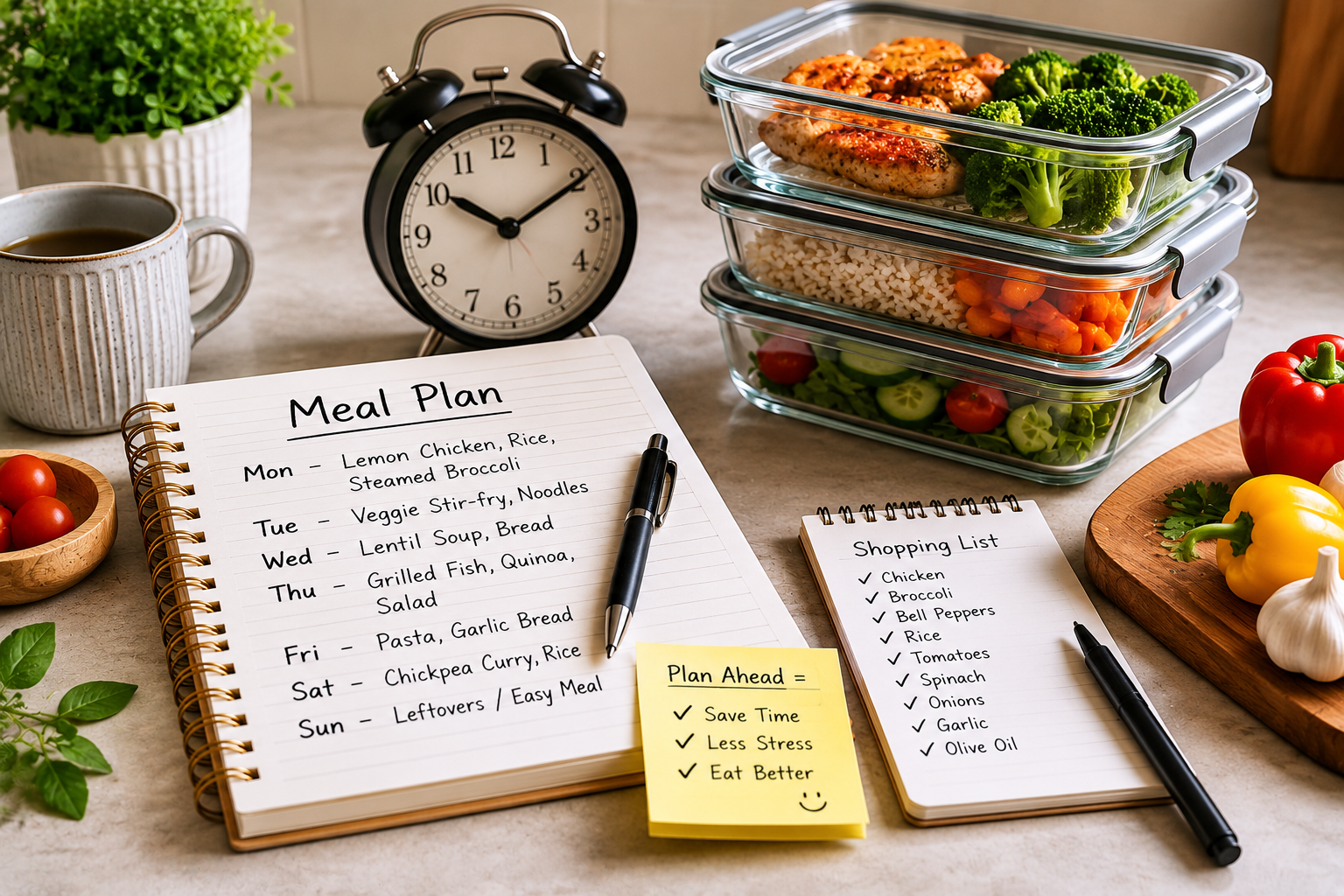
One of the biggest changes I made was setting aside just 15–20 minutes every few days to think about meals in advance. Not strict recipes, just rough ideas.
Simple planning does not mean complicated schedules. It means answering one question:
“What will I realistically eat in the next few days using what I already have?”
Here’s a basic structure that works well:
- Choose 2–3 main base foods (rice, pasta, bread, potatoes)
- Pick simple proteins (eggs, lentils, chicken, beans)
- Add easy vegetables (onions, tomatoes, frozen mix)
- Keep 2–3 flexible backup meals
This small step removes the “what should I cook?” panic completely.
I noticed that once I had even a loose plan, my evenings felt calmer. I wasn’t guessing anymore—I was simply following a direction.
Building a Reliable “Go-To Meal List” That Saves Time Daily
Another powerful habit is creating a list of meals you can cook without thinking too much. These are not fancy recipes—just simple, reliable meals you can depend on.
For example, my personal go-to list includes:
- Egg fried rice
- Vegetable stir-fry with rice
- Simple pasta with sauce
- Omelet with toast
- Lentil soup with bread
- Potato and vegetable sauté
These meals have one thing in common: they are fast, flexible, and forgiving.
When you have a list like this, your brain doesn’t need to reinvent cooking every day. You just pick something familiar and get started.
This alone reduces last-minute stress by a huge margin.
Organizing Your Kitchen So You Stop Searching and Start Cooking
A messy kitchen is one of the biggest hidden causes of cooking stress. If you can’t find ingredients quickly, cooking instantly feels harder than it should.
I learned this the hard way when I used to waste 10–15 minutes just searching for basic items like oil, spices, or rice.
A simple organisation system can fix this:
Keep Similar Items Together
- Cooking oils and sauces in one place
- Spices in a single container or shelf
- Dry goods grouped together
Make Frequently Used Items Easy to Reach
- Eggs at eye level in the fridge
- Bread in a visible section
- Everyday spices in front rows
Create a “Quick Cooking Zone”
This is a small area where you keep essentials:
- Salt, pepper, chili
- Cooking oil
- A few basic utensils
When everything has a place, cooking becomes faster and mentally easier.
The “10-Minute Kitchen Check” That Prevents Evening Panic
One habit that completely changed my routine is doing a quick kitchen check once a day or every two days.
It takes only 10 minutes, but it prevents a lot of stress later.
Here’s what I do:
- Check vegetables that need to be used soon
- Look at leftovers and plan to reuse them
- See what staples are running low
- Decide what must be cooked first
This small routine gives me mental clarity. Instead of discovering problems at dinnertime, I already know what’s available.
It’s like giving your future self a warning before things get chaotic.
How Simple Ingredient Combinations Reduce Cooking Pressure
One of the biggest mistakes people make is thinking every meal needs a new recipe. In reality, most stress disappears when you start thinking in combinations instead of recipes.
Here’s a simple formula I use:
Base + Protein + Flavor + Add-ins
Examples:
- Rice + eggs + soy sauce + vegetables
- Bread + eggs + butter + spices
- Pasta + sauce + vegetables + cheese
- Potatoes + onions + seasoning + oil
Once you understand this structure, you stop panicking about “what to cook”. You start seeing possibilities everywhere.
Even a nearly empty fridge becomes manageable.
Prepping Small Ingredients in Advance to Save Evening Energy
Meal prep doesn’t have to mean cooking everything in bulk. In fact, small preparation steps are often more effective.
Here are simple things you can prepare ahead:
Chop Vegetables in Advance
- Onions
- Tomatoes
- Peppers
Pre-boil Basics
- Eggs
- Potatoes
- Lentils
Store Simple Mixes
- Washed greens
- Ready-to-cook spice mixes
When you reduce prep work during busy hours, cooking becomes much faster and less stressful.
I personally noticed that even 10 minutes of prep in the morning can save 30 minutes of chaos in the evening.
Creating a Backup Meal System for Stress-Free Evenings
Even with planning, some days will still feel unpredictable. That’s why having backup meals is essential.
These are meals you can make in under 10–15 minutes without much thought.
Examples include:
- Fried eggs with toast
- Instant noodles with vegetables
- Simple rice and yogurt bowl
- Quick vegetable sauté
- Sandwiches with available fillings
The purpose of backup meals is not variety—it’s reliability.
When everything else feels difficult, these meals act like a safety net.
Smart Grocery Habits That Reduce Last-Minute Pressure
Interestingly, last-minute cooking stress often starts in the grocery store.
Random buying leads to random cooking challenges later.
Instead, try this approach:
Buy Based on Meal Ideas, Not Impulse
Before shopping, ask:
- What meals will I cook this week?
- What ingredients support those meals?
Stick to Core Staples
- Rice, pasta, bread
- Eggs or protein sources
- Basic vegetables
- Essential spices
Avoid Overbuying Perishables
Too many fresh items often lead to waste and stress.
When grocery shopping becomes intentional, cooking becomes smoother.
Changing the Mindset: From “What Do I Cook?” to “What Can I Make Easily?”
One of the most important shifts is mental, not physical.
Instead of thinking:
“What should I cook tonight?”
Start thinking:
“What can I make quickly with what I already have?”
This small change removes pressure. It turns cooking into a simple action instead of a difficult decision.
Over time, you stop seeing cooking as a burden and start seeing it as a routine part of your day.
A Realistic Example of a Stress-Free Weekly Cooking Flow
Let’s imagine a simple, realistic routine using common ingredients:
Day 1
- Egg fried rice
- Vegetable stir-fry
Day 2
- Simple pasta with vegetables
- Boiled eggs
Day 3
- Potato sauté with spices
- Bread with butter or eggs
Day 4
- Leftover rice bowl
- Quick omelet
Day 5
- Lentil soup
- Toast or rice
Notice how nothing is complicated. Yet everything is practical and stress-free.
This is the power of planning ahead in a simple way.
Conclusion
Avoiding last-minute cooking stress is not about becoming a professional chef or following complex meal plans. It’s about building small, consistent habits that make your daily life easier.
When you plan even lightly, organise your kitchen, prepare simple ingredients, and keep backup meals ready, cooking stops feeling like a burden. Instead, it becomes a smooth part of your routine.
Most importantly, you gain something even more valuable than time—you gain peace of mind at the end of the day. With just a little structure and awareness, your kitchen can go from a source of stress to a place of comfort and control.
FAQs
1. How can I stop last-minute cooking stress quickly?
Start by planning just 2–3 meals ahead and keeping a list of simple go-to dishes. This immediately reduces daily decision pressure.
2. Do I need to meal prep everything in advance?
No. Even small preparations like chopping vegetables or boiling eggs can significantly reduce cooking time and stress.
3. What if I don’t have many ingredients at home?
Focus on simple combinations using basics like rice, eggs, potatoes, and spices. Most meals can be built from these essentials.
4. How do I avoid getting bored of the same meals?
Change flavours and cooking styles instead of ingredients. For example, rice can be fried, boiled, or turned into a stir-fry.
5. What is the easiest way to start planning meals?
Begin with a weekly check of your kitchen, then choose 2–3 simple meals based on what you already have. Keep it flexible, not strict.