
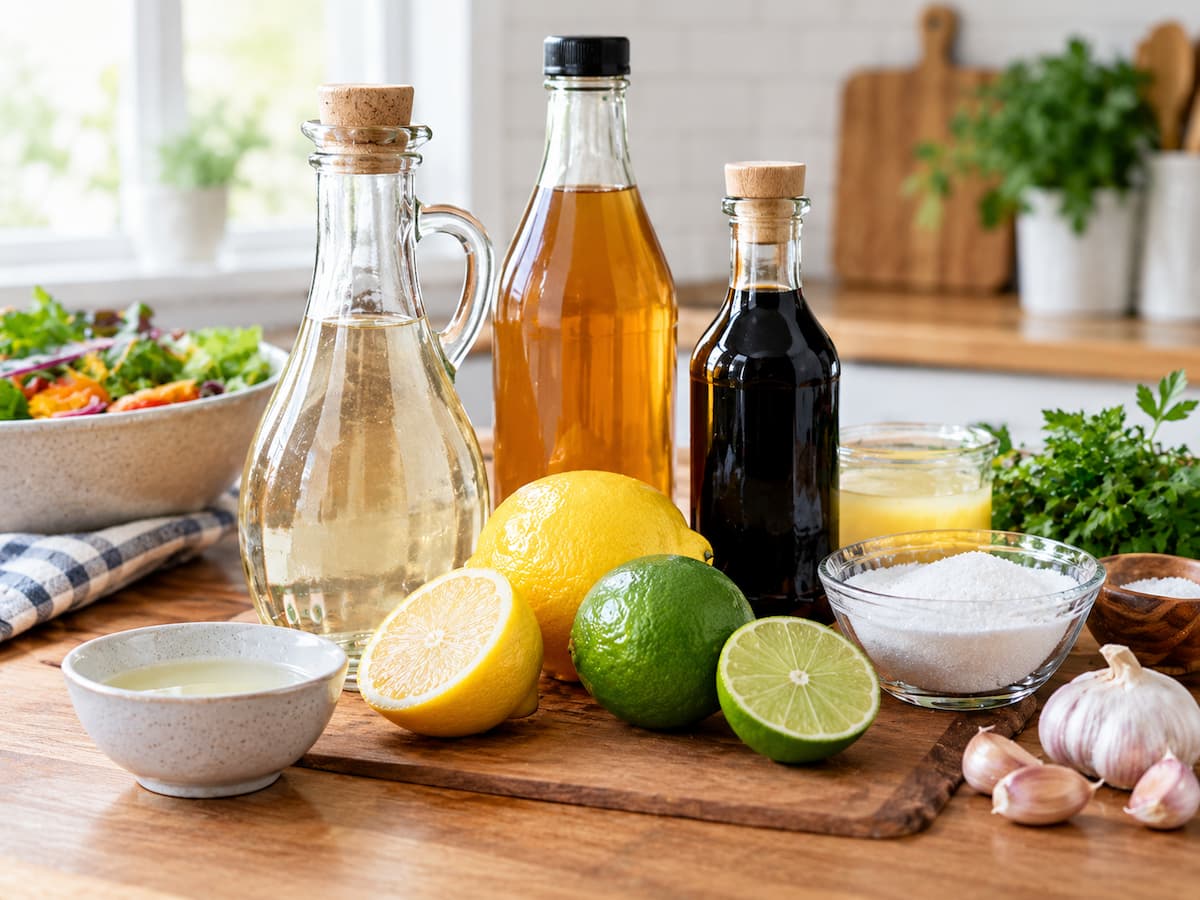
A dish can contain plenty of salt, herbs, spices, and aromatics and still taste flat. Often, what is missing is not another seasoning but a little acidity. Vinegar, lemon juice, lime juice, yoghurt, tomatoes, wine, and other acidic ingredients affect food in several different ways. They can brighten a heavy sauce, balance sweetness, make rich foods feel less tiring to eat, change the texture of certain ingredients, and even affect how some foods behave during cooking.
The tricky part is knowing which acid to use, when to add it, and how much is enough. A splash of vinegar added to a finished soup is not interchangeable with lemon juice added to a marinade or tomato cooked into a sauce for a long time. Understanding those differences gives you much more control in the kitchen. Instead of adding acid because a recipe says to, you can recognise what the dish needs and make a deliberate adjustment.
What Acidity Actually Does In Food
Acidity refers to the presence of acids in food or cooking ingredients. Common kitchen acids include acetic acid in vinegar and citric acid in citrus fruits. You do not need to measure the acidity of a dish to cook well. What matters at home is how acidity changes flavour, texture, and ingredient behaviour.
The most noticeable effect is on flavour. Acid can make other flavours seem more defined and can counterbalance sensations such as sweetness, richness, or heaviness. This is why a rich creamy dish may taste more balanced with a small amount of lemon juice, or why a bean salad can become more appealing with vinegar. Acid does not simply make food taste “sour”. Used carefully, it can make a dish taste less dull without producing an obviously sour flavour. There is also an important difference between adding acid for flavour and using an acidic ingredient as part of a cooking process. Lemon juice squeezed over cooked vegetables is primarily a finishing adjustment. Vinegar used in pickling serves a very different purpose.
Vinegar and Citrus Are Not Interchangeable
Both vinegar and citrus provide acidity, but they bring different flavours and behave differently in recipes. Vinegar is usually defined by its acidic bite and its particular source. White vinegar can be sharp and clean, while apple cider vinegar has a more noticeable fruity character. Rice vinegar is generally milder, and wine vinegars bring flavours associated with the wine from which they are made. Citrus juice brings acidity along with fresh fruit character. Lemon and lime are particularly useful when you want a bright flavour that remains recognisable in the finished dish.
There is also a difference between juice and zest. Citrus zest contains aromatic oils that provide a strong citrus fragrance without adding nearly as much acidity as the juice. If a dish needs a fresh citrus aroma but is already acidic enough, zest can sometimes be a better adjustment than more juice. This is one reason simply replacing one acid with another can change the character of a dish even when both provide sourness.
| Acid | Typical Character | Useful In |
|---|---|---|
| Lemon juice | Bright, fresh, distinctly citrussy | Vegetables, fish, sauces, grains, dressings |
| Lime juice | Sharp, fresh, citrus-forward | Beans, salsas, sauces, drinks, many savoury dishes |
| White vinegar | Clean, sharp acidity | Pickling, sauces, dressings, cooking adjustments |
| Apple cider vinegar | Fruity, moderately sharp | Dressings, sauces, vegetables |
| Rice vinegar | Relatively mild | Dressings, marinades, Asian-inspired dishes |
| Red or white wine vinegar | Tangy with a wine-derived character | Dressings, sauces, vegetables |
| Yoghurt | Tangy and creamy | Sauces, marinades, dips, cooked dishes |
| Tomato | Acidic with sweetness and savoury flavour | Sauces, soups, stews |
The table is a starting point, not a strict substitution chart. Two acidic ingredients may produce a similar level of tang while leaving very different flavours behind.
When A Dish Tastes Flat, Acid May Be The Missing Piece
A common kitchen problem is adding more salt when a dish does not seem flavourful enough. Sometimes that works. Sometimes the food is already adequately salted and simply lacks contrast. Imagine a lentil soup that tastes rich but slightly dull. Adding more salt may make it saltier without making it more lively. A small amount of lemon juice or another suitable acid can provide contrast and make the existing flavours more noticeable.
The same idea works with many foods:
- A rich sauce can benefit from a little acidity.
- Roasted vegetables can taste brighter with lemon juice or vinegar.
- A sweet glaze can become less one-dimensional with a small amount of vinegar.
- Beans can taste more lively with citrus or a sharp dressing.
- A creamy dressing may need acidity to balance its richness.
The important point is small adjustments are usually easier to control than large ones. Once too much acid has been added, correcting the flavour can be considerably harder.
Acid Added Early Does Not Behave Like Acid Added Late
Timing matters. When an acidic ingredient is added near the end of cooking, its flavour often remains more noticeable and fresh. When it is added earlier and cooked for a longer period, its flavour can change as the dish cooks and concentrates. That does not mean acid should always be added at the end. Some recipes depend on acidity being present throughout cooking. Tomato sauces, braises, marinades, and other preparations can have good reasons for introducing acid earlier.
The useful distinction is this:
Add acid early when it is part of the cooking process; add it late when you mainly want to adjust the finished flavour.
For example, if a finished vegetable soup tastes heavy, adding a little lemon juice at the end gives you direct control over the final balance. You can taste after each small addition rather than committing the entire pot to a strong acidic flavour from the beginning. This also explains why a recipe may call for vinegar at two different stages. One addition may influence the cooking process, while the other is intended to sharpen the finished flavour.
Acidity Can Change Texture Too
Acid is not only a flavouring ingredient. It can affect the structure of certain foods, particularly proteins and some plant ingredients. This is one reason acidic ingredients appear in marinades, dairy preparations, pickling, and other techniques where texture matters. However, the effect depends heavily on the food, the type of acid, its concentration, and the amount of time involved.
For example, acid in a marinade can interact with the outer portions of food. It does not mean that leaving food in a highly acidic marinade indefinitely will continue improving its texture. With some foods, prolonged exposure can produce an undesirable surface texture rather than a better result. Acid can also cause dairy proteins to change. Lemon juice or vinegar added to milk can cause it to curdle, which is useful when intentionally making certain fresh dairy products but undesirable when it happens accidentally in a sauce. This is why acidic ingredients should be treated as active cooking ingredients, not merely sour seasonings.
Why Creamy Sauces Can Split or Curdle
Acid and dairy require some care. Adding a strong acid to a hot dairy-based mixture can cause proteins to tighten and separate. The exact result depends on the dairy product, temperature, fat content, amount of acid, and cooking conditions. This does not mean you should avoid lemon juice or vinegar in creamy dishes. It means you should understand that the order and temperature can matter.
If a creamy sauce needs acidity, a cautious approach is often to add a small amount while monitoring the texture rather than pouring in a large quantity at once. Some recipes deliberately combine acid and dairy because the desired result is thickening or curdling. Others use ingredients or techniques that make the dairy mixture more stable. If your sauce suddenly becomes grainy after adding lemon juice or vinegar, the problem may not be the acid itself. The combination of heat, dairy proteins, and acidity may have pushed the sauce toward separation.
Acidity and Baking Are Different Kinds of Problems
Acids also play an important role in baking, particularly when they interact with baking soda. Baking soda is alkaline. When it encounters an appropriate acid in a wet mixture, a chemical reaction produces carbon dioxide gas. That gas can help a batter rise. Common acidic ingredients used in baking include buttermilk, yoghurt, natural cocoa, molasses, and some fruit ingredients. This is different from adding lemon juice to a finished soup for flavour. In baking, the acid may be part of the structure of the recipe.
It is therefore not a good idea to assume that every acidic ingredient can be freely substituted for another. A substitution may change not only flavour but also the balance of ingredients involved in the recipe’s leavening system. If a recipe has been designed around baking soda and a specific acidic ingredient, changing that ingredient can require more than simply matching the amount of sourness.
Vinegar Can Be Useful When A Dish Is Too Sweet
Sweetness can become overwhelming when there is nothing to contrast with it. A small amount of vinegar can help balance a sweet sauce, glaze, dressing, or cooked vegetable preparation. The goal is not necessarily to make the food taste sour. Instead, the acidity provides contrast. This is especially useful when a sauce contains ingredients such as sugar, honey, sweet fruit, or naturally sweet vegetables. The safest way to make this adjustment is gradually. Add a small amount, mix thoroughly, taste, and decide whether another small addition is needed. It is much easier to add another splash than to recover from a sauce that has become sharply acidic.
Tomatoes Bring More Than Acidity
Tomatoes are an interesting example because their role cannot be reduced to “acid”. They contain acids along with water, sugars, savoury compounds, pigments, and other flavour components. The balance between those characteristics changes depending on the tomato, preparation, and cooking method.
A fresh tomato can bring brightness and juiciness to a dish. A cooked tomato sauce develops a different flavour as water changes and the ingredients cook together. This is why replacing tomatoes with vinegar or lemon juice is not a true equivalent. You might reproduce some acidity, but you would lose the other characteristics tomatoes contribute.
When adjusting a tomato-based sauce, therefore, ask what is actually missing. If it tastes flat, a little acidity may help. If it tastes too sharp, additional cooking or balancing ingredients may be more appropriate. The answer is not automatically “add more acid”.
Acid Can Help Balance Rich Foods
Rich foods often benefit from something sharp or fresh alongside them. Think about the difference between a fatty, creamy dish served alone and the same dish with a bright acidic component. The second version may feel more balanced because the richness is contrasted rather than allowed to dominate every bite.
Acidity can come from the dish itself or from something served alongside it:
- Lemon with rich seafood or vegetables
- Pickled vegetables with rich sandwiches
- Vinegar-based dressing with roasted vegetables
- Citrus with beans or grains
- A tangy sauce with fried foods
This is a useful way to think about acid: it can create contrast rather than simply adding another flavour. That distinction helps explain why a tiny amount can make a surprisingly large difference.
Don’t Confuse More Acid With Better Flavour
One of the easiest mistakes is adding acid repeatedly because the first small addition did not produce an obvious sour taste. Acidity often works subtly. If you keep adding vinegar or lemon juice until you can clearly taste sourness, you may have already gone too far for the dish. A better approach is to taste for balance.
Ask yourself:
- Does the food still taste heavy?
- Does the sweetness dominate?
- Do the main flavours seem clearer?
- Has the dish become noticeably sour?
- Does the acid fit the other ingredients?
The desired point is often somewhere between “flat” and “sour”. This is also where the difference between finishing acid and cooking acid becomes useful. A finishing splash is easy to adjust. Once a large amount has been incorporated and cooked into a dish, correcting it becomes more difficult.
What To Do If You Add Too Much Acid
There is no single fix for an overly acidic dish because the best response depends on what you are cooking.
First, stop adding acid and taste carefully. Then consider what else is already part of the dish. Possible adjustments can include increasing the overall quantity of the other ingredients, adding an appropriate neutral or complementary component, or balancing the flavour with other tastes already suitable for the recipe.
For a soup or sauce, increasing its non-acidic base may dilute the sharpness. For a dressing, adjusting the ratio of the other ingredients may be beneficial. Be cautious about trying to “cancel” acid with a large amount of another ingredient. Adding excessive baking soda, for example, is not a general-purpose solution for sour food. It can create an unpleasant alkaline taste and may change the food in other ways. If you frequently have trouble diagnosing whether a dish needs more acid, salt, or another adjustment, the Cooking Problem Fixer can serve as a practical starting point for identifying possible causes and adjustments.
A Simple Way To Choose Between Lemon, Lime, And Vinegar
When a recipe gives you flexibility, choose the acid based on the flavour you want rather than treating all acids as identical.
- Choose lemon when you want a bright citrus character that works naturally with foods such as vegetables, seafood, grains, creamy preparations, and many sauces.
- Choose lime when its distinctive citrus flavour fits the other ingredients. It can work particularly well in preparations containing beans, fresh vegetables, herbs, and strongly seasoned foods.
- Choose vinegar when you want tang without adding a prominent citrus flavour. The specific vinegar then matters: a mild rice vinegar and a sharp white vinegar can produce very different results.
- Choose yoghurt or another cultured dairy ingredient when you want acidity combined with creaminess and body.
The question is not simply “Which ingredient is acidic?” It is “What flavour and texture should this acid bring with it?”
A Useful Acid-Adjustment Method
When a finished dish seems to need brightness, use a controlled adjustment rather than adding a large quantity. Start by taking a small amount of the food if practical, especially when working with a large pot or sauce. Add a tiny amount of the chosen acid, mix, and taste. Then compare the result with the original. If the flavour improved, apply the same idea carefully to the main dish. If it has become too sharp, you can avoid changing the entire batch.
This approach is particularly useful with soups, sauces, dressings, cooked vegetables, grains, and bean dishes. It also helps develop a more useful cooking habit: tasting for what is missing instead of automatically adding more seasoning. Salt, sweetness, bitterness, richness, aroma, and acidity interact. Improving one dimension does not necessarily fix another.
Acidity and Food Preservation Are Not the Same as Flavour Adjustment
Acid is associated with preservation because acidic environments can limit the growth of some microorganisms. However, simply adding vinegar or lemon juice to food at home should not be treated as a guarantee of food safety. Proper pickling and other preservation methods depend on specific ingredients, proportions, acidity, processing, and storage conditions. A casual splash of vinegar added to a food is not equivalent to a tested preservation method.
For everyday cooking, keep the distinction clear:
Using acid to improve flavour is a cooking decision. Using acid as part of a preservation method is a food-safety process.
If you are preserving food rather than simply seasoning it, follow a reliable, tested preservation recipe and its instructions rather than improvising the acidity.
The Best Way To Think About Acid While Cooking
Instead of memorising a long list of substitutions, think about four questions:
1. What does the dish taste like now?
Is it flat, overly sweet, too rich, or already sharply sour?
2. What kind of acidity would fit?
Do you want a clean tang, citrus brightness, fruity vinegar character, or creamy acidity?
3. When should the acid be added?
Is it part of the cooking process, or are you trying to adjust the finished flavour?
4. How much is needed?
Start conservatively. You can almost always add more.
This way of thinking is more useful than treating vinegar and citrus as interchangeable ingredients.
Conclusion
Vinegar, citrus, tomatoes, yoghurt, and other acidic ingredients do much more than make food sour. They can sharpen flavours, balance sweetness and richness, influence texture, and play an important role in certain cooking and baking processes. The most useful habit is to stop thinking of acid as a single seasoning category. The type of acid, the amount, the timing, and the food it is combined with are all matter. When a dish tastes heavy or flat, consider whether it needs brightness rather than more salt. When choosing between lemon and vinegar, consider the flavour each one brings. And when using acid in dairy, baking, marinades, or preservation, remember that acidity can affect the food beyond its taste. A small, deliberate adjustment is usually more useful than a large splash. With practice, acidity becomes less of a recipe instruction and more of a tool for making sensible decisions while you cook.
FAQs
1. Is lemon juice stronger than vinegar?
Not necessarily in a simple, universal sense. Different vinegars and citrus juices have different acid concentrations and flavour characteristics. What you perceive as “stronger” is also affected by the ingredient’s flavour and the amount used. For cooking, it is better to consider both acidity and taste rather than assuming one is always stronger.
2. Can I substitute vinegar for lemon juice?
Sometimes, but the result will not necessarily taste the same. Vinegar provides acidity without the same fresh citrus character as lemon. In a savoury sauce or dressing, a suitable vinegar may work well. In a dish where lemon’s flavour is important, the substitution can noticeably change the finished food.
3. Why does lemon juice sometimes make a creamy sauce curdle?
Acid can cause dairy proteins to tighten and separate, especially under certain heat and concentration conditions. The effect varies with the dairy product and cooking method. Adding acid carefully and controlling the heat can help in preparations where a smooth texture is desired.
4. Should I add vinegar or lemon juice at the beginning or end of cooking?
It depends on its purpose. Acid that is part of the cooking process may be added earlier, while acid used mainly to brighten and balance a finished dish is often easier to control near the end. Some recipes intentionally use acid at both stages for different reasons.
5. Can too much acid be fixed?
Often it can be improved, but the solution depends on the dish. Increasing the non-acidic portion of a soup, sauce, or dressing can dilute the sharpness, while changing the balance of other ingredients may help in other preparations. Avoid adding large amounts of baking soda as a general fix.
6. Does citrus zest add acidity?
Zest provides a strong citrus aroma and flavour but does not contribute acidity in the same way as citrus juice. If a dish already has enough tang but needs more citrus character, zest can be useful because it changes the aroma without simply adding more sourness.