
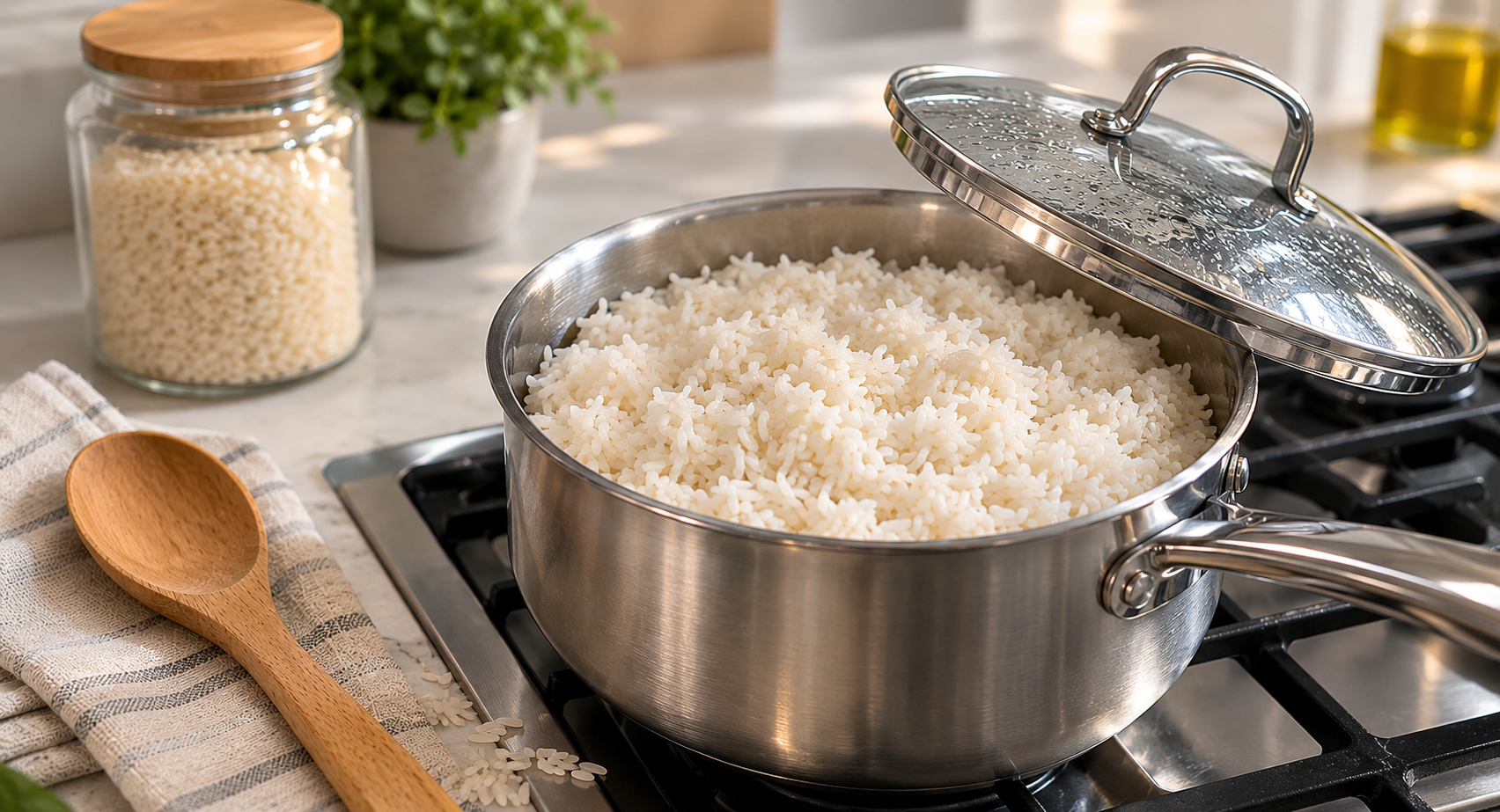
Rice seems simple—just water, heat, and time. Yet for many people, it’s one of the most frustrating things to get right in the kitchen. Sometimes it turns out too sticky, sometimes too dry, and occasionally it burns at the bottom while still being undercooked on top.
If that sounds familiar, you’re not doing anything unusual. The problem is that rice cooking isn’t about luck—it’s about understanding a few key steps and doing them consistently.
The good news? You don’t need a rice cooker, fancy equipment, or complicated techniques. With a simple method and a bit of awareness, you can cook rice perfectly every single time using tools you already have.
This guide focuses on real-life solutions. No confusing ratios, no guesswork—just a clear, repeatable process that works in everyday kitchens.
Why Cooking Rice Goes Wrong So Often
Small Mistakes Have Big Effects
Rice is sensitive to small changes. Slightly too much water, slightly too much heat, or even skipping one step can affect the final result.
Common issues include:
- Mushy or overly soft rice
- Hard or undercooked grains
- Burnt bottom layer
- Sticky or clumpy texture
Most of these problems come from a lack of control over heat and water balance.
Choosing the Right Type of Rice
Not All Rice Cooks the Same
Different types of rice absorb water differently and require slightly different handling:
- Long-grain rice (like basmati) stays separate and fluffy
- Medium-grain rice is slightly sticky
- Short-grain rice tends to clump together
For beginners, long-grain rice is usually the easiest to manage because it’s more forgiving.
Stick to One Type at First
Instead of switching between rice types, stick to one and master it. Once you understand how it behaves, you can experiment with others.
The Basic Rice-to-Water Ratio
Keep It Simple
A reliable starting point for most long-grain rice is:
- 1 cup rice
- 2 cups water
This ratio works well in most home kitchens. However, your stove and cookware may require small adjustments.
Step-by-Step Method That Actually Works
Step 1: Rinse the Rice
Rinsing removes excess starch that causes stickiness.
- Place rice in a bowl
- Add water and swirl it gently
- Drain and repeat 2–3 times
This simple step makes a noticeable difference in texture.
Step 2: Use the Right Pot
Choose a pot with:
- A thick base
- A tight-fitting lid
Thin pots heat unevenly and increase the risk of burning.
Step 3: Combine and Start Cooking
Add rice and water to the pot. Then:
- Place on medium heat
- Leave uncovered until it starts boiling
Avoid stirring too much—it can break the grains.
Step 4: Lower the heat and Cover
Once the water starts boiling:
- Reduce the heat to low
- Cover the pot with a lid
This is where many people go wrong. High heat at this stage can burn the rice at the bottom.
Step 5: Let It Cook Without Disturbing
Leave the rice covered for about 12–15 minutes.
Do not:
- Open the lid repeatedly
- Stir the rice
- Increase heat
The steam inside the pot cooks the rice evenly.
Step 6: Turn Off the Heat and Let It Rest
Once cooking time is complete:
- Turn off the heat
- Let the rice sit covered for 5–10 minutes
This step allows moisture to settle and prevents sogginess.
Step 7: Fluff Gently
Use a fork to fluff the rice. This separates the grains and improves texture.
Understanding Heat: The Key to Perfect Rice
Too Much Heat = Burnt Bottom
If the heat is too high after boiling:
- Water evaporates too quickly
- Bottom layer burns
- The top remains undercooked
Too Little Heat = Undercooked Rice
If the heat is too low:
- Water doesn’t fully absorb
- Rice stays hard
Finding the balance is essential. Medium heat for boiling, then low heat for cooking, is the safest approach.
Common Rice Cooking Mistakes (And Fixes)
Mistake 1: Skipping the Rinse
Unrinsed rice often turns sticky and clumpy.
Fix: Always rinse before cooking.
Mistake 2: Lifting the Lid Too Often
Opening the lid releases steam, which disrupts cooking.
Fix: Keep the lid closed until cooking is done.
Mistake 3: Using the Wrong Pot Size
Too small → water overflows
Too large → uneven cooking
Fix: Use a pot that comfortably holds rice and water with extra space.
Mistake 4: Incorrect Heat Control
This mistake is one of the biggest issues.
Fix: Start at medium, switch to low, and do not increase again.
Mistake 5: Not Knowing When It’s Done
Sometimes rice looks done but isn’t fully cooked.
How to Fix Rice That Didn’t Turn Out Right
If Rice Is Too Dry
- Add 2–3 tablespoons of water
- Cover and heat on low for a few minutes
If Rice Is Too Wet
- Remove lid
- Cook on very low heat to evaporate excess moisture
If Rice Is Burnt at the Bottom
- Do not scrape immediately
- Transfer the top layer to another bowl
The burnt layer can sometimes be avoided with better heat control next time.
Simple Additions That Improve Flavor
Don’t Overcomplicate It
Plain rice doesn’t have to be boring. Try small additions:
- A pinch of salt
- A teaspoon of oil or butter
- Cooking with broth instead of water
These enhance flavor without complicating the process.
Making Rice Part of Your Daily Routine
Build a Habit Around It
Cooking rice becomes easier when it’s part of your routine:
- Use the same pot
- Follow the same steps
- Adjust only when necessary
Consistency leads to better results.
Prepare Ahead When Possible
You can cook rice in advance and store it:
- Keep in the fridge for 2–3 days
- Reheat with a little water to restore moisture
This saves time on busy days.
Creating a Better Cooking Environment
Keep Your Workspace Ready
Before starting:
- Measure rice and water
- Prepare your pot
- Clear your cooking area
A smooth setup reduces mistakes and stress.
Long-Term Improvement Tips
Learn From Each Attempt
If your rice isn’t perfect, ask:
- Was the heat too high?
- Was the ratio off?
- Did I open the lid too early?
Small observations lead to big improvements.
Stick to the Basics First
Don’t jump into complex recipes. Master plain rice first. Once you’re confident, you can explore the following:
- Fried rice
- Pulao
- Flavored rice dishes
Conclusion
Cooking rice perfectly every time isn’t about talent—it’s about following a simple, consistent method and paying attention to a few key details.
When you rinse the rice properly, use the right water ratio, control the heat, and let it cook without interference, you remove almost all the guesswork. What’s left is a reliable process you can repeat anytime.
The biggest shift happens when you stop rushing. Rice rewards patience. Give it the right conditions, and it will turn out soft, fluffy, and evenly cooked.
Once you master this basic skill, it becomes a foundation for countless meals. Perfectly cooked rice paves the way for improved cooking, ranging from simple home dinners to more advanced dishes.
FAQs
1. Why does my rice always turn sticky?
This usually happens when you skip rinsing or use too much water. Rinsing and correcting ratios can fix this quickly.
2. Can I cook rice without measuring?
It’s possible, but beginners should measure for consistency. Once you gain experience, you can estimate more confidently.
3. How do I prevent rice from burning at the bottom?
Lower the heat after boiling and avoid using thin pots. Controlled heat is the key.
4. Is it okay to stir rice while cooking?
No, stirring can break the grains and make rice mushy. Let it cook undisturbed.
5. How long should rice rest after cooking?
Let it sit covered for 5–10 minutes. This improves texture and prevents excess moisture.